Saturday, January 24, 2009

Observations In The Church of Rome (Pt. 2) - "Primitive Christianity"

I experienced a rare blessing last week as I sat down with my Evangelical friends and we discussed theology, I realized that after reading parts of Isaiah, Galatians, and 1 John that whenever we talked about what the Scriptures were saying to us, or what they meant originally, we were in agreement. It may have been because they took a Wesleyan approach to their Protestantism - I've always called Wesley the 'half-Catholic' - but I think the heart of it is that when it comes to the main points of theology (outside Justification), we tend to agree. I read this letter of John Wesley's called "Letter to a Roman Catholic"
(it's in this list of letters http://wesley.nnu.edu/john_wesley/letters/1749b.htm) and it reinforced this point. One of the best churches I've ever been in has been Mount Zion Independent Methodist Church in Cliviger, England (where I gave my first sermon, and where John Wesley preached once). I've always loved the practicality of Methodism and how appealing it was to the common man. Wesley talks in this letter about "primitive Christianity" which we can all agree upon and which if we follow, we can both be sure of our future destination.


Wesley's ecumenism is absolutely unique in this era of downright hatred between Protestants and Catholics, but this letter has alot of sentences I love which are all about their common ground in the faith. Here are a few:

"You have heard ten thousand stories of us who are commonly called Protestants, of which, if you believe only one in a thousand, you must think very hardly of us. But this is quite contrary to our Lords rule, 'Judge not, that ye be not judged'; and has many ill consequences, particularly this -- it inclines us to think as hardly of you. Hence we are on both sides less willing to help one another, and more ready to hurt each other. Hence brotherly love is utterly destroyed; and each side, looking on the other as monsters, gives way to anger, hatred, malice, to every unkind affection, which have frequently broke out in such inhuman barbarities as are scarce named among the heathens....

I do not suppose all the bitterness is on your side. I know there is too much on our side also -- so much, that I fear many Protestants (so called) will be angry at me too for writing to you in this manner, and will say, ' It is showing you too much favor; you deserve no such treatment at our hands....

But I think you do. I think you deserve the tenderest regard I can show, were it only because the same God hath raised you and me from the dust of the earth, and has made us both capable of loving and enjoying Him to eternity; were ~ only because the Son of God has bought you and me with His own blood. How much more, if you are a person fearing God (as without question many of you are) and studying to have a conscience void of offence towards God and towards man!...

(Wesley goes through the Apostles' Creed emphasizing the continuity of doctrine) ...the third day He rose again from the dead; that He ascended into heaven; where He remains in the midst of the throne of God, in the highest power and glory, as Mediator till the end of the world, as God to all eternity; that in the end He will come down from heaven to judge every man according to his works, both those who shall be then alive and all who have died before that day.


I believe the infinite and eternal Spirit of God, equal with the Father and the Son, to be not only perfectly holy in Himself, but the immediate cause of all holiness in us; enlightening our understandings, rectifying our wills and affections, renewing our natures, uniting our persons to Christ, assuring us of the adoption of sons, leading us in our actions, purifying and sanctifying our souls and bodies, to a full and eternal enjoyment of God.

I believe that Christ by His Apostles gathered unto Himself a Church, to which He has continually added such as shall be saved; that this catholic (that is, universal) Church, extending to all nations and all ages, is holy in all its members, who have fellowship with God the Father, Son, and Holy Ghost; that they have fellowship with the holy angels, who constantly minister to these heirs of salvation; and with all the living members of Christ on earth, as well as all who are departed in His faith and fear....

Now, is there anything wrong in this? Is there any one point which you do not believe as well as we?

But you think we ought to believe more. We will not now enter into the dispute. Only let me ask, If a man sincerely believes thus much, and practices accordingly, can any one possibly persuade you to think that such a man shall perish everlastingly?

...this alone is the old religion. This is true, primitive Christianity. Oh, when shall it spread over all the earth? when shall it be found both in us and you? Without waiting for others, let each of us by the grace of God amend one.

Are we not thus far agreed? Let us thank God for this, and receive it as a fresh token of His love. But if God still loveth us, we ought also to love one another. We ought, without this endless jangling about opinions, to provoke one another to love and to good works. Let the points wherein we differ stand aside: here are enough wherein we agree enough to be the ground of every Christian temper and of every Christian action.

O brethren, let us not still fall out by the way! I hope to see you in heaven. And if I practice the religion above described, you dare not say I shall go to hell. You cannot think so. None can persuade you to it. Your own conscience tells you the contrary. Then, if we cannot as yet think alike in all things, at least we may love alike. Herein we cannot possibly do amiss. For of one point none can doubt a moment, -- ‘God is love; and he that dwelleth in love dwelleth in God, and God in him.’

In the name, then, and in the strength of God, let us resolve first, not to hurt one another; to do nothing unkind or unfriendly to each other, nothing which we would not have done to ourselves. Rather let us endeavor after every instance of a. kind, friendly, and Christian behavior towards each other.

Let us resolve secondly, God being our helper, to speak nothing harsh or unkind of each other...Let us, thirdly, resolve to harbor no unkind thought, no unfriendly temper, towards each other....Let us, fourthly, endeavor to help each other on in what­ever we are agreed leads to the kingdom.
...O let you and I (whatever others do) press on to the prize of our high calling! that, being justified by faith, we may have peace with God through our Lord Jesus Christ; that we may rejoice in God through Jesus Christ, by whom we have received the atonement; that the love of God may be shed abroad in our hearts by the Holy Ghost which is given unto us. Let us count all things but loss for the excellency of the knowledge of Jesus Christ our Lord; being ready for Him to suffer the loss of all things, and counting them but dung that we may win Christ.

--I am Your affectionate servant for Christ’s sake." - John Wesley. Dublin July 18, 1749

May we all recognize what brother John has pointed out here, what unites us is bigger than what divides us, and as the great Charles Spurgeon said, 'may our hearts be smarter than our heads'

Observations In The Church of Rome (Pt. 1) - The Gospel

This last week I was very frustrated as I tried to explain to my Evangelical friend why I was still becoming Roman Catholic. She asked me if the Church was energized about evangelism. No, was my honest answer. Do they understand they're saved by Grace? No, for the most part. Do they preach Christ above all else? Not at my current Church (The city Cathedral) but in my parish Church, more often than not. All this to say she was quite confused as to why anyone would remain in such a place. I also told her that I couldn't use any of my spiritual gifts of teaching and preaching there, and that because of these classes I'd been unable to receice the Eucharist for almsot a year now. I tried telling her about the indivisibility of the Church, I tried to explain Transubstantiation and Eucharistic Adoration, I tried to explain the infallibility of the Church/Pope. It wasn't as substantial. For the Protestant mind - especially the Evangelical mind, it's a living faith that matters, it's evangelism even if there's no depth in what is evangelized, as long as people are reached for Jesus. So I decided to put my observations of the Roman Catholic Church up here, more for myself probably than anyone (I think only 2 people read this blog anyway these days).

The Gospel
"You are all sons of God through faith in Christ Jesus" - Galatians 3:26 NIV

Throughout my life as an Evangelical Protestant the most important thing in the world was spreading the Gospel. The Gospel was humanity's only hope, and salvation came by hearing the Gospel preached and the word proclaimed, as St. Paul said "faith cometh by hearing" (Rom 10:17). So when I went to the Catholic Church I wondered what the gospel would be like. To my surprise it was actually there in part being preached. "Swimming in God's Abundant Grace" was a homily given by Fr. Peter at my parish and it was a lovely Lutheran understanding of justification (Trent would've anathemized it). It was good to see some of the message there. When I read my Catechism I found it much more clearly with sections like:

"Justification has been merited for us by the Passion of Christ who offered himself on the cross as a living victim, holy and pleasing to God, and whose blood has become the instrument of atonement for the sins of all men. Justification is conferred in Baptism, the sacrament of faith. It conforms us to the righteousness of God, who makes us inwardly just by the power of his mercy. Its purpose is the glory of God and of Christ, and the gift of eternal life" - CCC 1992

... for the most part that sounded right to me, it was different than Imputed Righteousness -but in my Baptist Church I was never taught Protestants believed in the Trinity, let alone Imputed Righteousness - so it wasn't as shocking to me. For the most part things sounded ok... until baptism came in.

Well the first verse I quoted was Galatians 3:26, a verse I'd heard alot: "You are all sons of God through faith in Christ Jesus", but then I realized I had never read the next sentence with much thought. "for all of you who were baptized into Christ have clothed yourselves with Christ." (Gal 3:27) ... Uh Oh , Regenerative (Saving) Baptism, not good, Lutheran and Catholic alert! I always got angry with the Catholic Church because of their emphasis on the 'dead works of the law' like Baptism, but then I realized that the gospel is twofold, it comes by faith certainly but grace is also conferred sacramentally.

One East Orthodox blogger I read said "Protestantism makes salvation a mental exercise, the sacraments make salvation possible for all, even the mentally handicapped, and go beyond the sort of gnostic salvation whereby knowledge merits grace"... or something to that effect.

So the reason I will sometimes tell people the Church of Rome needs to get real and start preaching about Justification, I keep forgetting that in their theology all of it is linked together, and that whenever a priest reminds us of our baptism, or exhorts us to partake of the sacraments he is simply echoing the other side of grace.


The 2-Lane Road to Redemption
If Salvation is a two way highway I would say that the lane on the right is Salvation by Grace alone, through faith, producing good works, it would have signs saying things like "Believeth on the Lord Jesus" and "Trust in God, trust also in me" (Jn 14.1). But I would say the left lane could be the Sacraments, it would have signs like "baptism that now saves you" (1 Pet 3:21) and "If anyone eats of this bread, he will live forever. This bread is my flesh, which I will give for the life of the world." (Jn 6:51 - Eucharist).

So yes, there are many 'lost' Catholics who without understanding take the good gift each week without a full understanding of Grace and Justification, but maybe in some way God glances on it as the Quakers profess their faith in God and refuse to baptize or break bread together. Maybe God is leading people through the Word and the Sacraments - as the Reformers taught.

Or maybe I'm totally wrong. (*Presbyterians Nod Enthusiastically*)

In all my frustration with the Church of Rome I perpetually repeat my Augustinian Mantra, "The Church is a whore, but she's my mother"

Wednesday, January 21, 2009

My Personal Relationship With Jesus

I spent the last 5 days with my friends from Capernwray who are some of the most genuine evangelicals (in every good sense of the word) I know. They've re-taught me alot about the faith and the importance of the Bible and the necessity for a personal relationship with Jesus.

I hope I never forget the first time I ever went to Mass, I just sat in the back row the whole time, I refused to kneel, there were no songs, and I didn't know any of the prayers, but I remember the homily. It was on the importance of having a personal relationship with Jesus and that it is the centre of a living faith. I'm not for a second pretending that the Roman Catholic Church I go to actually teaches what Wesley would call "true Christianity" or Schaeffer "True Spirituality" - that is, a faith based in the grace of God and the finished work of Christ on the Cross, rich in good works flowing from the power of the Holy Spirit. But it must have been an off night. I'm Catholic because the Christian tradition, Logic, and Scripture oblige me to, not because it does anything near a good job in actually preaching or practicing the gospel. But enough complaints.

I wanted to write about my personal walk with Christ and how it has strengthened this year. I've been reading the Bible again with an open heart and praying that God will teach me things. Starting with 2 Corinthians, a bit of Romans, and 1 Samuel I feel that God has re-inforced the most important parts of salvation to me. He has shown me that he has unlimited grace and love for me as long as I am in Christ. He has taught me about the significance of my baptism and faith in Christ. But most importantly God has reassured me in what my Catholic friend Philip once said in an email, that becoming a saint is not only possible for those in Christ, but it is an inevitability. I still find that the most difficult dogma to believe. The infallibility of the Church/Pope wasn't that difficult, the immaculate conception was difficult, but the complete Regeneration of a Christian in this life and the next (purgatory) - that seemed impossible.

I've learned alot in the past year about my sinfulness and as I sit here writing I find it humorous. My Atheist and Humanist friends always talk about the "freedom" from Relgion and Morality and how they can do whatever they want. Well I've been home 2 days and I've fought through God's grace, and my cooperation (which is still a grace) the temptation to fall back into the sin which has been a 'thorn in my flesh' so to speak. I'm pacing around and stressed out and at that moment I realized that in sin I'm not free at all. As one Protestant theologian said "the most free you will ever be is as a slave to Christ". I tend to agree with that alot. So now I pray and read my bible and read the words "Are you so foolish? Having started with the Spirit, are you now ending with the Flesh?" (Gal 3.3) and trying to have faith in the power of the Spirit. And so I wish always to be an Evangelical Catholic who is given grace through faith and the sacraments, and who is fed by the word of God and the Eucharist, and is always seeking to become what Christ is.

I close with St. Augustine's words which a friend gave me and which will annoy all my Reformed friends:

"God, oh Lord, grant me the power to overcome sin. For sin is that which you gave to us when you granted us free choice of will. If I choose wrongly, then I shall be justly punished for it. Is that not true, my Lord, of whom I indebted for my temporal existence. Thank you, Lord, for granting me the power to will my self not to sin." - St. Augustine

Sunday, January 18, 2009

Chesterton for the day

"I have another far more solid and central ground for submitting to it as a faith (Christianity), instead of merely picking up hints from it as a scheme. And that is this: that the Christian Church in its practical relation to my soul is a living teacher, not a dead one. It not only certainly taught me yesterday, but will almost certainly teach me to-morrow. Once I saw suddenly the meaning of the shape of the cross; some day I may see suddenly the meaning of the shape of the mitre. One free morning I saw why windows were pointed; some fine morning I may see why priests were shaven. Plato has told you a truth; but Plato is dead. Shakespeare has startled you with an image; but Shakespeare will not startle you with any more. But imagine what it would be to live with such men still living, to know that Plato might break out with an original lecture to-morrow, or that at any moment Shakespeare might shatter everything with a single song. The man who lives in contact with what he believes to be a living Church is a man always expecting to meet Plato and Shakespeare to-morrow at breakfast. He is always expecting to see some truth that he has never seen before. " - G.K. Chesterton "Orthodoxy"

Thursday, January 15, 2009

Today's Glimpse of Pop Culture and Religion

So today I turned on Daily Mass and heard this prayer:

"I asked God for strength that I might achieve.
I was made weak that I might learn humbly to obey.
I asked God for health that I might do greater things.
I was given infirmity that I might do better things.

I asked for riches that I might be happy.
I was given poverty that I might be wise.
I asked for power that I might have the praise for men.
I was given weakness that I might feel the need of God.

I asked for all things that I might enjoy life.
I was given life that I might enjoy all things.
I got nothing that I asked for
but everything that I hoped for. . .

Almost, despite myself,
My unspoken prayers were answered.
I am among all men most richly blessed."

I then turned on Sex and the City (I know I'm a sinner) and wrote down some of the lines pertaining to religion. It was the episode where Miranda dates a Catholic who showers every time they have sex.

“If I knew he was a Catholic I never would have dated him, they should make them wear a sign or something.” – Miranda
“Sure all religions are sweet till they get to that shower after sex phase” – Miranda
“’That Presbyterian Church is a really good Church’ – Charlotte, ‘What are you doing rating Churches now? Good bread, poor wine selection’ – Miranda”
“Lighten up this isn’t a Catholic Church it’s Presbyterian’ –Carrie. ‘Catholics, Episcopalians, Buddhists, Quakers, Shakers, all the same, all out to ruin our sex lives’ – Miranda”
‘Come on don’t lie you’re in a church’ – Carrie
'later that night in the church of disco...(some gay guy has a party in a church) to introduce his new boyfriend Milan' - Carrie
'Isn't this fun? It's like hell with a cover-charge' - Gay fashion guy
'I stayed up all night questioning my faith in faith' - Carrie

In the show Charlotte is an Episcopalian, Mr. Big and Miranda are Atheists, Carrie is an Agnostic, and Samantha is a whore (the rough equivalent to http://www.united-church.ca/). So luckily except for the most attractive one, they're all going to Hell...but then again Charlotte converted to Judaism in another episode, so they're probably all going to Hell.

An interesting mix of different influences that one sees in everyday Canada.

Friday, January 9, 2009

Obama - An Arian, Pelagian, Universalist... or maybe just a Deist

In Canada I vote for the Conservative Party, and I am I guess a Right Wing guy - but just barely, more of a Centrist. Anyway, I'm Conservative in Canada which according to my friend from Arkansas makes me a liberal in the US. In this last election I thought both candidates were unworthy to lead the American Republic, but I was vaguely rooting for Barrack Obama. I'd read some of the Audacity of Hope and it seemed idealistic enough to maybe do some good things in Washington.

Anyway, Obama claimed to be a Christian, but I would call him a Deist after this interview: http://blog.beliefnet.com/stevenwaldman/2008/11/obamas-interview-with-cathleen.html He never affirms the Deity of Christ and merely calls him a teacher. He believes all paths lead to Heaven. He denies the doctrine of Hell. He denies the need for evangelism or certainty about faith. He also talks about 'doing our best and being rewarded' which sounds like some post-Trent pelagian B.S. to me. so I'm labeling him an Arian, Pelagian, Universalist. Really he's a deist no different from Lincoln - except Lincoln said he was in no way a Christian, and Obama says he is one (though he denies every tenet of the historic Christian faith)....only in America.

This interview actually made me with Barrack Obama was a muslim, at least then he'd believe in a personal God and objective morality as well as an afterlife. As well most Muslims revere Christ more than Obama. heh.

The Just Condemnation of Humanity (Romans 1)

"For I am not ashamed of the gospel of Christ: for it is the power of God unto salvation to every one that believeth; to the Jew first, and also to the Greek. For therein is the righteousness of God revealed from faith to faith: as it is written, The just shall live by faith.

For the wrath of God is revealed from heaven against all ungodliness and unrighteousness of men, who hold the truth in unrighteousness; Because that which may be known of God is manifest in them; for God hath shewed it unto them. For the invisible things of him from the creation of the world are clearly seen, being understood by the things that are made, even his eternal power and Godhead; so that they are without excuse: Because that, when they knew God, they glorified him not as God, neither were thankful; but became vain in their imaginations, and their foolish heart was darkened. Professing themselves to be wise, they became fools, And changed the glory of the uncorruptible God into an image made like to corruptible man, and to birds, and fourfooted beasts, and creeping things.

Wherefore God also gave them up to uncleanness through the lusts of their own hearts, to dishonour their own bodies between themselves: Who changed the truth of God into a lie, and worshipped and served the creature more than the Creator, who is blessed for ever. Amen.

For this cause God gave them up unto vile affections: for even their women did change the natural use into that which is against nature: And likewise also the men, leaving the natural use of the woman, burned in their lust one toward another; men with men working that which is unseemly, and receiving in themselves that recompence of their error which was meet.

And even as they did not like to retain God in their knowledge, God gave them over to a reprobate mind, to do those things which are not convenient; Being filled with all unrighteousness, fornication, wickedness, covetousness, maliciousness; full of envy, murder, debate, deceit, malignity; whisperers, Backbiters, haters of God, despiteful, proud, boasters, inventors of evil things, disobedient to parents, Without understanding, covenantbreakers, without natural affection, implacable, unmerciful: Who knowing the judgment of God, that they which commit such things are worthy of death, not only do the same, but have pleasure in them that do them.

Therefore thou art inexcusable, O man, whosoever thou art" - Romans 1:16-2:1a King James Version

I was listening to Charles Price preach on this today, he was a former principal at Capernwray Hall where I studied for a year in the 'simple precepts of the gospel'. He really preached this morning and I really listened to the message of Romans 1, even if some areas of scripture are very confusing, I've been listening to Romans my whole life, and I think I get the just of the message.

I love how St. Paul writes in this Epistle with his Rhetorical style. He makes it clear that the world has made manifest the existence of God, and here appeals to what we call Natural Theology (in Catholicism) or Common Grace/Common Revelation? in Reformed theology (i think I got that one wrong).

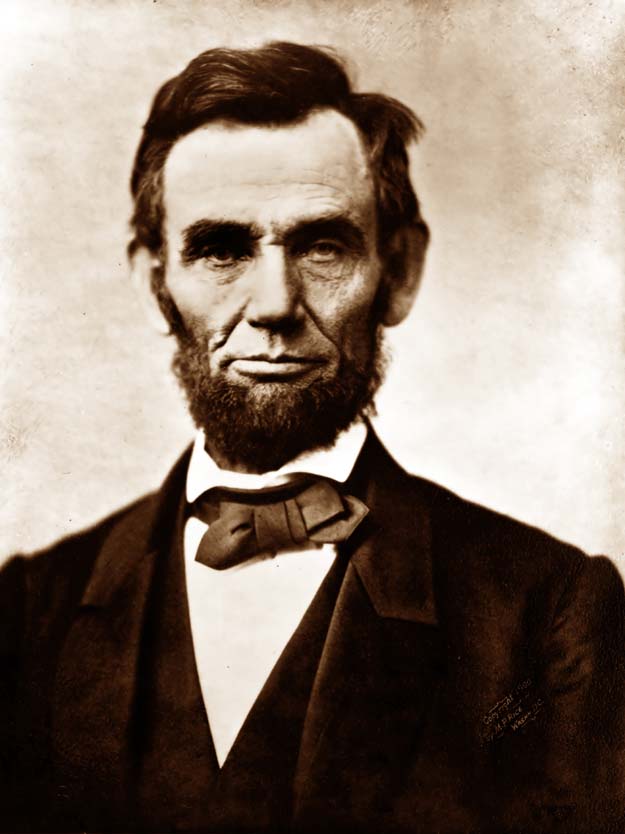
Price quoted Abraham Lincoln who was not a Christian but once said

"I never behold them (the universe filled withstars) that I do not feel I am looking in the face of God. I can see how it might be possible for a man to look down upon the earth and be an atheist - but I cannot conceive how he could look up into the heavens and say 'There Is No God.'"
- And as much as I believe the Confederacy was right (just my historical/political view), I still have to say that honest Abe seems to make my point well for me.

I used this passage three times today when talking with people. Two of the discussions were on Homosexuality and I had to say that I thought it was immoral, and I must say that St. Paul makes it abundantly clear here when he writes, "burned in their lust one toward another; men with men" - no matter what the liberal commentators in my NRSV say about Judaic understandings of Idolatry leading to immorality, it seems clear to me right here that St. Paul is painfully spelling out the fact that homosexuality was a sin. There's too much theological gymnastics I would have to do to get out of it, and I'm going to need all the theological gymnastics I can muster to dodge Romans 4:5 like the plague to make my Catholic hermeneutic fit.

Anyway I just thought it was good to remember that under God's declaration all stand guilty and sinful. This is the first precept of the Gospel, the sinfulness and just condemnation of mankind.

God is just, and justifier. If it were not for the grace of his unconditional election, we would have no hope.