Showing posts with label Sin. Show all posts

Saturday, December 17, 2011

Excerpts of The Delicious Destruction of Thomism by Paul Ricoeur


""repentance" belongs to the same thematic universe as trnsgression and merit, and it is no accident that it was precisely Judaism that laid emphasis on this concept. For "repentance" signifies that "return" to God, freely chosen, is always open to man; and the example of great and impious men who have "returned" to the Eternal attests that it is always possible for a man to "change his way." This emphasis on repentance is in conformity with the intepretation of "evil inclination" as occasion of sin and not as radical evil. The ethical universe of Pharisaism is already that of Pelagius: no great contrasts, as in Paul, Augustine, and Luther, between radical evil and radical deliverance, but a slow and progressive process of salvation, in which "pardon" is not lacking to "repentance," grace to the good will." - Paul Ricoeur "The Symbolism of Evil" (131)

"justice, although it is extrinsic to a man as far as its origin is concerned, has become something that dwells within him, as far as its operation is concerned; the "future" justice is already imputed to the man who believes; and so the man who is "declared" just is "made" just, really and vitally. Thus there is no ground for opposing the forensic and eschatological sense of justice to its immanent and present sense: for Paul the first is the cause of the second, but the second is the full manifestation of the first; the paradox is that the acme of outwardness is the acme of inwardness, of that inwardness that Paul calls new creature, or liberty. Liberty, considered from the point of view of last things, is not the power of hesitating and choosing between contraries, nor is it effort, good will, responsibility. For St. Paul, as for Hegel, it is being at home with oneself, in the whole, in the recapitulation of Christ." - Paul Ricoeur "The Symbolism of Evil" (148)

"Such is the symbol in the light of which the final experience of fault is perceived as something in the past that one has got beyond. It is because "justification" is the present which dominates the backward look on sin, that the supreme sin consists, in the last resort, in the vain attempt to justify oneself... Justification by faith, then, is what makes manifest the failure of justification by the law, and the failure of the justice of works is what reveals the unity of the entire domain of sin." - Paul Ricoeur "The Symbolism of Evil" (148)

"evil is not nothing; it is not a simple lack, a simple absence of order; it is the power of darkness; it is posited; in this sense it is something to be "taken way": "I am the Lamb of God who takes away the sins of the world," says the interior Master. Hence, every reduction of evil to a simple lack of being remains outside the symbolism of defilement, which is complete only when defilement has become guilt." - Paul Ricoeur "The Symbolism of Evil" (155)

Friday, September 18, 2009

Catholic Soteriology summed up fairly easily

on this website I found a typical summation of Catholic soteriology called "A Catholic understanding of how grace saves" : http://evangelical-catholicism.blogspot.com/2006/09/catholic-understanding-of-how-grace.html

It seems to still be suspect to my observation that this means that grace is just the ability to do good works and merit salvation, not the absolution of sins or forgiveness which the Reformers taught it was (and which I feel in my heart more partial to still).

To me the issue no Catholic theologians want to touch is sin in the believer. Luther said "when God saves a man he doesn't do it in heaps", and if this is his characterization of Catholicism, then it's kind of true. Catholicism doesn't call Concupiscence Sin and I think has failed to understand what every priest understands: that the average Christian, is a sinner with faith and repentance, not an intrinsically righteous transformed and angelic being.

Hopefully reading some St. Augustine, De Lubac, and Von Balthasar on this will clear some stuff up.

Wednesday, April 1, 2009

Penitential Psalms (part 2) - Psalm 32

I've been dreading this post.... because that red alert word is used in it "imputes" and "covered", it's like admitting defeat. But I don't really want to get into a huge debate about justification, I'll simply say that maybe the Roman Catholic Church needs to re-read this Psalm, it's the one infamously quoted by St. Paul in Romans 4 and by Protestants everywhere as the imputation proof text, which the text actually seems to support.

But I'll note this, it's not the imputation of sin to Christ that Trent anathema'd (I'm pretty sure), we can believe that, it's the imputation of Christ's active obedience/righteousness to us which they excommunicated.

There's a big difference saying 'Jesus' blood covered my sins', and saying 'when God looks at me, he sees Christ's active obedience and allows my sinful unregenerate nature to enter Heaven, without any personal transformation'. I think that's the difference. Our sin is removed "imputed" to Christ at our baptism/moment of sola fide, then we are increasingly justified as the grace of the Holy Spirit is infused into us and we are transformed into the image of Christ.

And I think that's what the Psalm basically teaches, blessed are those who God doesn't consider sinful, but rather have a right spirit and act righteously and fear God.

Anyway, here's the Psalm.

Psalm 32

The Joy of Forgiveness
Of David. A Maskil.
"Happy are those whose transgression is forgiven,
whose sin is covered.
Happy are those to whom the Lord imputes no iniquity,
and in whose spirit there is no deceit.

While I kept silence, my body wasted away
through my groaning all day long.
For day and night your hand was heavy upon me;
my strength was dried up as by the heat of summer.
Selah

Then I acknowledged my sin to you,
and I did not hide my iniquity;
I said, ‘I will confess my transgressions to the Lord’,
and you forgave the guilt of my sin.
Selah

Therefore let all who are faithful
offer prayer to you; at a time of distress,
the rush of mighty waters shall not reach them.
You are a hiding-place for me;
you preserve me from trouble;
you surround me with glad cries of deliverance.
Selah

I will instruct you and teach you the way you should go;
I will counsel you with my eye upon you.
Do not be like a horse or a mule, without understanding,
whose temper must be curbed with bit and bridle,
else it will not stay near you.

Many are the torments of the wicked,
but steadfast love surrounds those who trust in the Lord.
Be glad in the Lord and rejoice, O righteous,
and shout for joy, all you upright in heart."

I love the lines about God being our hiding place, this idea is more creepily illustrated in the Catholic prayer "Jesus hide me in your wounds" (which I think sounds weird)

I like that David describes the righteous (those who trust in the Lord) as almost in a tornado of love. It surrounds them, and they shout for joy. What a gift and encouragement the scriptures are.

Monday, March 23, 2009

Wittenberg v. Rome - what is sin?

This is a good post by Dave Armstrong: http://socrates58.blogspot.com/2005/10/reflections-on-justification.html But he has an excerpt specifically which is useful:

"For Luther sin is passion, for Catholicism sin is in the will - the act of choice. In Freudian terms Luther's sin is libido, Catholic sin is ego. From this a number of consequences flow. From the Lutheran point of view the conclusion follows that, as nobody is ever entirely passionless (least of all essentially passionate types like Luther), there can be no freedom from sin in this world. Man is born and dies in iniquity. The utmost he can attain is an assurance that this won't be counted against him - that Christ's redemptive suffering covers all. Hence justice is only imputed - the Lutheran concept which became the center of controversy."

In Catholic teaching, on the other hand, the work of justification is not limited to the act of faith with which it begins. It is carried on by the use of the sacraments, the life of charity and the practice of good works, so that human nature recovers the spiritual life that was lost by sin and man becomes a new creature . . ."

Good habits make a man good and bad habits make him bad. This . . . was ignored or underestimated by Luther. It seems that there was a certain confusion in his thought on these matters. He had become convinced of the worthlessness of pious practices - that it is no use fasting or saying long prayers or making a pilgrimage or a vow. Good works, however, are not merely pious practices, they are simply what the words denote - doing good - and it is a fallacy to argue that such action has no value from a religious point of view." (5:78-79) - Christopher Dawson

You're free to disagree with the latter half and Catholic justification, but what I wanted to point out was the difference between a Lutheran and Catholic view of sin, that is extremely important for the rest of our theology. It is a prime difference and it is simply important to note.

Thursday, January 29, 2009

New Discovery on Martin Luther

Wow I read this article and thought it was published by a Traditionalist Catholic group because the evidence against Luther was so mean-spirited, but it's the Guardian (a huge newspaper in the UK, I saw it every day I lived there). Here it is:

http://www.guardian.co.uk/world/2008/oct/27/martin-luther-protestantism

It's completely irrelevant to the man's theology and historically speaking 'circumstantial' evidence, and unless they can prove he was actually lying about the monk thing, then it's not that big a deal. I just found it interesting.

Friday, January 9, 2009

The Just Condemnation of Humanity (Romans 1)

"For I am not ashamed of the gospel of Christ: for it is the power of God unto salvation to every one that believeth; to the Jew first, and also to the Greek. For therein is the righteousness of God revealed from faith to faith: as it is written, The just shall live by faith.

For the wrath of God is revealed from heaven against all ungodliness and unrighteousness of men, who hold the truth in unrighteousness; Because that which may be known of God is manifest in them; for God hath shewed it unto them. For the invisible things of him from the creation of the world are clearly seen, being understood by the things that are made, even his eternal power and Godhead; so that they are without excuse: Because that, when they knew God, they glorified him not as God, neither were thankful; but became vain in their imaginations, and their foolish heart was darkened. Professing themselves to be wise, they became fools, And changed the glory of the uncorruptible God into an image made like to corruptible man, and to birds, and fourfooted beasts, and creeping things.

Wherefore God also gave them up to uncleanness through the lusts of their own hearts, to dishonour their own bodies between themselves: Who changed the truth of God into a lie, and worshipped and served the creature more than the Creator, who is blessed for ever. Amen.

For this cause God gave them up unto vile affections: for even their women did change the natural use into that which is against nature: And likewise also the men, leaving the natural use of the woman, burned in their lust one toward another; men with men working that which is unseemly, and receiving in themselves that recompence of their error which was meet.

And even as they did not like to retain God in their knowledge, God gave them over to a reprobate mind, to do those things which are not convenient; Being filled with all unrighteousness, fornication, wickedness, covetousness, maliciousness; full of envy, murder, debate, deceit, malignity; whisperers, Backbiters, haters of God, despiteful, proud, boasters, inventors of evil things, disobedient to parents, Without understanding, covenantbreakers, without natural affection, implacable, unmerciful: Who knowing the judgment of God, that they which commit such things are worthy of death, not only do the same, but have pleasure in them that do them.

Therefore thou art inexcusable, O man, whosoever thou art" - Romans 1:16-2:1a King James Version

I was listening to Charles Price preach on this today, he was a former principal at Capernwray Hall where I studied for a year in the 'simple precepts of the gospel'. He really preached this morning and I really listened to the message of Romans 1, even if some areas of scripture are very confusing, I've been listening to Romans my whole life, and I think I get the just of the message.

I love how St. Paul writes in this Epistle with his Rhetorical style. He makes it clear that the world has made manifest the existence of God, and here appeals to what we call Natural Theology (in Catholicism) or Common Grace/Common Revelation? in Reformed theology (i think I got that one wrong).

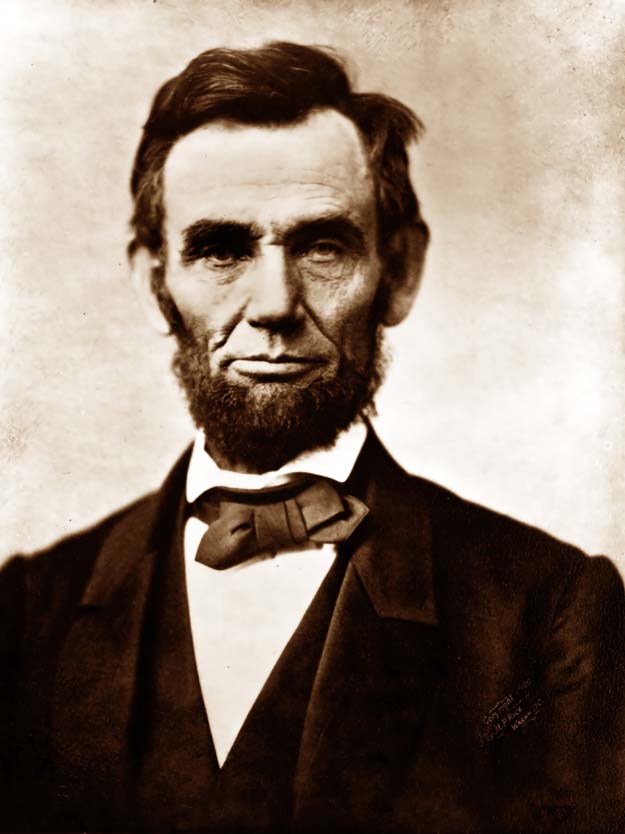
Price quoted Abraham Lincoln who was not a Christian but once said

"I never behold them (the universe filled withstars) that I do not feel I am looking in the face of God. I can see how it might be possible for a man to look down upon the earth and be an atheist - but I cannot conceive how he could look up into the heavens and say 'There Is No God.'"
- And as much as I believe the Confederacy was right (just my historical/political view), I still have to say that honest Abe seems to make my point well for me.

I used this passage three times today when talking with people. Two of the discussions were on Homosexuality and I had to say that I thought it was immoral, and I must say that St. Paul makes it abundantly clear here when he writes, "burned in their lust one toward another; men with men" - no matter what the liberal commentators in my NRSV say about Judaic understandings of Idolatry leading to immorality, it seems clear to me right here that St. Paul is painfully spelling out the fact that homosexuality was a sin. There's too much theological gymnastics I would have to do to get out of it, and I'm going to need all the theological gymnastics I can muster to dodge Romans 4:5 like the plague to make my Catholic hermeneutic fit.

Anyway I just thought it was good to remember that under God's declaration all stand guilty and sinful. This is the first precept of the Gospel, the sinfulness and just condemnation of mankind.

God is just, and justifier. If it were not for the grace of his unconditional election, we would have no hope.

Friday, September 12, 2008

The Walking Wounded and the Wounded Healer

My Principal Rob Whittaker at Capernwray Bible School in England used to talk about Christians who struggled with sin as they went through life, he used this poem - or at least the phrase 'the walking wounded' to describe us. Here is a part of the poem.

"And crimson crosses on the dirty white...
The mist still hung in snags from dripping thorns;
Absent-minded guns still sighed and thumped.
And then they came, the walking wounded,
Straggling the road like convicts loosely chained,
Dragging at ankles exhaustion and despair...
Remembering after eighteen years,
In the heart's throat a sour sadness stirs;
Imagination pauses and returns
To see them walking still, but multiplied
In thousands now. And when heroic corpses
Turn slowly in their decorated sleep
And every ambulance has disappeared,
The walking wounded still trudge down that lane,
And when recalled they must bear arms again" - "The Walking Wounded" By Vernon Scannell

"When he saw the crowds, he had compassion (splagnidzomai) for them, because they were harassed and helpless, like sheep without a shepherd...." - Matthew 9:36

The Gospel is our only hope to heal the walking wounded, with the wounded healer

"But he was pierced for our transgressions, he was crushed for our iniquities; the punishment that brought us peace was upon him, and by his wounds we are healed." -Isaiah 53:5

"‘Let us lie in wait for the righteous man, because he is inconvenient to us and opposes our actions; he reproaches us for sins against the law, and accuses us of sins against our training. He professes to have knowledge of God, and calls himself a child of the Lord. He became to us a reproof of our thoughts; the very sight of him is a burden to us, because his manner of life is unlike that of others, and his ways are strange. We are considered by him as something base, and he avoids our ways as unclean; he calls the last end of the righteous happy, and boasts that God is his father. Let us see if his words are true, and let us test what will happen at the end of his life; for if the righteous man is God’s child, he will help him, and will deliver him from the hand of his adversaries. Let us test him with insult and torture, so that we may find out how gentle he is, and make trial of his forbearance. Let us condemn him to a shameful death, for, according to what he says, he will be protected.’" - Wisdom of Solomon 2:12-20

Saturday, August 23, 2008

Sin and Reconciliation

A friend of mine who is a Pastor's daughter once said her father was accused of only preaching the same message, and he responded that it was not his choice, but God's, and that God had only told him to speak on that issue.

In my own personal religious life, a similar situation has occured. I am unable to overcome a sin, the proverbial thorn in the flesh, and God and/or Satan has plagued me (see 1 Chron 21 vs 2 Sam 24) with this constant recognition of my great sin, and thus if I am to write theology, I should write on sin, as it is what I am being taught, through my own faillures.

"Many years ago, in the British TIMES newspaper, the editor asked for comments on what was wrong with the world. Among the many letters which came back to him, was the shortest ever letter to a newspaper editor. It read, 'Dear Sir, I am, Yours faithfully....' The writer was G. K. Chesterton, well-known author of such books as 'Father Brown'. He had put in two words what many of us took years to find out. He meant that what is wrong with the world is a problem of the human heart. The problem is - I am wrong inside. We are all wrong inside. " -(http://www.soon.org.uk/page53.htm)

I admire Chesterton for his honesty and the truth of the statement. Romans 3:23 reminds us 'For all have sinned and fall short of the glory of God" NIV (Catholics pull the Calvinist card out here and read 'all' as 'some', or 'all ... except Mary', and of course we all believe it 'should' read 'all ...except Jesus')

The real point without bringing Marian theology into the equation is that we have all sinned. Sin is a universal reality.

"For God will bring every deed into judgement, including every secret thing, whether good or evil. " - Ecclesiastes 12:14

" I saw the dead, great and small, standing before the throne, and books were opened. Also another book was opened, the book of life. And the dead were judged according to their works, as recorded in the books. And the sea gave up the dead that were in it, Death and Hades gave up the dead that were in them, and all were judged according to what they had done." - Revelation 20:12-13

"I acknowledge, Lord, and I give thanks that you have created your image in me, so that I may remember you, think of you, love you. But this image is so obliterated and worn away by wickedness, it is so obscured by the smoke of sins, that it cannot do what it was created to do, unless you renew and reform it." - Saint Anselm of Canterbury

I've been trying to learn the 'De Profundis', an ancient monastic liturgical prayer in latin, based on Psalm 130. Thus far I have "De Profundis Clamavi Ad Te Domine" [Out of the depths to you I cry Lord]. There are other verses in the Psalm which says "If you, O Lord, should mark iniquities, Lord, who could stand?...For with the Lord there is steadfast love, and with him is great power to redeem. It is he who will redeem Israel from all its iniquities."

Thus God gives us Christ who dies the atoning death and by his blood a propitiation is offered to the Father in forgiveness. Of course the debate is over how this sacrifice is applied to us, forensically, or actually. I again don't feel like entering into this debate right now.

I'd like to focus on 2 things in Christ's commands in the gospels and the pre-Pauline new testament. In these we see 2 ways Jesus, or the Church, describes as ways of absolving sin instantly.

1. Repentence/Confession. In the story of the Tax collector and the Pharisee the famous prayer 'Lord have mercy on me a sinner' is prayed by the sinful tax collector, and Christ says 'that man went home justified'. Likewise Christ gives to the apostles the power to forgive or retain the sins of individuals on his behalf (John 20:23).

2. Baptism. Acts 2:38, the first sermon of the Church given by Pope St. Peter, or Peter, or Simon - The guy has alot of names - but the point is when he says "'Repent, and be baptized ... for the remission of sins, and ye shall receive the gift of the Holy Ghost." The other day my Uncle was waxing philosophical about how the greatest sin of the Catholic Church was infant baptism, I doubt he knew that the Anglican, Lutheran, Reformed, Presbyterian, Orthodox, Coptic Churches along with every church before 1500 AD baptized infants. The ironic thing in the early church for those arguing in favor of adult baptism from those cases of people being baptized later in life, is that Constantine and others - many others - in the early church, believed that baptism forgave you of all your sins, so it was best to do it right before you died, to 'make sure' that they were forgiven. That's where the debate raged. So ironically, the people believed so strongely in regenerative baptism that they didn't want to baptize infants at first, thinking that forgiveness was a difficult thing to come by later in life - hence the growth of the sacrament of Penance (or whatever happier modern name you call it).

So I've been baptized, and I wait for Confession, it can't come soon enough.

Monday, June 23, 2008

Luther & Calvin, you win this round

I've been struggling for months with this passage from "The Bondage and Liberation of the Will" by John Calvin. It is one of the fundamentally differing premises between Catholicism and Protestantism. Catholicism in it's common form is semi-pelagian, (even though it should be Augustinian), all this to say at it's simplest form: we can do go works, God expects it. Protestantism is usually (note the word usually) and Traditionally on Calvin and Luther's Depravity kick, which to say it it's simplest form: you suck. you will always suck.

Here's the quote:
"We say that man not only cannot do anything good but cannot even think it, so that he may learn to depend totally on God and, despairing of himself, to cast himself entirely upon him; and so that [man] may give the credit, if he has done anything good, to God and not to himself...by ourselves we are helpless"

Now this idea is a Protestant flavoured Augustinianism (arguably of course as Augustine did believe in merit), but aside from big labels that make me feel like I know the first thing about theology, I have found in my practical life that this is true.

Call me a post-modernist because I don't want to say it's true for everyone, but for me I am a terrible sinner. There is no way around it, I am just bad. I have tried so hard to be good, but I suck (as Mark Driscoll would say). I have found in my day to day life that I am helpless, I can't stop sinning.

It's St. Paul all over again with: "for what I would, that do I not; but what I hate, that do I." (Rm 7:15 KJV) and "For I know that in me (that is, in my flesh,) dwelleth no good thing" (v.18).

I have felt what is called Regeneration in theology while at Bible School in England, I was a much better Christian than I am now. However even then I look at my prayer journal, and on days I would dream for now I write things like 'forgive my miserable sinfulness' etc (see Puritans for details). As horrific as it sounds I think Calvin is right, if I know nothing else about myself, I know that I am a terrible sinner, and that I must cast myself at Christ's feet if I am ever to be saved. I think I may have given up my belief in merit.

I am currently reading "True Spirituality" by Francis Schaeffer and it is a challenging book, last night I read the chapter on death to self and I actually sat there counting the cost and thinking about what being a Christian truly means. Ultimately I remembered my baptismal vows and my entry into the new covenant, and once again I will start over, trying to be a Christian, trying to fix my plethora of problems.

As David once probably prayed (another debate I'll ignore right now), I too must pray.


Have mercy upon me, O God, according to thy lovingkindness: according unto the multitude of thy tender mercies blot out my transgressions. Wash me throughly from mine iniquity, and cleanse me from my sin. For I acknowledge my transgressions: and my sin is ever before me...Create in me a clean heart, O God. -Psalm 51