Showing posts with label Grace. Show all posts

Wednesday, November 23, 2011

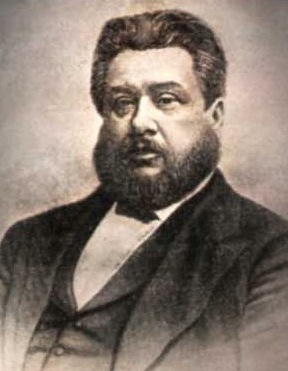
A Photograph of Two Great Christian Adulterers


I was trying to explain to someone the other day that a person's sin is no reason to discount their theology.

These two men were both great Christian thinkers and witnesses, and yes, there is substantial evidence that both of them had mistresses / cheated on their wives.

If only I could find a picture of these two with Fr. Karl Rahner (though apparently he was technically a fornicator, and his mistress was an adulteress), then we'd have all 3 of them.

The great other exception is of course St. Augustine, who had multiple concubines, once for over a decade.

Of course, we are not good, because of our righteousness, but because of Christ. After all, concerning the so-called "free" will, St. Augustine wrote:

"Behold what damage the disobedience of the will has inflicted on man's nature! Let him be permitted to pray that he may be healed! Why need he [Pelagius] presume so much on the capacity of his nature? It is wounded, hurt, damaged, destroyed. It is a true confession of its weakness, not a false defence of its capacity, that it stands in need of." - St. Augustine (On Nature and Grace, 62.)

And as the very traditional Catholic legend goes, the saints rejoice in Heaven over their sins, because they were opportunities for the abundance of God's grace to shine through.

Tuesday, November 22, 2011

Good Shepherd Iconography


Roman Catholic Jesus (The Good Shepherd)

My commentary here seems to be the way that Western Christian art de-masculinizes Jesus. Sometimes to the extreme. For instance, the Western mystics speak about Christ nursing them at times. (St. Bernard claimed to have nursed from the Blessed Virgin, but I'm not touching that issue). I sometimes enjoy these portrayals of Christ, and I think they were produced to show the approachability(?) of Christ, and his meekness. I like this image a lot, and after spending enough time in the RCC, I have come to identify with it's once foreign iconography and art. It's a very kind Jesus.


East Orthodox Jesus (The Good Shepherd)

There's no one quite like Orthodox Jesus. Half Putin, half Goliath. That sheep is being dragged with Him whether it likes it or not (paradoxically contradictory to the EO view of predestination, but I guess sometimes lex orandi lex credendi non est). Sometimes I feel like I'm looking at Vlad the Impaler, rather that our blessed Lord, but other times I'm impressed by the authority and power of Christ. This icon reminds me of his strong words: "[m]y sheep hear my voice, and I know them, and they follow me". If I heard this man shouting at me (with a heavy Russian accent?) I would certainly stop what I was doing, and listen.


Synthesis / Protestant(?) Jesus


This image is a nice rapproachment between the East & West. It's an image from a Lutheran church in my province. I won't say it's the best because of it's denominational affiliation, after all, it might've just been a public domain image that they slapped on their website. However, I think it does a good job of capturing the humanity of Christ (while keeping him masculine), and also the sheep over his shoulders is quite significant to me, and is more reminiscent of Lk 15:5 "when he hath found it, he layeth it on his shoulders, rejoicing."

Christ is my Good Shepherd, who leaves the 99 to find me, a wayward sheep, one which doesn't heed his voice, and wanders my own way, but whom the Lord graciously picks up and carries home himself.

Monday, September 28, 2009

St. Paul's Challenge for Today: Living by the Spirit

"Live by the Spirit, I say, and do not gratify the desires of the flesh. For what the flesh desires is opposed to the Spirit, and what the Spirit desires is opposed to the flesh; for these are opposed to each other, to prevent you from doing what you want. But if you are led by the Spirit, you are not subject to the law. Now the works of the flesh are obvious: fornication, impurity, licentiousness, idolatry, sorcery, enmities, strife, jealousy, anger, quarrels, dissensions, factions, envy, drunkenness, carousing, and things like these. I am warning you, as I warned you before: those who do such things will not inherit the kingdom of God." - Galatians 5:16-21 (NRSV)

We are called through our baptism to 'fight under the banner of Christ' (as Rowan Williams likes saying) against the world, the flesh, and the devil. The apostle actually outlines the 3 ways of living presented to us today.

1. The works of flesh: sin. I like that St. Paul is translated here "to prevent you from doing what you want". He knows the struggle against the flesh and that it is what we want.

2. The Law. God's moral precepts without grace and Christ's merit, without the work of the Spirit, basically to be left alone in Original Sin without the possibility of obedience.

3. The Spirit. The solution of St. Paul is life in the Spirit, against the flesh and the law. The freedom to follow Christ in loving God, and bearing one another's burdens. This the apostle calls "the torah of Christ" (Gal. 6:2)

and if that wasn't enough motivation St. Paul's call for imperfect contrition at the end still rings true:

If you do these, you will not inherit the kingdom.

Friday, September 18, 2009

Catholic Soteriology summed up fairly easily

on this website I found a typical summation of Catholic soteriology called "A Catholic understanding of how grace saves" : http://evangelical-catholicism.blogspot.com/2006/09/catholic-understanding-of-how-grace.html

It seems to still be suspect to my observation that this means that grace is just the ability to do good works and merit salvation, not the absolution of sins or forgiveness which the Reformers taught it was (and which I feel in my heart more partial to still).

To me the issue no Catholic theologians want to touch is sin in the believer. Luther said "when God saves a man he doesn't do it in heaps", and if this is his characterization of Catholicism, then it's kind of true. Catholicism doesn't call Concupiscence Sin and I think has failed to understand what every priest understands: that the average Christian, is a sinner with faith and repentance, not an intrinsically righteous transformed and angelic being.

Hopefully reading some St. Augustine, De Lubac, and Von Balthasar on this will clear some stuff up.

Wednesday, September 16, 2009

Grace and Faith in Catholicism

To clarify questions that some readers might have, I do believe in salvation by grace alone, but this is equivocation if understood in the way the Reformers viewed grace. Grace for Catholics is God's unmerited help or gift, it is like a movement or energy or work of the Holy Spirit in the soul of the individual. So grace is like the life of the soul and so Salvation is by grace alone.

Faith in Catholicism is not understood as the Reformers taught. Protestantism says that saving faith is fiducia, more accurately in English: trust. In Catholicism, faith is the assent of the will to the divine revelation of God. So at my Baptist baptism I had to say that I had a personal faith/trust in Jesus, but in my Roman Catholic Confirmation I had to say "I believe and profess all that the the Catholic Church believes, teaches, and proclaims to be revealed of God". Both are statements of faith, but very different.

This becomes relevant when you look at a verse like:

"Abraham believed God and it was creditted to him as righteousness"

Was Abraham justified because he trusted in God's character, or because he believed the promises of God to make him into a great nation.

The book I really want to read on this issue is Hans Urs Von Balthasar's "The Theology of Karl Barth" where he defends the Catholic view of Grace.

Wednesday, July 1, 2009

Newman : Sermon 2 - The Religion of the Pharisee

I was saying to an Evangelical Seminarian friend of mine that the prayer I pray every night has been either the Jesus Prayer (in English or Latin) or a modified version of it: 'Lord Jesus Christ, Son of the living God, have mercy on me, a sinful man'. This comes from the story of the Pharisee and the Tax Collector in St. Luke's account chapter 18, verse 3.

I read a sermon by the Venerable John Henry Cardinal Newman about it today : http://www.newmanreader.org/works/occasions/sermon2.html

It was an alright sermon, if you don't like Newman I wouldn't bother reading it.

His main message was that Paganism was the Same Religion of all mankind and that of the Pharisee. It was based on self-sufficiency and social rewards. He calls it 'religious in the worst sense of the word'. It is not a religion of repentance, but pride. He states that the "The Catholic saints alone confess sin, because the Catholic saints alone see God" and his argument is that because as Christians we see God, we know we can never reach his standard without resting wholly on his grace and mercy. Thus the prayer of the Christian is always for God's grace and mercy.

"...whether it be the thief on the cross, Magdalen at the feast, or St. Paul before his martyrdom:—not that one of them may not have, what another has not, but that one and all have nothing but what comes from Him, and are as nothing before Him, who is all in all.... Let us thank Him for all that He has done for us, for what He is doing by us; but let nothing that we know or that we can do, keep us from a personal, individual adoption of the great Apostle's words, "Christ Jesus came into this world to save sinners, of whom I am the chief." - John Henry Cardinal Newman 1856

I love Newman, he always focuses on God's grace, he's very Augustinian.

Thursday, April 2, 2009

Spurgeon: What I love about the Baptist Tradition

I was pretty discouraged with all this theology and at times like that I sometimes go to this book I really enjoyed "Spurgeon v. Hyper-Calvinism: The Battle for Gospel Preaching" by Iain H. Murray. I find Spurgeon normally kind of boring because he has gems of wisdom within long sermons, but this book takes all of those gems and puts them together so that you cut through the slag.

I love Spurgeon, that's why I still like the Baptist tradition, and I still think infant baptism has got to be one of the biggest malignings of the gospel as well (but Tradition/Augustine/Church Fathers are allowed to malign the gospel I guess in non-Baptist traditions - including my own). Anyway, here's some wonderful quotes:

"Man must not look to himself to find reasons for God's grace...Trust nothing of your own, not even your own sense of need...Sinners, let me address you with words of life; Jesus wants nothing from you, nothing whatsoever, nothing done, nothing felt; he gives both work and feeling. Ragged, penniless, just as you are, lost, forsaken, desolate, with no good feelings, and no good hopes, still Jesus comes to you, and in these words of pity he addresses you, "Him that cometh unto me I will in no wise cast out"..."Him that cometh to me:"...the man may have been guilty of an atrocious sin, too black for mention; but if he comes to Christ he shall not be cast out. He may have made himself as black as night - as black as hell...I cannot tell what kind of persons may have come into this Hall to-night; but if burglars, murderers, and dynamite-men were here, I would still bid them come to Christ, for he will not cast them out. No limit is set to the extent of sin: any "him" in all the world - any blaspheming, devilish "him" that comes to Christ shall be welcomed. I use strong words that I may open the gate of mercy. Any "him" that comes to Christ - though he come from slum or taproom, betting ring or gambling-hell, prison or brothel - Jesus will in no wise cast out." - Charles H. Spurgeon in "Spurgeon v. Hypercalvinism" p. 78, 79

"Beloved, there is nothing that so delights Jesus Christ as to save sinners... You misjudge him if you think he wants to be argued with and persuaded to have mercy; he gives it as freely as the sun pours forth light...Paul had no stinted Saviour to present to a few, no narrow-hearted Christ to be the head of a clique, but he preached a great Saviour to great masses, a great Saviour to great sinners..." Spurgeon p. 93

"you cannot help it; if you are the people of God you must commune with all saints, baptized or not. You may deny them the outward and visible sign, but you cannot keep them from the inward spiritual grace...If a man be a child of God, I do not care what I may think about him - if he be a child of God I do commune with him and I must" - Spurgeon p. 110

"We give our hand to every man that loves the Lord Jesus Christ, be he what he may or who he may. The doctrine of election, like the great act of election itself, is intended to divide, not between Israel and Israel, but between Israel and the Egyptians, - not between saint and saint, but between saints and the children of the world. A man may be evidently of God's chosen family, and yet though elected, may not believe in the doctrine of election. I hold there are many savingly called, who do not believe in effectual calling, and that there are a great many who persevere to the end, who do not believe the doctrine of final perseverance. We do hope that the hearts of many are a great deal better than their heads. We do not set their fallacies down to any wilful opposition to the truth as it is in Jesus, but simply to an error in their judgments, which we pray God to correct. We hope that if they think us mistaken too, they will reciprocate the same Christian courtesy; and when we meet around the cross, we shall ever feel that we are one in Christ Jesus." Spurgeon p. 112

"True peace puts an end to all spiritual monopoly. I know there are some who think there is no grace beyond their own church...not unlike those ancient wranglers in the land of Uz, they say, "We are the men and wisdom will die with us." ...You may have sound doctrine and yet do nothing unless you have Christ in your spirit. I have known all the doctrines of grace to be unmistakably preached, and yet there have been no conversions" p. 113

Spurgeon mocked hyper-calvinists saying they believed "they cannot be saved till they are thorough theologians" p. 115. Well I love Spurgeon, I have even more quotes, as I read him even though as a Catholic he would've either beat me to death with his KJV bible or just screamed and pointed "reprobate" at least within Protestantism he advocated this kind of a view. I hope that maybe someday someone will come to advocate a view this open and grace-filled, if they ever did I don't care what denomination they were in, I'd join that church...

Wednesday, April 1, 2009

A Temporary Lapse into Reformed Theology lol

"ultimately, since God is sovereign, salvation must depend solely upon His sovereign choice." - Presbyterian Website.

Now you wouldn't think that when a Baptist friend sent me a message at 3am concerned about his salvation that I would speak almost the exact same words to him, as a Roman Catholic. But I did. He was worried about whether baptism saved you or not because he encountered the sinister "Church of Christ" denomination account of regenerative baptism (as an aside, they really should get a new name, that's like calling your denomination "The Real Church").

I tried to explain that I thought it was necessary for you to be baptized but that both my brothers aren't -strangely the baptists I know go around calling baptism a meaningless ritual...maybe they should change the name to "The Church Formerly known as Baptists", anyway, he was worried and I showed him all the verses about Baptism for salvation (Jn 3:5, Mk 16.16, Acts 2.39, Gal 3.27, 1 Pet 3:21, etc) but being a smart kid he started talking about "baptism of the Holy Spirit" - I wanted to shout DAMN YOU CALVIN!!@#@. but I didn't .... strangely I did the opposite and started talking to him about what it means to be saved, and why he shouldn't be worried. I said something like "Ultimately it doesn't matter whether you're baptized or not, Salvation is God's free sovereign choice, it's his house, he decides who to let in (Mark Driscoll said that)" - I shocked myself - A papist pretty much quoting the WCF, it must've been because it was 3am.

The thing is, I -like St. Thomas Aquinas- believe in predestination, God's sovereignty, and while I believe people can choose, God already knows who's "in" and who is "out" and I don't think he arbitrarily elects some for 30 years and then unelects them, which is a strange thing Aquinas taught.

But here's where I think this latent Reformedness comes from for me. I was reading parts of Fr. Louis Bouyer's thoughts on Sola Gratia in "The Spirit and Forms of Protestantism" and he goes on and on about the "gratuitousness of salvation" (which is now one of my favourite phrases) and the fact that salvation is a free gift which is unmerited, etc. So I was just linking the two doctrines I guess.

I had a 2 hour argument with my Dad about justification on Saturday (again) and he just doesn't understand how a Catholic who believes works are a fundamental part of salvation can have any assurance or trust in God, because they're "buying their way into Heaven" (a concept Kreeft decimates). I don't think my salvation has anything to do with me, just because my justification is intrinsic - within me - doesn't mean it's within my power. It's "God working in you" (Php 2:13).

I guess the thing I have in common with Calvin - probably the reason I like him as much as I still do - is that I believe the question of Salvation is a question of God's character. I have a friend named Dan and if I was in prison or in trouble he'd come and bail me out or help me. Dan is just a finite human, and I can trust him for my temporal salvation in situations. God on the other hand is "mighty to save", he has "loved me with an everlasting love", he is the one who saved me while I was yet a sinner (Rm 5:8) and I have full faith that he will save me in the end. For St. Paul says:

"And those whom he predestined he also called; and those whom he called he also justified; and those whom he justified he also glorified." (Romans 8:30 - also note the word Sanctified which Calvin championed in his distinction isn't even present).

and finally I will quote the great catholic council of Orange which as a Catholic I adhere to:

"[W]e are obliged, in the mercy of God, to preach and believe that, through sin of the first man, the free will is so weakened and warped, that no one thereafter can either love God as he ought, or believe in God, or do good for the sake of God, unless moved, previously, by the grace of the divine mercy . . . . Our salvation requires that we assert and believe that, in every good work we do, it is not we who have the initiative, aided, subsequently, by the mercy of God, but that he begins by inspiring faith and love towards him, without any prior merit of ours."

I guess that's what I was saying to my friend, that God will save him, because God has chosen him, and elected him. But that still sounds like a lapse into Reformed theology heh.

Sunday, September 28, 2008

Christ's Superabundant Cross

I'm currently reading through 1 Corinthians and the other day I read this verse:

"For no one can lay any foundation other than the one that has been laid;
that foundation is Jesus Christ." - 1 Corinthians 3:11

St. Thomas Aquinas describes Christ's sacrifice on the cross as superabundant, it's like the famous evangelical worship song lyrics 'All of you, is more than enough for all of me, for every thirst and every need, you satisfy me with your love, and all I have in you, is more than enough'.

This morning I was thinking about the motto of Notre Dame University, crux spes unica 'the cross is our only hope'. It was then that I learned this is from an ancient latin hymn called "Vexilla Regis" dating back to 6th century Rome written by the Bishop of Poiters. (now aside from a debate about St. Helen and the True Cross, I want to include a portion of a translation of it)

Vexilla Regis

"Abroad the regal banners fly,
now shines the Cross's mystery:
upon it Life did death endure,
and yet by death did life procure.

Who, wounded with a direful spear,
did purposely to wash us clear
from stain of sin, pour out a flood
of precious water mixed with blood.
...

Blest Tree, whose happy branches bore
the wealth that did the world restore;
the beam that did that Body weigh
which raised up Hell's expected prey.

Hail Holy Cross, our only hope!
Now, in the mournful Passion time;
grant to the just increase of grace,
and every sinner's crimes efface.

Blest Trinity, salvation's spring
may every soul Thy praises sing;
to those Thou grantest conquest by
the Holy Cross, rewards supply. Amen."

This hymn reminded me of another hymn I heard the other day, which I am not trying to commit to memory. It was written by Annie Johnston Flynt who was extremely sick and frail for most of her life, and wrote this wonderful hymn in spite of everything she endured:

He Giveth More Grace

He giveth more grace as our burdens grow greater,
He sendeth more strength as our labors increase;
To added afflictions He addeth His mercy,
To multiplied trials He multiplies peace.

When we have exhausted our store of endurance,
When our strength has failed ere the day is half done,
When we reach the end of our hoarded resources
Our Father’s full giving is only begun.

Fear not that thy need shall exceed His provision,
Our God ever yearns His resources to share;
Lean hard on the arm everlasting, availing;
The Father both thee and thy load will upbear.

His love has no limits, His grace has no measure,
His power no boundary known unto men;
For out of His infinite riches in Jesus
He giveth, and giveth, and giveth again."

May you find hope in the glorius Cross of Our Lord, who provided more than enough grace for everyone to be washed of their sins in. May Grace lift us up, help us stand, and lead us on the path to Heaven. Praise to you Lord Jesus Christ

Tuesday, September 23, 2008

Luther and the Refuge of God

Hey folks, this is kind of a personal post, I'm really struggling in my own spiritual life and things are incredibly busy so I can't really post alot, but I read this the other day which I think is absolutely beautiful, even a Catholic - I think - could respect this particular passage, and I think Luther wrote many great works out of his love for God that both sides of the Tiber should revere. I also included a few other quotes that have helped me lately.


"Faith is a divine work in us, which transforms us, gives us a new birth out of God (John 1:13), slays the old Adam, makes us altogether different men in heart, affection, mind, and all powers, and brings with it the Holy Spirit. Oh, it is a living, energetic, active, mighty thing, this faith! It cannot but do good unceasingly. There is no question asked whether good works are to be done, but before the question is asked the works have been done, and there is a continuous doing of them. But any person not doing such works is without faith. He is groping in the dark, looking for faith and good works, and knows neither what faith is nor what good works are, although he indulges in a lot of twaddle and nonsense concerning faith and good works. Faith is a living, daring confidence in the grace of God, of such assurance that it would risk a thousand deaths. This confidence and knowledge of divine grace makes a person happy, bold, and full of gladness
in his relation to God and all creatures. The Holy Spirit is doing this in the believer. Hence it is that a person, without constraint, becomes willing and enthusiastic to do good to everybody, to serve everybody, to suffer all manner of afflictions, from love of God and to the praise of Him who has extended such grace to him. Accordingly, it is impossible to separate works from faith, just as impossible as it is to separate the power to burn and shine from fire. Accordingly, beware of your own false thoughts and of idle talkers, who pretend great wisdom for discerning faith and good works and yet are the greatest fools. Pray God that He may create faith in you; otherwise you will be without faith forever and aye, no matter what you may plan and do" - Martin Luther preface to Romans Commentary

"God is our refuge and strength, an ever-present help in trouble. Therefore we will not fear, though the earth give way...The LORD Almighty is with us; the God of Jacob is our fortress." - Psalm 46:1-2, 11

"Lord, you have been our refuge in all generations."- Psalm 90:1

"All that the Father giveth me shall come to me; and him that cometh to me I will in no wise cast out." - John 6:37 KJV

"A mighty fortress is our God, a bulwark never failing; our helper he amid the flood of mortal ills prevaling." - Martin Luther

"Fire. God of Abraham, God of Isaac, God of Jacob, not of the philosophers and the scholars...I will not forget thy Word" - Blaise Pascal after a near death experience

Tuesday, September 16, 2008

Jansenism Pt. 2 and Emphasis in Theology

Emphasis is important in theology. A church can believe in a doctrine but not emphasize it over a period of time. An example is 'sola gratia' - grace alone. Dr. R.C. Sproul is a very honest Reformed theologian and he says in his book "Faith Alone" that the Catholic Church has always fought to maintain that salvation is by the grace of God alone (though obviously not by faith alone, hence the Reformation). Louis Bouyer writes that if the Church focussed more on Grace Alone during the time of the Reformation, it is probable that the issues would have been settled. This is quite a claim of course, and easily debatable, but the general principle is that emphasis matters.


Jansenism is intriguing to me because I like it's emphasis, in only a few ways does it contradict Church teaching (possibly teaching limited atonement, and irresistible grace), but it places great emphasis on Election and the sovereign grace of God and faith in the work of Christ. It never denies that works justify or the nature of the communion or anything else like that (from the little of what I've read), but it does emphasize what I think at least is the 'best' of Protestantism and Catholicism.


Jansen himself wrote that if his doctrines were offensive to the Church that they should of course be disposed of and that he wished to be faithful to the Church, and I believe that is the point. The point is that emphasis needs to be reformed at times or shifted depending on the situation. Baptists for example believe in an eternally Hell for all believers which they will be conscious during, but I've never heard a sermon on it, because it's just alluded to briefly or like an 'unwritten law' that it exists. Thus if their churches start to doubt Hell, they should emphasize it.


Thus while I am not a Jansenist because it has been declared heretical, I definately agree with the emphasis and that the good parts of it's theology should be emphasized more. I don't know why people think Election is such a horrific doctrine, St. Paul, St. Augustine, St. Thomas Aquinas, and alot of others are in agreement that it is a beautiful thing. Active reprobation...is another story.

Monday, September 15, 2008

Jansenism Pt 1

I've realized that I like 2 systems of Theology greatly and agree with them. The systems are Catholicism and Calvinism. The problem is that they are contradictory. Blaise Pascal always seemed like a great man and I am reading Pensees right now, so I wikipedia'd him. As I read descriptions of his theology I realized I really agreed with alot of it. It was a form of Catholicism that didn't teach the Semi-Pelagian error of Trent to believe in Resistable Grace.

It seems very good as it blends alot of the truth about the fall, the gospel, predestination, and grace together and presents a truly Augustinian theology. I am planning on reading alot more of it.

Wikipedia says it well here:

"Jansen also insisted on justification by faith, although he did not contest the necessity of revering saints, of confession, and of frequent Communion. Jansen’s opponents (mainly Jesuits) condemned his teachings for their alleged similarities to Calvinism (though, unlike Calvinism, Jansen rejected the doctrine of assurance and taught that even the saved could not be assured that they were saved). Blaise Pascal's Ecrits sur la Grâce, based on what Michel Serres has called his "anamorphotic method," attempted to conciliate the contradictory positions of Molinists and Calvinists by stating that both were partially right: Molinists, who claimed God's choice concerning a person's sin and salvation was a posteriori and contingent, while Calvinists claimed that it was a priori and necessary. Pascal himself claimed that Molinists were correct concerning the state of humanity before the Fall, while Calvinists were correct regarding the state of humanity after the Fall.

The heresy of Jansenism, meaning here its denial of Catholic doctrine, is that it denies the role of free will in the acceptance and use of grace -- that God's role in the infusion of grace is such that it cannot be resisted and does not require human assent. The Catholic teaching is that "God's free initiative demands man's free response" (CCC 2002) [3] that is the gift of grace can be resisted and requires human assent."

Even if one is not allowed to believe in Irresistible Grace and be a Catholic, at least this shows me you can still believe in Total Depravity and Unconditional Election. Augustinian Thomism still offers some hope for me yet.

Monday, September 8, 2008

Sola Gratia - Charles Spurgeon

“. . .If you take away the grace of God from the gospel you have extracted from it its very life-blood, and there is nothing left worth preaching, worth believing, or worth contending for. Grace is the soul of the gospel: without it the gospel is dead. Grace is the music of the gospel: without it the gospel is silent as to all comfort. I endeavoured also to set forth the doctrine of grace in brief terms, teaching that God deals with sinful men upon the footing of pure mercy: finding them guilty and condemned, he gives free pardons, altogether irrespective of past character, or of any good works which may be foreseen. Moved only by pity he devises a plan for their rescue from sin and its consequences—a plan in which grace is the leading feature. Out of free favour he has provided, in the death of his dear Son, an atonement by means of which his mercy can be justly bestowed. He accepts all those who place their trust in this atonement, selecting faith as the way of salvation, that it may be all of grace. In this he acts, from a motive found within himself, and not because of any reason found in the sinner’s conduct, past, present, or future. I tried to show that this grace of God flows towards the sinner from of old, and begins its operations upon him when there is nothing good in him: it works in him that which is good and acceptable, and continues so to work in him till the deed of grace is complete, and the believer is received up into the glory for which he is made meet. Grace commences to save, and it perseveres till all is done. From first to last, from the “A” to the “Z” of the heavenly alphabet, everything in salvation is of grace, and grace alone; all is of free favour, nothing of merit.” – Charles Spurgeon

Sunday, September 7, 2008

Honest To God - Part 1 - The Gospel

The very controversial book by an Anglican bishop titled 'Honest to God' was the work of famous (or rather infamous) liberal theology and a general attack at Traditional Christian Theology. I'm not going liberal (though I do like the Quakers), but I decided that instead of constantly publishing polemics, this series is going to go in favor of a more personal approach to theology. Rather than entrenching myself within Catholicism or Protestantism, I'll just state my beliefs about things from my limited reading of Tradition/Church Fathers, Scripture, Logic, and Personal Experience (Wesleyan quadrilateral is my favourite approach to Christianity).

I'm hoping to cover 3 topics:

1. The Gospel
2. The Holy Spirit
3. The Sacraments

*note: Today I signed up for RCIA at the Catholic Cathedral in town, so please don't guilt trip me about not being Catholic enough, I'm following through with it. Thus my Catholic Ecclesiology has beat my Protestant Soteriology, and Church Tradition/History has beat Scripture.

Man:
"Man is nothing but a subject so naturally full of error that it can only be eradicated through grace." -Blaise Pascal

I've heard alot of arguments on the subject, I think in the end that St. Augustine, and John Calvin are correct in their assessment. I believe that the unregenerate man can neither do good, nor even think it, as the Bondage and Liberation of the Will says. I think mankind only has the free choice to choose between sin and sin.

Christ:
I believe that at the culmination of the ages, Christ came as the God-Man to reconcile the world to God and redeem those the father had given him. I believe as Scripture says that Christ died for all, and his message should be addressed to all people, yet at the same time his sacrifice was only efficient for some. I've been influenced alot by reading "Spurgeon v. Hyper-Calvinism" by Iain Murray, in understanding the balance and historic Calvinism.

I don't know about the saints or mother teresa or others, but in my own personal opinion and in contradiction to the teaching of my church, I believe that I have nothing to offer God, and that as a begger I come to the Lord, unconditionally elected, and saved solely by his grace alone. Even my repentence is done in selfishness and fear of Hell, but trusting Christ, I believe he will lead me to Heaven.

I read this verse today which comforted me greatly "I am the good shepherd. I know my own and my own know me" -John 10:14

Calvinism:
For those of you who know theology, you'll realize I basically have a completely Reformed/Calvinistic view of Salvation (Soteriology), you are right in saying that. I just don't know how to explain the Gospel in Catholic terms, the Reformed/Augustinian way is the only way I understand.

Whenever I explain the gospel in Catholicism, I can usually convince people - it's almost the same gospel as Methodism/Wesleyan/Arminianism - but for me on a completely individual and personal level the Gospel of the Church Fathers and of the Catholic Church is terrible news. It's a requirement I could never live up to (perfection), and it makes Christ more of a legalist than a lover. The Early Church (2nd century) even taught that if you sinned after baptism you could not be forgiven, as J.N.D. Kelly points out. But I think I'll be a sinner my whole life. Simul Iust et Pecatur or something like that right?

I hope against hope that Christ loves me unconditionally and not based on my own merits or acheivements. These are the things that God has revealed to me personally in my life, as I said, I cannot provide logically indefensible proof for why I believe them, and I am branded a heretic for believing them in the Communion of Rome, please don't remind me, I KNOW.

Conclusion:
I am still becoming a Roman Catholic, but this kind of message or Gospel -whether or not it is 'another gospel' (Gal 1:8) - will always bring tears to my eyes. If God took me back in time and gave me one request, one thing I could make to be true, it would be salvation by grace alone, through faith alone, because of Christ alone. But as I said, I don't 'really' believe it, and see tons of problems with it, etc. But again this is just at a personal level.

I really wish I was " justified by his grace as a gift, through the redemption that is in Christ Jesus, whom God put forward as a sacrifice of atonement by his blood, effective through faith" - Romans 3:24-25

Friday, July 25, 2008

The Gift of God - Covenent, Salvation and Christology

I have been struggling with the age old issue that seperates Protestants and Catholics: What place do works have in salvation? I find that there are 3 key texts for understanding this (in my pathetic opinion) James 2, Ephesians 2, and Matthew 25.

I've already done James 2, and I must say that Catholics win some ground in that it does *sound like a refutation of Sola Fide, although Calvin and Jared compose a good counter-argument. The main problem is the fact that if they are right (Catholics), how on earth do faiths retain our justification. That's when we step from the biblical to the traditional, suddenly we find a phrase like 'retain our justification' and then we fall into this weird sphere which leaves us with a God who cares more about physical actions then the position of the heart, in essence a pharisaical (is that a word?) legalism, which many Catholic complain to me about (actually only 3 but still). On the other side, we have of course the free-grace-r's, whom Bonhoeffer dismisses quite effectively as well in his chapter on "Cheap Grace".

I read through the other 2 passages today and here are my thoughts and conclusions - at least for now, which shockingly place me in the sphere of Protestantism, something I haven't seen in a while. It appears I might be reshaking Luther's hand again, before all is said and done.

Ephesians 1-2.
I've been trying REALLY hard not to read my bible in the way I was taught as a reformed baptist, and been actively trying to make my bible sound like Catholicism, I have of course a strange Wesleyan-Orthodox theology, and so reading Ephesians 1 - the Calvinist gospel, yielded an interesting result for me.

Now, I go with the Arminians in that when I read Ephesians 1 and everything about predestination I see St. Paul discussing more of a category, rather than individuals. I think he's discussing the church as a whole, the new covenant group, and that God somehow has pre-destined (for a God outside time and space, I don't see how foreknowledge without predestination is possible) the church. So, it says in v4 that we are chosen to be "Holy and Blameless" meaning sanctification. In these chapters St. Paul contrasts the 'others', the pagans, those ignorant of Christ, and the Elect. Those whom God chose to reveal Christ to. Those in the new covenant. So he sealed them with the Holy Spirit and these are God's people.

He keeps saying though things like 'heard the word of truth, the gospel of your salvation' and that the people 'believed in him'. Very Protestant (i'm not honestly saying St. Paul was protestant or Catholic, I'm just saying it is points on their side. He seems to be saying that the formula is: 1. you were bad, 2. luckily God predestined you to be holy, 3. (because) you heard the gospel and believed. Paul always talks about faith and grace in these chapters and rejects the notion that the people of God/the church/believers really had anything to do with it. He is saying (in my opinion) that Christ achieved it all.

Riches is another key theme, it is that when Christ came and died he 'drew men unto himself' (Jn 6:44) and that they could become 'in Him' and 'in Christ'. The amazing thing to me is the pattern, it is that CHRIST earned it, NOT us. There can be no merit. The Catholic position is the opposite in some ways, in that they believe in salvation by grace, but that we can still merit our salvation. As St. Thomas Aquinas states:

"Man, by his natural endowments, cannot produce meritorious works
proportionate to everlasting life; and for this a higher force is needed, viz.
the force of grace. And thus without grace man cannot merit everlasting life"
(St. Thomas Aquinas ST I-II:109:5)

However in Ephesians 3:13-14 it says "in Christ Jesus you who once were far off have been brought near by the blood of Christ. For he himself is our peace, who has made us both one and has broken down in his flesh the dividing wall of hostility" (ESV). This is of course Christology, talking about how the blood of Christ brings unity between the believers. But I am always amazed at how throughout the letter the theme is always - Christ achieves eternal life, he distributes grace, and in his crucifixion he has bought all of the elect, they HAVE BEEN saved, in the Past tense. Somehow, mysteriously Christ bought the salvation of St. Thomas Aquinas, over 1000 years before he was born, because he was one of the elect, he 'believed God and it was credited to him as righteousness'.

It says in Chapter 2:4 "even when we were dead in our trespasses, made us alive together with Christ - by grace you have been saved" (ESV). It is a reoccuring theme that Christ has made us alive, not us. How do we know those who have been made alive? they have heard the gospel, they believe, they are being made holy. Again St. Paul hammers it out 'by grace you have been saved through faith and this is not your own doing; it is the gift of God, not a result of works, so that no one may boast.' It seems clear to me that the case is closed for Paul, salvation is seperate from holiness, from works, from boasting.

Now I know Catholics will argue 2 things here. 1. Works means - works of the law of moses, etc. blah blah N.T. Wright, 2nd temple judaism, blah. I know. I've heard it. However, if the ESV was translated properly (I have no clue if it is), it says 'not your own doing', rather than Works/works of the law of moses. 2. This is talking about 'initial justification' blah blah Lutheran-Catholic joint declaration on Justification blah. I know. I've heard it. However, Paul doesn't seem to understand Trentine Catholicism, in that he says in v.6 "and raised us up with him and seated us with him in the heavenly places in Christ". It goes straight from justification by grace, to glorification, theosis etc. This left my Catholic-side screaming: 'For the love of God Paul, don't you know about meritous good works! don't you know about Purgatory and indulgences! don't you know that you are one of the greatest of the saints, and that if you look at yourself in the mirror and say a hail mary you will earn 1000 years out of purgatory because of the merits of ... well you and the saints'. I realize this is one passage, but still, if you were in Ephesus, this was all the church really knew outside the basic life of Jesus, and the OT. It seemed enough for them.

Good Lord, I seem like a Calvinist. Ephesians 1 will do it to all of us... 'he desireth that all men might be saved' come on Andrew, remember 'sins of the world-not sins of the elect' ... just repeat it over and over again.... There we go, Wesleyan once more. Moving on.

Now the other thing is, I didn't discuss Chp 2:10, in typical Protestant style. "For we are his workmanship, created in Christ Jesus for good works, which God prepared beforehand, that we should walk in them." But again, this says nothing about Salvation, it only seems to me to be pointing to proof of justification, proof of election, proof that you are in God's covenant. There is my protestant reading of Ephesians 1-2, may God have mercy on my soul, I defy the position of the church.

I was always guilted by Catholics and Orthodox who would say that if this IS the gospel, if this is the message, why did no one preach it throughout church history until Martin Luther in the 16th century. Why? How could the Gospel be lost. That is why I bought into Catholic interpretation, because it is a good argument. However when I honestly look at the text and at the life of Protestant and Catholic churches in my city and elsewhere, I have to embarrassingly say along with Luther that I really do think this is the gospel. I really do think that Christ lived, died, and rose to save us, to make dead people alive, not to empower us to be better, not to gain victory and then make us gain victory ourselves, not to make bad people pull themselves up. I think the fundamental premise is that they can't, ever. And even Christ's victory over death still has each Christian die. And even his victory over sin can't in this life free us from sin. I think it's a noble ideal, that we somehow become like Christ and merit our salvation. However, I can't do it. Me, personally, I can't be that way. Only Christ can I think, I will always be the same selfish fat bastard. But Christ is so much more, and when I give up everything and let Christ work through me, when I admit that I am rubbish, and give up my hope that I can save myself, then God changes me. I have to much faillure to be triumphalistic. My good works were predestined by God, and they don't merit anything other than thanksgiving to Him.

Matthew 25.
If Ephesians 1 was the Calvinist Gospel, then Matthew 25 is the social gospel. Now the idea of Covenant is still something I don't truly understand, but here is my underdeveloped view of it. Belief, faith, baptism, communion, are all things we do to enter into the covenant, but the key is really submission to Christ and trust in his ability to save us. Now the thing I never noticed before is that at the beginning Christ seperates the sheep and the goats, sheep on the right. Sheep on the right. Christ = The Good Shepherd (Ez.34, Jn.10), believers = Sheep, those in his covenant, those who believe, those who are saved. And on the left he seperates the goats, goat typically associated with Satan. As 1 John tells us, all who sin are children of the devil, which means, everyone except Christians and the Blessed Virgin Mary (Gen 3:15 + 1Jn3:8 = sinless Mary) are goats/children of the devil.

Now I was always taught that those who looked after the poor, who did everything 'for the least of these', were the ones who go to Heaven, and the others who neglected the poor, hungry, and naked, were the ones who went to Hell. HOWEVER, it says that to the ones on the right that they served him well, that they did the work of Christ, but they are judged TOGETHER, or Corporately. The Church itself is judged as Righteous on Judgement day, not the individul. Those outside the Church who do not share in it's corporate blessings, those who have not stayed in Christ, are the ones who are judged to go to "eternal punishment".

Thus, my believe is that we must stay "in Christ". I've always said that Predestination doesn't honestly matter, because if we are predestined not to believe in predestination, there's no changing our minds anyway. I am thinking that St. Paul's theme the more and more I read and re-read, is that we must be "In Christ" and those the people who are saved and will be made holy through sanctification, and that it is by grace, through faith, the good gift, salvation, the gift of God.

Friday, July 4, 2008

The God Who Stoops

I was once taught by a wise man that in Greek, grace meant to stoop in compassion and be willing to help. I remember reading the words in St. Luke's gospel which describe Jesus. There were 2 adjectives that he found after all his investigation, which described Jesus. "Grace & Truth". The painful part is the truth, it's the part that no one wants to hear, it's the part about everyone being on the ground. Before you can realize the beauty of a God who stoops to our level in compassion, you have to recognize that you're the one in need of help.

I had a bunch of my close friends from Bible School at my house last week, it was amazing how much we loved each other and respected each other, and yet how I'm sure if you asked each one of us, we would have been ashamed of many of our choices since Bible school. We would have many regrets (at least I do) but in spite of all that and the possibility that we knew the truth about each other's secret faillures, we still had grace and love for each other. I'm reminded by my friend Jenn quoting Oscar Wilde I believe, who said 'the best view of the stars is while laying in the gutter', or something to that extent. That kind of grace from my friends makes me remember why the gospel is so important.

In my lecture notes it says "nothing surpasses the gospel in relevance or urgency". Those words seem colloquial in Christianity, but more and more I think it is true. Jaroslav Pelikan once said "If Christ is raised, nothing else matters, if Christ is not raised, nothing else matters". I thought about that statement for probably longer than a healthy time, trying to figure out all that was being said. I think it means that if the gospel is true, and that Christ stands victorious over death and all else, then everything else is subordinate to the ultimate importance of that truth. And likewise, if the gospel is a lie, then life itself has no inherent meaning. The resurrection really is the proof of everything. It's such a beautiful picture, that God himself has walked through our path the first time in the person of Christ. He showed us our victory over death, and he walked every step of the journey. In the deepest part of my soul I want to be able to walk that path. I think my faith needs to be renewed in his grace, I need to believe in the God who stoops, the gracious God.

There's a prayer in the Rosary I prayed tonight, it's at the end of one version of the 'Hail, Holy Queen' and the line is "Pray for us, O holy Mother of God, that we may be made worthy of the promises of Christ." I don't know whether we are imputed Christ's righteousness, or whether we are infused with it, but in the everyday part of my life, this is my earnest prayer. That I might be made worthy of the promises of Christ. I think of those promises off the top of my head which seem so unreal, but so amazing, John 8:12 "I am the light of the world, whoever follows me will never walk in darkness but shall have the light of life". "I am the resurrection and the life, he who believes in me, though he die, will yet live". I love the verse that describes Abraham as a friend of God, I always talk about it with people and about at the end of Deuteronomy when it says that no one has ever known the Lord like Moses who spoke with God face to face. I want to be made worthy of the promises of Christ, and I think if I can - or rather if God can (for the Monergists in the crowd), then nothing else will matter... as Dr. Pelikan pointed out earlier.

Friday, June 27, 2008

Saved by Grace? Augustinian Problems

Systems are amazing. Systems make everyone organized and make sense of complex things. There is a system that is very prevalent and historic within Christianity it is called Augustinianism, and while I think it is possibly the best system for Christianity I believe that in my short life I have seen no proof of it outside the first few principles.

St. Augustine the doctor of Grace is one of my favourite authors - he may one day be my patron - who knows? He's the man who brought you the following ideas without you probably knowing it: Original Sin, Irresistible Grace, Eternality of Hell, Damnation of Unbaptized babies, Augustinian view of good works vs. Pelagian view, and sat on the Council of Carthage which helped decide the canon of scripture (which included the Apocrypha).

He's the man who said "Grace alone conquers sin" (and the lesser known 'I would not believe Scripture unless the church told me to').

His system is as such in my limited understanding - forgive my simplicity.
1. Man is Bad and unable to do good works
2. God enables man with Grace to cooperate with him
3. Man cooperates with God and is Sanctified/Justified/Regenerated

The end.

I've come to agree with St. Augustine on #1, but here's my problem, in Calivinsm, Augustinianism, and many other isms, the same pattern is shown, where ultimately long story short, bad person becomes good person by the grace of God.

Now of course in Lutheranism the bad person can stay bad and be saved, whereas for the Catholic, change must occur. But here's the problem. No one changes. I started out as a bad person, became a Christian, did some good stuff, did lots of bad stuff, and now live a fairly self-centred life. I'm 'trying' to do better, but the whole system says that I am unable to do better, only God can give me the grace to get better, well I've been waiting to cooperate, but I don't feel this lightning bolt of grace.

Irresistible grace is an even more confusing thing. In Calvinism I would just be zapped with Irresistible Grace and then I would be like a Jesus Robot until the energy of the Grace Lightning wore off. Or if I was one of the Reprobate it would just be lightning I guess, and I would burn, thus somehow making God feel better about himself? I'm still working that one out.

In daily life I find though, just alot of bad people. I mean I love people but everyone constantly sins. Even people I respect are probably just as bad as I am if I went into their daily lives. So where are the saints? where are the people who actually changed, who actually made it through the process of baptism, justification, regeneration, sanctification etc.... I don't know any of them. I just know people are bad, and sometimes God helps them to be better, but in the end they still aren't amazing, and usually not that much better than non-believers.

So once again the system sounds great, but I don't see it working.

This is why Lutheranism appeals to me, because with Extrinsic Justification (salvation outside ourselves) Christ won the victory. His merits are applied to us, and though we are bad, God sees us as good. As Old Marty said "At the same time I am both a great sinner and a great saint". No real change occurs - which is what I see in life.

Aside from scriptural problems and historical theology problems (aka. Luther being the first one to think it up), it sounds amazing. Tolkien called Catholicism 'the tale all men wish to be true' but I call Lutheranism/The alien righteousness of Christ 'the tale all men wish to be true'. I read Calvin's stuff on being Clothed in Righteousness and it's beautiful. As I said, I can't find it in church history, or in the Church Fathers and Creeds etc, and even have difficulty explaining all those other passages like Matthew 25 and James 2, but still, it's a great story. If it is true, praise Jesus, and if it isn't then it is still the most beautiful image I could think of.

Bono once said in an interview with Bill Hybels 'I believe in Grace, because I'm counting on it (to get to Heaven)', and I must say I echo his concern. It's 2 different views of grace, but all I know is I'm a bad person and I always will be, and I hope I have Christ's grace. But if it's this substance that Calvin describes, I'm screwed because I don't get zapped and suddenly feel overwhelmed to help my fellow man. Likewise if Catholicism is right and it's distributed via the sacraments, then none of the Catholics I know have been getting the right bread/Jesus because they live worse than I do. So where is the grace? where is the life change? I don't see it anywhere. So the only thing that seems logical is to believe it is outside ourselves - as Luther posited.

Tuesday, March 11, 2008

St. Augustine Refutes Faith Alone

In all of my investigation into Catholicism I don't know if I can believe in Sola Fide or Justification by Faith Alone anymore. It is a constant battle, and Martin Luther said that his religion would be based on Scriptures AND Augustine, so look what St. Augustine says:

"On Grace and Freewill" Ch.18
"Unintelligent persons, however, with regard to the apostle's statement: "We conclude that a man is justified by faith without the works of the law," (Rom 3:28) have thought him to mean that faith suffices to a man, even if he lead a bad life, and has no good works. Impossible is it that such a character should be deemed "a vessel of election" by the apostle, who, after declaring that " in Christ Jesus neither circumcision avails anything, nor uncircumcision," (Gal 5:6) adds at once, "but faith which works by love." It is such faith which severs God's faithful from unclean demons,—for even these "believe and tremble," (Jms 2:19) as the Apostle James says; but they do not do well. Therefore they possess not the faith by which the just man lives,—the faith which works by love in such wise, that God recompenses it according to its works with eternal life. But inasmuch as we have even our good works from God, from whom likewise comes our faith and our love, therefore the selfsame great teacher of the Gentiles has designated "eternal life" itself as His gracious "gift." (Rom 6:23) "

This is written in 426-427 AD so it is important to understand that this is a historic position of the church. Just some food for thought.