As I've read Catholic ecclesiology I've noticed two distinct traditions of understanding Church Dogmatics. In a weird way they seem counter-intuitive, as the Traditional Catholics seem to advocate the development of Doctrine, and the Nouvelle Theologie seems to advocate a Reformation-style jump backwards.
The First View: (I'll call it the Development of Doctrine)
Cardinal Newman and Tolkien and others tend to see theological growth in the Church as the Development of Doctrine. That doctrines existed in "seed" form and eventually grew. So that Mary's Assumption was in seed form (in the gnostics?...not going to try to defend this one) and over time it became more obvious (don't know how) but that basically enough people talked about it and so it then becomes Catholic dogma. This is the view when people tell you that the Church is like a tree growing gradually over time and expanding to higher and higher heights. Others would argue that doctrinal innovation and modernism could spring out of this view, yet strangely, this seems to be the view of the Anti-Vatican II Catholics. They didn't want to go ad fontes because the early church was just an immature version of the current Church. (if that makes sense)
The Second View: (I'll call it the "flight to antiquity" view in honor of Calvin's attack that this is what Catholics do)
This seems to be the view of many of the "Nouvelle Theologie" people / ressourcement theology. A return back to Patristics and Scriptural exegesis. They focus on the fact that the faith was once delivered to the saints, and will continue in a constant return to the same old truths expressed in new ways. This seems to be a fairly "protestant" view (if you can call it that. Except that Patristics are almost on par with Scripture, as is generally the case in Catholicism. This view seems to be quite popular among Catholic-converts and in general with people who aren't keen on new Marian doctrines and extended emphasis on things that have been recently emphasized.
The Third View: (Super-Traditionalist)
I do acknowledge a possible third view however, that of the super-traditionalists (as I'll call them) who think every new definition was there from the beginning, just no one talked about it (kind of like when the Reformed tell you the Fathers all taught the 5 solas, but forgot to mention them except in their pseudo condemnations of them). Sometimes this becomes a mixing of groups one and two by saying that all the dogmas as we now understand them were there in the beginning. The oath against modernism that SSPX takes deliberately recants the idea that doctrine develops (how I don't yet fully understand), and they seem to fall into this last view.
My View: I tend to go with the first people like Newman. I generally hate people who think Left Behind was basically Revelation word for word just in a modern context, and others who think Jesus taught Adam Smith's wealth of nations, or that Extrinsic imputed righteousness was in the Bible even though it wasn't. But a part of my detestation for such a historical ignorance is people who try to say that the Immaculate Conception is a clear biblical doctrine. There are a few proof texts you could bend to try and make say that, and some patristic phrases that seem to possibly indicate something like the sinlessness of Mary, but by and large it's a construct of scholasticism. But my argument would be: so is everyone elses theology.
I've said it a thousand times, and I'll say it again. You can't know what the bible means for complex theological questions. I don't know if Paul was made to pass the test on Chalcedonian orthodoxy if he would get it correct. My argument would be that you either have faith in Pentecost and Christ's Church with all of it's developments, or you become a Quaker. Of course most people try to make some wacky mix of the two, but to me, those are the only two totally logical perspectives.

Showing posts with label Tolkien. Show all posts
Showing posts with label Tolkien. Show all posts
Friday, October 16, 2009

Thursday, September 24, 2009
More Tolkien and Roman Catholic Stuff

"There cannot be any ‘story’ without a fall – all stories are ultimately about the fall – at least not for human minds as we know them and have them."
***
"certainly there was an Eden on this very unhappy earth. We all long for it, and we are constantly glimpsing it: our whole nature at its best and least corrupted, its gentlest and most humane, is still soaked with a sense of 'exile'." -J.R.R. Tolkien
I stole the second quote from one of the blogs on my list to the side. But I get from Tolkien 3 main parts of my Catholic understanding of the world.
1. Understanding of Polytheism & Angelology
In the Silmarillion he describes how the Elves went into polytheism and describes the nature of these pseudo-angels or demi-gods and his portrait of the allegorical heavenely hierarchy helped me finally to understand the Catholic heavenly hierarchy without having to resort to claims taught to me by History professors about a mere reflection of the earthly medieval great chain of being.
2. The Fall & Original Perfection
In Catholicism, because the dogma is that Catholics in a state of grace are in a similar state to the pre-fall Adam and Eve, they talk alot more about human perfection than other Christians do. This is a bad thing and a good thing I've found. But in Tolkien I constantly see his emphasis on the fall as a type of divorce between Heaven and Earth, and the Incarnation as a sort of Marriage of the Human and Divine. This is depicted most clearly with the marriage of the Elves and Men.
3. Hope
Tolkien writes: "The Lord of the Rings is of course a fundamentally religious and Catholic work" , and as I re-read it I see more and more things in there like the symbolic mariological type of Galadriel, etc. But overwhelmingly I find the story to be about hope. I feel a connection to Tolkien because they say he was a pessimist who wrote alot about hope. I have a sort of addiction to hope, and as I'm usually in a state of mortal sin, all my salvation is pinned on most days is hope in God's goodness and mercy. I read today in the LOTR "do not abandon your hope. Tomorrow is unknown". In Catholicism Despair is kind of the supreme sin, and the Lord of the Rings definately stresses that greatly (though I don't know if this is actually helping me avoid the theological vice, but it feels good to read about it).
Wednesday, June 17, 2009
Why The Mediators?
A constant accusation against Catholicism is that the Roman Church places mediators between men and God in addition to that of Christ - our one mediator (1 Tim 2:5). But a closer examination of the passage shows us that St. Paul commands us to intercede for each other:
"I urge that supplications, prayers, intercessions, and thanksgivings should be made for everyone, for kings and all who are in high positions, so that we may lead a quiet and peaceable life in all godliness and dignity. This is right and is acceptable in the sight of God our Saviour, who desires everyone to be saved and to come to the knowledge of the truth. For there is one God; there is also one mediator between God and humankind,Christ Jesus, himself human, who gave himself a ransom for all—this was attested at the right time." -1 Timothy 2 (NRSV)
Catholicism confuses alot of people (myself included) because of it's complexity, 2000 years of Tradition filled with monks, councils, and canon law make almost every issue very full of discussion and various decisions. There are two sides at least to every issue. In terms of mediation, Catholicism actually dogmatically requires no intermediary for salvation but Jesus Christ. The Council of Trent states that the sacramental salvic graces of baptism and absolution can be granted by God merely at their desire. As well, while Mortal Sin requires priestly confession for absolution by the same council, the Catechism of the Catholic Church also states that Mortal Sin can be absolved by the penitent's perfect contrition (sorrow for sins because the penitent loves God and has offended Him).
Therefore dogmatically, a person without any priest or church can - according to Catholicism - be saved by Christ. But, the thing that confuses people is that this is not the normative mode the Church believes to occur. Rather, God has ordained the Church to be his vessel/vehicle of salvation. He has left us a priesthood to offer the Eucharist, and to offer pardon for sins in his name. The problem with mediators is that people see them as obstructions rather than bridges or highways for God's grace.
Personally I get worried every time I go to confession - worrying I won't be forgiven. But each time I am absolved, I am reminded in a real tangible way, that God has forgiven me.
So again the question remains, why have a mediator? It's a question I've asked alot myself, and I've found the answer to be, appropriately enough: because God desires it. I've learned that God is understood in Catholicism as wanting to incorporate people into his work, he has appointed angels to carry prayers (see the book of Daniel), apostles to spread his word, the church to administer his sacraments, and saints (living and dead) to offer intercessions.
Someone explained to me at the beginning of my foray into Catholicism that the saints should be signs pointing to God, and God should not be viewed in the pagan sense, as competing with his creatures for glory. That he freely gives his work to angels and men to carry out, and to share in his eternal glory.
The best explanation of the Catholic understanding of God is actually in J.R.R Tolkien's "The Silmarillion" in the creation story, where the one God creates angels/demi-gods to create and watch over his creation, each is given a task and they work together in harmony. Men end up worshipping these demi-gods as polytheists accidentally. Thus Tolkien also explains his theory of how polytheism and Natural Theology / Common Grace fit together. Just another unlikely way that Tolkien helped me understand Catholicism.
"I urge that supplications, prayers, intercessions, and thanksgivings should be made for everyone, for kings and all who are in high positions, so that we may lead a quiet and peaceable life in all godliness and dignity. This is right and is acceptable in the sight of God our Saviour, who desires everyone to be saved and to come to the knowledge of the truth. For there is one God; there is also one mediator between God and humankind,Christ Jesus, himself human, who gave himself a ransom for all—this was attested at the right time." -1 Timothy 2 (NRSV)
Catholicism confuses alot of people (myself included) because of it's complexity, 2000 years of Tradition filled with monks, councils, and canon law make almost every issue very full of discussion and various decisions. There are two sides at least to every issue. In terms of mediation, Catholicism actually dogmatically requires no intermediary for salvation but Jesus Christ. The Council of Trent states that the sacramental salvic graces of baptism and absolution can be granted by God merely at their desire. As well, while Mortal Sin requires priestly confession for absolution by the same council, the Catechism of the Catholic Church also states that Mortal Sin can be absolved by the penitent's perfect contrition (sorrow for sins because the penitent loves God and has offended Him).
Therefore dogmatically, a person without any priest or church can - according to Catholicism - be saved by Christ. But, the thing that confuses people is that this is not the normative mode the Church believes to occur. Rather, God has ordained the Church to be his vessel/vehicle of salvation. He has left us a priesthood to offer the Eucharist, and to offer pardon for sins in his name. The problem with mediators is that people see them as obstructions rather than bridges or highways for God's grace.
Personally I get worried every time I go to confession - worrying I won't be forgiven. But each time I am absolved, I am reminded in a real tangible way, that God has forgiven me.
So again the question remains, why have a mediator? It's a question I've asked alot myself, and I've found the answer to be, appropriately enough: because God desires it. I've learned that God is understood in Catholicism as wanting to incorporate people into his work, he has appointed angels to carry prayers (see the book of Daniel), apostles to spread his word, the church to administer his sacraments, and saints (living and dead) to offer intercessions.
Someone explained to me at the beginning of my foray into Catholicism that the saints should be signs pointing to God, and God should not be viewed in the pagan sense, as competing with his creatures for glory. That he freely gives his work to angels and men to carry out, and to share in his eternal glory.
The best explanation of the Catholic understanding of God is actually in J.R.R Tolkien's "The Silmarillion" in the creation story, where the one God creates angels/demi-gods to create and watch over his creation, each is given a task and they work together in harmony. Men end up worshipping these demi-gods as polytheists accidentally. Thus Tolkien also explains his theory of how polytheism and Natural Theology / Common Grace fit together. Just another unlikely way that Tolkien helped me understand Catholicism.
Saturday, February 21, 2009
Why I'm Not Finished My Journey - Constant Conversion
WARNING!!!!! - Personal/spiritual post rather than Polemical/religious post - Ye who enter here abandon all hope
The Humility of a Hero
"Christ’s death redeemed man from sin, but I can make nothing of the theories as to how!"-C.S. Lewis
As I gave my thoughts on the Substitutionary Atonement and how I had to more or less 'give it up' for Catholicism, I realized that one of my favorite Anglicans had also given it up. Borrowing from another blog: "In The Allegory of Love Lewis referred to a poem whose "theology turns on a crudely substitutional view of the Atonement." In Mere Christianity Lewis indicated that he did not accept the substitutionary view of atonement." (http://www.faithalone.org/journal/2000i/townsend2000e.htm)
But I love Lewis' humility. He was clearly an Anglican/Protestant Arminian and accepted Sola Fide/Faith Alone but he tried to find a middle ground for which all Christians could come together on.
For me, I just need to accept that there is much that I haven't decided on and that this indecision is OK.
What I 'know'
When it comes to Theology Proper (Trinity, Who God is, etc) I think all Protestants, Catholics, and Orthodox agree. And regarding Ecclesiology and the Sacraments my position is staunchly Roman Catholic, which of course will never allow me to leave the Church, but will also give me a plaguing of constant fear and guilt until I get to have my first confession, communion, and confirmation.
What I don't 'know':
But even if I am settled in my mind on the Catholic view of Conversion and the work of the Holy Ghost, I still can't actually invision it practically. I never know anyone who actually changes. Just sinner saints as Luther would say. I would completely doubt the truth of regeneration if it weren't for the few months of it I experienced in Bible School 3 years ago, and a few of my friends who are doing much better than I. But all of them aren't Roman Catholic, and many aren't even baptized. So how does that fit with my theology? it doesn't seem to. Again I just don't know.
And just ask me about Creation, Theistic Evolution, Young Earth, Old Earth, etc. I have absolutely no idea. I don't think I fit into any category because I think they all have problems. I could write an entire blog on this issue (maybe I'll do that next), but currently I find the Christian narrative and the Scientific narrative at odds, and I don't like picking sides because I -like Galileo- think science will vindicate God if it is true, and I believe all truth is God's truth. So I'm waiting around right now, and utterly confused on the matter.
So it's ironic that I started this blog saying "I'm a Christian looking for a Church" and now I say "I found a Church, but I'm looking for a Christian".... hmm. I wonder what I'll be saying in 2 years from now. I started off a "saved and justified bible-believing Christian" at the beginning, and now I appraise myself a "repentant Roman Catholic candidate in a state of damnation (mortal sin)".
I'm still in the purgatory between Protestant and Catholic and working out all these glitches as it were and confused ideas. But I knew I was in a Catholic mindset when people asked me 'so are you going to trust Jesus or the Church' and I immediately thought "false dicotemy" and primarily, the Church.
Comfort
There are some things that bring me comfort however.
1. Mere Christianity. That I at least gotten over the worst of the family strife over my conversion - C.S. Lewis' "Mere Christianity" is now our household religion. My dad and I when we discuss the faith still speak only with regards to this shared grounds. I also make comments about how there are a great many 'unsaved' people in the Catholic Church and him and I agree on it. (though we use slightly different criteria). And I must say that I've never departed the teaching I received as a child that the Lord looks at the heart first, and so we view in my family now, "true Christianity" not as sola fide or sola ecclesia but as a living trust in Jesus. Pope Benedict XVI calls this the "constant call to conversion" that each Christian has. And while I might not be 'sacramentally' in a state of grace, God knows - I am sure - that my heart is in the right place. And I think that's more important than anything.
2. Kyrie Eliesen. That God is merciful - two of my favourite verses in the bible are: "The sacrifice acceptable to God, is a broken spirit; a broken and contrite heart, O God, you will not despise" (Ps 51.17) - a verse I emphasize when I talk to Muslims and Jews about salvation. And Jesus' promise "anyone who comes to me I will never drive away" (Jn 6:37). I also have taken comfort in the words of St. Gregory Nazianzen "God's joy in giving is greater than our joy in receiving".
3. Hope. While I cynically doubt I will ever be regenerate and suffer from constant feelings of guilt and inadequacy, I still take comfort in hope, which St. Paul says "will not disappoint" (Rom 5:5). President Obama -who ever Christian seems to hate- wrote a book called "The Audacity of Hope". I read some of it, and regardless of political views here, I just wanted to use the title for something. As Christians we do have the Audacity to hope. It is audacious because all signs point to despair. Hope is probably my favourite thing in the world, it's one of those words that for me has special meaning. It reminds me of Tolkien and his writing for Hope against despair. It's like the word repentance (which for many people is bad) which for me is a beautiful word. And so I try to pray each day for the Gift of the Holy Ghost which Jesus says the Father will give to us if we only ask, and maybe I'm already receiving it without knowing, but right now I have the audacity to hope for the zoe the supernatural and indwelling life of Christ, which I long for above all else.
Conclusion:
I'm still on the Journey, I'm not finished, and I need to spend some time enjoying the mystery of God, and I find it appropriate to quote the words of C.S. Lewis again:
"Relying on God has to begin all over again every day as if nothing had yet been done..."
Thus begins another day.
The Humility of a Hero
"Christ’s death redeemed man from sin, but I can make nothing of the theories as to how!"-C.S. Lewis
As I gave my thoughts on the Substitutionary Atonement and how I had to more or less 'give it up' for Catholicism, I realized that one of my favorite Anglicans had also given it up. Borrowing from another blog: "In The Allegory of Love Lewis referred to a poem whose "theology turns on a crudely substitutional view of the Atonement." In Mere Christianity Lewis indicated that he did not accept the substitutionary view of atonement." (http://www.faithalone.org/journal/2000i/townsend2000e.htm)
But I love Lewis' humility. He was clearly an Anglican/Protestant Arminian and accepted Sola Fide/Faith Alone but he tried to find a middle ground for which all Christians could come together on.
For me, I just need to accept that there is much that I haven't decided on and that this indecision is OK.
What I 'know'
When it comes to Theology Proper (Trinity, Who God is, etc) I think all Protestants, Catholics, and Orthodox agree. And regarding Ecclesiology and the Sacraments my position is staunchly Roman Catholic, which of course will never allow me to leave the Church, but will also give me a plaguing of constant fear and guilt until I get to have my first confession, communion, and confirmation.
What I don't 'know':
But even if I am settled in my mind on the Catholic view of Conversion and the work of the Holy Ghost, I still can't actually invision it practically. I never know anyone who actually changes. Just sinner saints as Luther would say. I would completely doubt the truth of regeneration if it weren't for the few months of it I experienced in Bible School 3 years ago, and a few of my friends who are doing much better than I. But all of them aren't Roman Catholic, and many aren't even baptized. So how does that fit with my theology? it doesn't seem to. Again I just don't know.
And just ask me about Creation, Theistic Evolution, Young Earth, Old Earth, etc. I have absolutely no idea. I don't think I fit into any category because I think they all have problems. I could write an entire blog on this issue (maybe I'll do that next), but currently I find the Christian narrative and the Scientific narrative at odds, and I don't like picking sides because I -like Galileo- think science will vindicate God if it is true, and I believe all truth is God's truth. So I'm waiting around right now, and utterly confused on the matter.
So it's ironic that I started this blog saying "I'm a Christian looking for a Church" and now I say "I found a Church, but I'm looking for a Christian".... hmm. I wonder what I'll be saying in 2 years from now. I started off a "saved and justified bible-believing Christian" at the beginning, and now I appraise myself a "repentant Roman Catholic candidate in a state of damnation (mortal sin)".
I'm still in the purgatory between Protestant and Catholic and working out all these glitches as it were and confused ideas. But I knew I was in a Catholic mindset when people asked me 'so are you going to trust Jesus or the Church' and I immediately thought "false dicotemy" and primarily, the Church.
Comfort
There are some things that bring me comfort however.
1. Mere Christianity. That I at least gotten over the worst of the family strife over my conversion - C.S. Lewis' "Mere Christianity" is now our household religion. My dad and I when we discuss the faith still speak only with regards to this shared grounds. I also make comments about how there are a great many 'unsaved' people in the Catholic Church and him and I agree on it. (though we use slightly different criteria). And I must say that I've never departed the teaching I received as a child that the Lord looks at the heart first, and so we view in my family now, "true Christianity" not as sola fide or sola ecclesia but as a living trust in Jesus. Pope Benedict XVI calls this the "constant call to conversion" that each Christian has. And while I might not be 'sacramentally' in a state of grace, God knows - I am sure - that my heart is in the right place. And I think that's more important than anything.
2. Kyrie Eliesen. That God is merciful - two of my favourite verses in the bible are: "The sacrifice acceptable to God, is a broken spirit; a broken and contrite heart, O God, you will not despise" (Ps 51.17) - a verse I emphasize when I talk to Muslims and Jews about salvation. And Jesus' promise "anyone who comes to me I will never drive away" (Jn 6:37). I also have taken comfort in the words of St. Gregory Nazianzen "God's joy in giving is greater than our joy in receiving".
3. Hope. While I cynically doubt I will ever be regenerate and suffer from constant feelings of guilt and inadequacy, I still take comfort in hope, which St. Paul says "will not disappoint" (Rom 5:5). President Obama -who ever Christian seems to hate- wrote a book called "The Audacity of Hope". I read some of it, and regardless of political views here, I just wanted to use the title for something. As Christians we do have the Audacity to hope. It is audacious because all signs point to despair. Hope is probably my favourite thing in the world, it's one of those words that for me has special meaning. It reminds me of Tolkien and his writing for Hope against despair. It's like the word repentance (which for many people is bad) which for me is a beautiful word. And so I try to pray each day for the Gift of the Holy Ghost which Jesus says the Father will give to us if we only ask, and maybe I'm already receiving it without knowing, but right now I have the audacity to hope for the zoe the supernatural and indwelling life of Christ, which I long for above all else.
Conclusion:
I'm still on the Journey, I'm not finished, and I need to spend some time enjoying the mystery of God, and I find it appropriate to quote the words of C.S. Lewis again:
"Relying on God has to begin all over again every day as if nothing had yet been done..."
Thus begins another day.
Thursday, August 21, 2008
J.R.R Tolkien & Eucharistic Theology
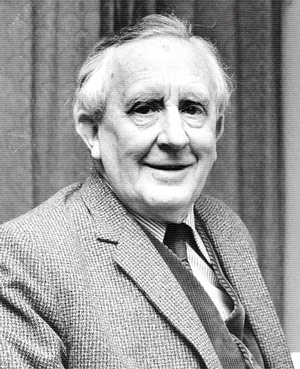
I've become more fascinated with C.S. Lewis and J.R.R Tolkien and in particular their theology of the gospel and myth, etc. But I started to read the other day a bunch of quotes from Tolkien about the Eucharist and how it was basically the centre of his faith (as Christ should be).
These quotes are from a letter of Tolkien to his son who was struggling with his Catholic faith.
"I have suffered grievously in my life from stupid, tired, dimmed, and even bad priests; but I now know enough about myself to be aware that I should not leave the Church (which for me would mean leaving the allegiance of Our Lord) for any such reasons: I should leave because I did not believe, and should not believe any more, even if I had never met any one in orders who was not both wise and saintly. I should deny the Blessed Sacrament, that is: call Our Lord a fraud to His face.... I find it for myself difficult to believe that anyone who has ever been to Communion, even once, with at least right intention, can ever again reject Him without grave blame. (however, He alone knows each unique soul and its circumstances.) The only cure for sagging or fainting faith is communion. Though always Itself, perfect and complete and inviolate, the Blessed Sacrament does not operate completely and once for all in any of us. Like the act of Faith it must be continuous and grow by excercise. Frequency is of the highest effect. Seven times a week is more nourishing than seven times at intervals"
later in the letter Tolkien makes these claims about Protestantism:
"I myself am convinced by the Petrine claims, nor looking around the world does there seem much doubt which (if Christianity is true) is the True Church, the temple of the Spirit dying but living, corrupt but holy, self-reforming and rearising. But for me that Church of which the Pope is the acknowledged head on earth has as chief claim that it is the one that has (and still does) ever defended the Blessed Sacrament, and given it most honour, and put it (as Christ plainly intended) in the prime place. 'Feed my sheep' was His last charge to St Peter; and since His words are always first to be understood literally, I suppose them to refer primarily to the Bread of Life. It was against this that the W. European revolt (or Reformation) was really launched – 'the blasphemous fable of the Mass' – and faith/works a mere red herring."
These quotes are from a letter of Tolkien to his son who was struggling with his Catholic faith.
"I have suffered grievously in my life from stupid, tired, dimmed, and even bad priests; but I now know enough about myself to be aware that I should not leave the Church (which for me would mean leaving the allegiance of Our Lord) for any such reasons: I should leave because I did not believe, and should not believe any more, even if I had never met any one in orders who was not both wise and saintly. I should deny the Blessed Sacrament, that is: call Our Lord a fraud to His face.... I find it for myself difficult to believe that anyone who has ever been to Communion, even once, with at least right intention, can ever again reject Him without grave blame. (however, He alone knows each unique soul and its circumstances.) The only cure for sagging or fainting faith is communion. Though always Itself, perfect and complete and inviolate, the Blessed Sacrament does not operate completely and once for all in any of us. Like the act of Faith it must be continuous and grow by excercise. Frequency is of the highest effect. Seven times a week is more nourishing than seven times at intervals"
later in the letter Tolkien makes these claims about Protestantism:
"I myself am convinced by the Petrine claims, nor looking around the world does there seem much doubt which (if Christianity is true) is the True Church, the temple of the Spirit dying but living, corrupt but holy, self-reforming and rearising. But for me that Church of which the Pope is the acknowledged head on earth has as chief claim that it is the one that has (and still does) ever defended the Blessed Sacrament, and given it most honour, and put it (as Christ plainly intended) in the prime place. 'Feed my sheep' was His last charge to St Peter; and since His words are always first to be understood literally, I suppose them to refer primarily to the Bread of Life. It was against this that the W. European revolt (or Reformation) was really launched – 'the blasphemous fable of the Mass' – and faith/works a mere red herring."

These are some strong words but I think it's so fascinating how Communion meant so much to Tolkien, at all the tough times, it was what kept him there. I once read that Tolkien was furious with C.S. Lewis for not including a reference to the Eucharist in the Narnia books. Tolkien said to Lewis that any attempt to tell Christ's passion narritive without mentioning the institution of the Lord's Supper, was a failed attempt.
"Out of the darkness of my life, so much frustrated, I put before you the one great thing to love on earth: the Blessed Sacrament ... There you will find romance, glory, honour fidelity, and the true way of all your loves on earth, and more than that: Death by the divine paradox, that which ends life, and demands the surrender of all, and yet by the taste (or foretaste) of which alone can what you seek in your earthly relationships (love, faithfulness, joy) be maintained, or take on that complexion of reality, of eternal endurance, which every man's heart desires...:"
Finally Tolkien writes:
"I fell in love with the Blessed Sacrament from the beginning – and by the mercy of God never have fallen out again: but alas! I indeed did not live up to it. I brought you all up [his children] ill and talked to you too little. Out of wickedness and sloth I almost ceased to practise my religion...I failed as a father. Now I pray for you all, unceasingly, that the Healer (the Hælend as the Saviour was usually called in Old English) shall heal my defects, and that none of you shall ever cease to cry Benedictus qui venit in nomme Domini. [Blessed is he who comes in the name of the Lord] (from the Psalms and the Triumphal entry, and the Mass)"
Tolkien attended Mass every morning (as a child) and helped out as an altar boy and later as a server, he was raised by a Catholic priest.
"...happy are those who are called to his supper..." - Liturgy of the Eucharist (Novus Ordo)

Dinner Table In Heaven
So I made a new banner for this blog, and I was just thinking, if I had one wish when I got to Heaven, it's that I'd get to sit at a table for dinner one night (if there is food, and night) with Ravi Zacharias, St. Augustine, St. Paul, John Wesley, C.S. Lewis, and J.R.R. Tolkien. They're my heroes, and have contributed so much to my faith. I also hope Philip, Jared, and I will be able to finally figure out who is right in our debate and be able to sit in fellowship as well.
Subscribe to:
Posts (Atom)