"One of the most important differences between us is our estimate of the importance of the differences. You, in your charity, are anxious to convert me: but I am not in the least anxious to convert you. You think my specifically Protestant beliefs a tissue of damnable errors: I think your specifically Catholic beliefs a mass of comparatively harmless human tradition which may be fatal to certain souls under special conditions, but which I think suitable for you. I therefore feel no *duty* to attack you: and I certainly feel no *inclination* to add to my other works an epistolary controversy with one of the toughest dialecticians of my acquaintance, to which he can devote as much time and reading as he likes and I can devote very little. As well--who wants to debate with a man who begins by saying that no argument can possibly move him? Talk sense, man! With other Catholics I find no difficulty in deriving much edification from religious talk on the common ground: but you refuse to show any interest except in differences." - C.S. Lewis to Dom Bede Griffiths
My friend sent this to me after I 'kind of' tried to show her what I believed/convert her or at least show that the Mennonites were heretics... It made me think alot. It's ironic that Griffiths wrote an article defending Catholic views from Patristics that was influential for me. We both have the harsh unkindness in common I guess. heh.

Showing posts with label C.S. Lewis. Show all posts
Showing posts with label C.S. Lewis. Show all posts
Tuesday, October 6, 2009

Sunday, September 20, 2009
This Week in Summary & Thoughts Before Mass Tonight
I'm going to a new church tonight (it's still Roman, don't get your hopes up) and I'm hoping that there's confession/reconcilliation before Mass. I've had a terrible week and my Depression had really kicked in. I think I angered everyone I know this week both online and IRL (for non-gamers this means "in real life"). Chesterton said that we don't need a religion that is right where we're right, we need one that's right where we're wrong. I said to a friend once "when I disagree with Catholicism, I get angry and yell and dispair, but eventually I realize that it's not the Church that needs to change, it's me".
I highlighted this in C.S. Lewis' "The Problem of Pain" but I just saw it quoted online by Dave Armstrong, so I figured I'd post it as I'm hoping to go to confession tonight:
"It is . . . a poor thing to come to Him as a last resort, to offer up "our own" when it is no longer worth keeping. If God were proud He would hardly have us on such terms: but He is not proud, He stoops to conquer, He will have us even though we have shown that we prefer everything else to Him, and come to Him because there is "nothing better" now to be had. The same humility is shown by all those Divine appeals to our fears which trouble high-minded readers of scripture. It is hardly complimentary to God that we should choose Him as an alternative to Hell: yet even this He accepts. The creature's illusion of self-sufficiency must, for the creature's sake, be shattered; and by trouble or fear of trouble on earth, by crude fear of the eternal flames, God shatters it "unmindful of His glory's diminution." Those who would like the God of scripture to be more purely ethical, do not know what they ask.
If God were a Kantian, who would not have us till we came to Him from the purest and best motives, who could be saved? And this illusion of self-sufficiency may be at its strongest in some very honest, kindly, and temperate people, and on such people, therefore, misfortune must fall." - C.S. Lewis (The Problem of Pain, New York: Macmillan, 1940, 97-98)
Father forgive me of my sins, because of Christ, even when I repent out of fear rather than love, or rather, when they are so close together I can't separate them.
I highlighted this in C.S. Lewis' "The Problem of Pain" but I just saw it quoted online by Dave Armstrong, so I figured I'd post it as I'm hoping to go to confession tonight:
"It is . . . a poor thing to come to Him as a last resort, to offer up "our own" when it is no longer worth keeping. If God were proud He would hardly have us on such terms: but He is not proud, He stoops to conquer, He will have us even though we have shown that we prefer everything else to Him, and come to Him because there is "nothing better" now to be had. The same humility is shown by all those Divine appeals to our fears which trouble high-minded readers of scripture. It is hardly complimentary to God that we should choose Him as an alternative to Hell: yet even this He accepts. The creature's illusion of self-sufficiency must, for the creature's sake, be shattered; and by trouble or fear of trouble on earth, by crude fear of the eternal flames, God shatters it "unmindful of His glory's diminution." Those who would like the God of scripture to be more purely ethical, do not know what they ask.
If God were a Kantian, who would not have us till we came to Him from the purest and best motives, who could be saved? And this illusion of self-sufficiency may be at its strongest in some very honest, kindly, and temperate people, and on such people, therefore, misfortune must fall." - C.S. Lewis (The Problem of Pain, New York: Macmillan, 1940, 97-98)
Father forgive me of my sins, because of Christ, even when I repent out of fear rather than love, or rather, when they are so close together I can't separate them.
Thursday, July 9, 2009
Super Post, Must Read - Today's Catholicism - Variety in the Roman Kirk
"Thou art Peter, and on this rock will I build my Church" - The Gospel According to St. Matthew, Chapter 16, Verse 18
What's the Rock?
For Protestants it is St. Peter's confession - God bless them, as a former Protestant I have to say I believe they do more to advance the Catholic faith by teaching orthodox Christological and Trinitarian and Biblical theology than 9 out of 10 of the lapsed Catholics you meet throughout high school and wherever Italians and Francophones dwell.
Catholics believe St. Peter is the Rock (along with his successors, the bishops of Rome, or "popes"), but as a little bit of a tour of the Roman Church, I've replaced 'the Rock' with those things which some Catholics emphasize the most.
What's the Rock?: Abortion

I once told a Catholic "Christ died to start a Church, not a Pro-life Movement"
I've been reading the American Papist blog today and a number of the other "top" Catholic blogs and I find them dreadfully boring. They're just Abortion this, Abortion that, Abortion... yes, if I lived during the Holocaust I would be talking about how horrible it is, but the point is, the Gospel must still be preached, theology must still be taught, the Liturgy should still be refined, etc. As a student of Political Science, it is my firm conviction that abortion will never be illegal, and that probably something worse will come up eventually that Catholics will rave about all the more.
Needless to say, I am pro-life, I do think abortion is a moral evil, but I do think it is a subordinate issue. I have a friend who was a lapsed Catholic for over a year and he was HEAVILY involved in the pro-life movement, i'll never forget when I said to him "salvation is by grace" and he said "what's grace?" - that almost stopped my conversion immediately, but I'm simply saying all of this to emphasize how abortion has usurped the message of salvation which after all is the whole purpose of Christianity.
What's the Rock: Charismatic Gifts of the Holy Spirit

Charles Spurgeon (still one of my heroes) once said in regards the Wesleyan movement that he didn't care about being filled with enthusiasm, and that the only emotion he wanted to feel deeply was repentance. I agree with him. But there are some things I like about the Charismatics, the fact that they actually believe the Bible is one refreshing thing. I empathize with Lutheran Theologian Paul Tillich who once said "I am excited for the day when we can all talk about God again without embarrassment". This article in first things by the Episcopal (famous Catholic sympathizer) writer Philip Jenkins is all about the Charismatic movement (specifically in the global south):
http://www.firstthings.com/article/2007/01/believing-in-the-global-south-17
Their stories fill me with hope that once again supernaturalism will triumph over the arbitrary western tyrant of naturalism.
What's the Rock: All Things Idolatry

C.S. Lewis said that Catholicism goes wrong when it becomes the world-old folk religion of amulets and magic. In spite of Newman's wonderful sophistry about "dulia" and "hyper-dulia" and "latria" I've been unfortunate enough to have to read medieval british books on popular Piety and they always talk about how we should "worshippe the Saintes in a goodley waye" or some other myspelld idolatri. It's really annoying how they write. In any case, many Roman Christians in my estimation easily jump over the line from mere dulia (devotion) to latria (worship). Maybe it's just me, but my own brain has a worship and non-worship switch. Anyway, I still like the saints but I think the Anglican Communion has a healthier theology on them... it could be worse, we could be East Orthodox, there's worship for you (I don't know the Greek word for Latria otherwise I'd use it to sound smart).
I find that others are so ridiculous about protecting the Eucharist that it is just ridiculous. I understand respect and treating the Eucharist in a worthy way, and I believe transubstantiation, but seriously, we are talking about the same Jesus right? They stopped serving the Eucharist by intinction (dipping the bread into the wine and giving it to the communicant) because a drop of the blood might fall on the ground. ... does anyone in the Catholic Church remember that Christ's blood was poured out onto the ground for our sake. That he was despised, trampled, and spat on. I think he can take a carpet at St. Alexander's parish church.
And for the life of me, I'm tired of trying to explain my way out of awkward moments at mealtime when a Protestant friend or family member will ask me about upside-down buried statues of St. Joseph and real estate. (St. Thomas More, pray for the destruction of idolatry and false veneration!)
What's the Rock?: The Church

Dave Armstrong and many Protestant Converts boast about the awesomeness of the Church and use grandiose statements about how humungous and gigantic "our" (as if they did any of it) Ancient Communion is. They teach what the (self-proclaimed) Bishop James White describes as sola ecclesia, or 'the church alone' for salvation. I don't believe this is official church teaching - and neither would Protestants if they had to sit through the dreaded "subsistit in" debates which are now every discussion on Vatican II (the council says that true Christianity -or something to that effect - "Subsist in the Catholic Church", the debate is thus, 'are Protestants unknowingly in the Catholic Church, or is this Feeneyism - only the visible Catholic Church is the true elect church). Anyway, whether they changed Tridentine declarations or not (I think they kind of did) Vatican II now teaches something much closer to a catholic/orthodox view of Tradition, that Scripture is materially sufficient as the source of faith and morals and that Tradition is the interpretive lens.
The Church and Ecclesiology is important, but even Papa Benny says that the more offices and mechanisms the Church adds for itself the more the Spirit is quenched.
What's the Rock?: Social Gospel

This group is the inverse of the previous group, they seem to think that Jesus was a 1st century Che Gueverra who was killed for resisting "the man". The whole purpose of Church is to protect the poor and the innocent. To accept Homosexuals and outcasts. Like the Charismatics, I don't have as much of a problem with the Social Gospel people, they do a hell of alot more to live their faith than I do. But my issue is always with their watered-down theology, and dodgy leftist politics. This group reminds me of a female Catholic theology student I talked with the other day with whom I voiced my concern "I think the Church (Catholic) has contradicted itself" and she replied to the effect of "so what? you thought we were infallible?". Strangely when the Catholic Church advertised "Infallibility", I assumed it's adherents believed in it, but it's ok, I still do, but not with the fervor I used to, and now with the knowledge that many in the fold do not.
What's the Rock?: Christ

This final group are to me the group I associate myself with. I have found a small communion of Catholics (most of which are dead) with whom I associate myself. St. Thomas More, the Venerable Cardinal John Henry Newman, G.K. Chesterton, Peter Kreeft, Henry Nouwen, Thomas Howard, Richard John Neuhaus and to a lesser extent J.R.R. Tolkien & the Anglo-Catholics (C.S. Lewis, and others). These are the people who always centre Roman Catholic theology on the person, work, and teachings of Jesus. When they discuss the faith, they talk about the love of Christ, about the mercy of God, about true repentance and Christian living. They emphasize the Eucharist, the Church, the Blessed Virgin Mary, and all the saints only to point to Christ. Peter Kreeft says that Protestants will only become Catholics if they see the Christo-centric nature of Catholicism (which for me was like finding Waldo, but it is there somewhere). I feel at home with the Anglican converts to Rome, because most of them seem to share this similar view, a view taught quite alot in Traditional Anglicanism (may she rest in peace), and I feel like a thoroughly English Catholic. My faith isn't centred on abortion, or 'christian' marxism, or speaking in tongues, it's about Jesus. It's not that those things are wrong, it's just that they are subordinate in importance. To Sum this camp up, I'll close with a quote I love by C.S. Lewis about this:
"This is the whole of Christianity. There is nothing else. It is so easy to get muddled about that. It is easy to think that the Church has a lot of different objectives -- education, building, missions, holding services. The Church exists for nothing else but to draw men into Christ, to make them little Christ's. If they are not doing that, all the cathedrals, clergy, missions, sermons, even the Bible itself, are simply a waste of time. God became Man for no other purpose. It is even doubtful, you know, whether the whole universe was created for any other purpose."
What's the Rock?
For Protestants it is St. Peter's confession - God bless them, as a former Protestant I have to say I believe they do more to advance the Catholic faith by teaching orthodox Christological and Trinitarian and Biblical theology than 9 out of 10 of the lapsed Catholics you meet throughout high school and wherever Italians and Francophones dwell.
Catholics believe St. Peter is the Rock (along with his successors, the bishops of Rome, or "popes"), but as a little bit of a tour of the Roman Church, I've replaced 'the Rock' with those things which some Catholics emphasize the most.
What's the Rock?: Abortion
I once told a Catholic "Christ died to start a Church, not a Pro-life Movement"
I've been reading the American Papist blog today and a number of the other "top" Catholic blogs and I find them dreadfully boring. They're just Abortion this, Abortion that, Abortion... yes, if I lived during the Holocaust I would be talking about how horrible it is, but the point is, the Gospel must still be preached, theology must still be taught, the Liturgy should still be refined, etc. As a student of Political Science, it is my firm conviction that abortion will never be illegal, and that probably something worse will come up eventually that Catholics will rave about all the more.
Needless to say, I am pro-life, I do think abortion is a moral evil, but I do think it is a subordinate issue. I have a friend who was a lapsed Catholic for over a year and he was HEAVILY involved in the pro-life movement, i'll never forget when I said to him "salvation is by grace" and he said "what's grace?" - that almost stopped my conversion immediately, but I'm simply saying all of this to emphasize how abortion has usurped the message of salvation which after all is the whole purpose of Christianity.
What's the Rock: Charismatic Gifts of the Holy Spirit

Charles Spurgeon (still one of my heroes) once said in regards the Wesleyan movement that he didn't care about being filled with enthusiasm, and that the only emotion he wanted to feel deeply was repentance. I agree with him. But there are some things I like about the Charismatics, the fact that they actually believe the Bible is one refreshing thing. I empathize with Lutheran Theologian Paul Tillich who once said "I am excited for the day when we can all talk about God again without embarrassment". This article in first things by the Episcopal (famous Catholic sympathizer) writer Philip Jenkins is all about the Charismatic movement (specifically in the global south):
http://www.firstthings.com/article/2007/01/believing-in-the-global-south-17
Their stories fill me with hope that once again supernaturalism will triumph over the arbitrary western tyrant of naturalism.
What's the Rock: All Things Idolatry

C.S. Lewis said that Catholicism goes wrong when it becomes the world-old folk religion of amulets and magic. In spite of Newman's wonderful sophistry about "dulia" and "hyper-dulia" and "latria" I've been unfortunate enough to have to read medieval british books on popular Piety and they always talk about how we should "worshippe the Saintes in a goodley waye" or some other myspelld idolatri. It's really annoying how they write. In any case, many Roman Christians in my estimation easily jump over the line from mere dulia (devotion) to latria (worship). Maybe it's just me, but my own brain has a worship and non-worship switch. Anyway, I still like the saints but I think the Anglican Communion has a healthier theology on them... it could be worse, we could be East Orthodox, there's worship for you (I don't know the Greek word for Latria otherwise I'd use it to sound smart).
I find that others are so ridiculous about protecting the Eucharist that it is just ridiculous. I understand respect and treating the Eucharist in a worthy way, and I believe transubstantiation, but seriously, we are talking about the same Jesus right? They stopped serving the Eucharist by intinction (dipping the bread into the wine and giving it to the communicant) because a drop of the blood might fall on the ground. ... does anyone in the Catholic Church remember that Christ's blood was poured out onto the ground for our sake. That he was despised, trampled, and spat on. I think he can take a carpet at St. Alexander's parish church.
And for the life of me, I'm tired of trying to explain my way out of awkward moments at mealtime when a Protestant friend or family member will ask me about upside-down buried statues of St. Joseph and real estate. (St. Thomas More, pray for the destruction of idolatry and false veneration!)
What's the Rock?: The Church

Dave Armstrong and many Protestant Converts boast about the awesomeness of the Church and use grandiose statements about how humungous and gigantic "our" (as if they did any of it) Ancient Communion is. They teach what the (self-proclaimed) Bishop James White describes as sola ecclesia, or 'the church alone' for salvation. I don't believe this is official church teaching - and neither would Protestants if they had to sit through the dreaded "subsistit in" debates which are now every discussion on Vatican II (the council says that true Christianity -or something to that effect - "Subsist in the Catholic Church", the debate is thus, 'are Protestants unknowingly in the Catholic Church, or is this Feeneyism - only the visible Catholic Church is the true elect church). Anyway, whether they changed Tridentine declarations or not (I think they kind of did) Vatican II now teaches something much closer to a catholic/orthodox view of Tradition, that Scripture is materially sufficient as the source of faith and morals and that Tradition is the interpretive lens.
The Church and Ecclesiology is important, but even Papa Benny says that the more offices and mechanisms the Church adds for itself the more the Spirit is quenched.
What's the Rock?: Social Gospel

This group is the inverse of the previous group, they seem to think that Jesus was a 1st century Che Gueverra who was killed for resisting "the man". The whole purpose of Church is to protect the poor and the innocent. To accept Homosexuals and outcasts. Like the Charismatics, I don't have as much of a problem with the Social Gospel people, they do a hell of alot more to live their faith than I do. But my issue is always with their watered-down theology, and dodgy leftist politics. This group reminds me of a female Catholic theology student I talked with the other day with whom I voiced my concern "I think the Church (Catholic) has contradicted itself" and she replied to the effect of "so what? you thought we were infallible?". Strangely when the Catholic Church advertised "Infallibility", I assumed it's adherents believed in it, but it's ok, I still do, but not with the fervor I used to, and now with the knowledge that many in the fold do not.
What's the Rock?: Christ
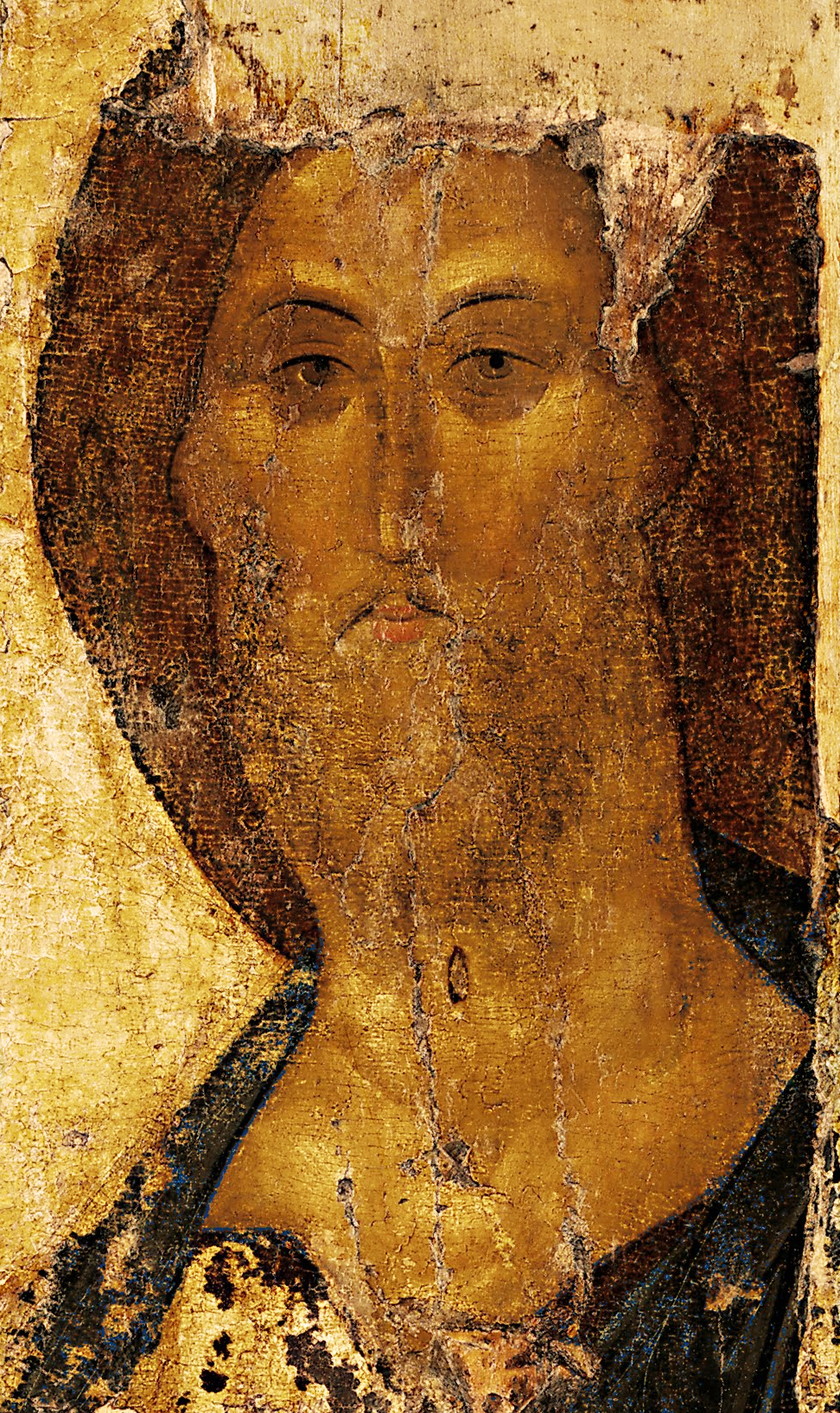
This final group are to me the group I associate myself with. I have found a small communion of Catholics (most of which are dead) with whom I associate myself. St. Thomas More, the Venerable Cardinal John Henry Newman, G.K. Chesterton, Peter Kreeft, Henry Nouwen, Thomas Howard, Richard John Neuhaus and to a lesser extent J.R.R. Tolkien & the Anglo-Catholics (C.S. Lewis, and others). These are the people who always centre Roman Catholic theology on the person, work, and teachings of Jesus. When they discuss the faith, they talk about the love of Christ, about the mercy of God, about true repentance and Christian living. They emphasize the Eucharist, the Church, the Blessed Virgin Mary, and all the saints only to point to Christ. Peter Kreeft says that Protestants will only become Catholics if they see the Christo-centric nature of Catholicism (which for me was like finding Waldo, but it is there somewhere). I feel at home with the Anglican converts to Rome, because most of them seem to share this similar view, a view taught quite alot in Traditional Anglicanism (may she rest in peace), and I feel like a thoroughly English Catholic. My faith isn't centred on abortion, or 'christian' marxism, or speaking in tongues, it's about Jesus. It's not that those things are wrong, it's just that they are subordinate in importance. To Sum this camp up, I'll close with a quote I love by C.S. Lewis about this:
"This is the whole of Christianity. There is nothing else. It is so easy to get muddled about that. It is easy to think that the Church has a lot of different objectives -- education, building, missions, holding services. The Church exists for nothing else but to draw men into Christ, to make them little Christ's. If they are not doing that, all the cathedrals, clergy, missions, sermons, even the Bible itself, are simply a waste of time. God became Man for no other purpose. It is even doubtful, you know, whether the whole universe was created for any other purpose."
Saturday, July 4, 2009
C.S. Lewis Being My Hero Again
In the last week I've read "C.S. Lewis and the Catholic Church" by Joseph Pearce, "The Great Divorce" by C.S. Lewis and read the majority of "Surprised by Joy" and "The Screwtape Letters" by C.S. Lewis.
The closest theologian I could place Lewis next to is Richard Hooker the Anglican Divine (and philosophically, G.K. Chesterton). Anyway, I just read this quote which reminded me of why I love C.S. Lewis so much. He was such an ecumenical bad-ass a true via media Anglican, a man after my own heart. He writes in the Screwtape Letters (in Devil's Advocate):
"The real fun [when attacking Christians] is working up hatred between those who say "mass" and those who say "holy communion" when neither party could possibly state the difference between, say, Hooker's doctrine and Thomas Aquinas', in any form which would hold water for five minutes. And all the purely indifferent things - candles and clothes and what not- are an admirable ground for our activities. We have quite remove from men's minds what that pestilent fellow Paul used to teach about food and other unessentials" - C.S. Lewis "The Screwtape Letters" p 84
He then talks about "high" Anglicans genuflecting and crossing themselves and "low" church brothers being offended and how they should get over it. LOL, Luther called the Mass "a damnable impiety" and Lewis sees it as irrelevant. He was in the best sense of the word an Anglican. It's a shame they're led by a druid arian these days....
It's also funny that Lewis refers to the anonymous Christian's religious leader as "Fr." aka Father. And he makes reference to Maritain as being a true theologian they (demons) should be worried about. Jacques Maritain was a Catholic Neo-Thomistic Theologian. Oh Lewis, he's so flippant when it comes to the Reformation, he acts as if it were a glass of spilled milk or something.
The closest theologian I could place Lewis next to is Richard Hooker the Anglican Divine (and philosophically, G.K. Chesterton). Anyway, I just read this quote which reminded me of why I love C.S. Lewis so much. He was such an ecumenical bad-ass a true via media Anglican, a man after my own heart. He writes in the Screwtape Letters (in Devil's Advocate):
"The real fun [when attacking Christians] is working up hatred between those who say "mass" and those who say "holy communion" when neither party could possibly state the difference between, say, Hooker's doctrine and Thomas Aquinas', in any form which would hold water for five minutes. And all the purely indifferent things - candles and clothes and what not- are an admirable ground for our activities. We have quite remove from men's minds what that pestilent fellow Paul used to teach about food and other unessentials" - C.S. Lewis "The Screwtape Letters" p 84
He then talks about "high" Anglicans genuflecting and crossing themselves and "low" church brothers being offended and how they should get over it. LOL, Luther called the Mass "a damnable impiety" and Lewis sees it as irrelevant. He was in the best sense of the word an Anglican. It's a shame they're led by a druid arian these days....
It's also funny that Lewis refers to the anonymous Christian's religious leader as "Fr." aka Father. And he makes reference to Maritain as being a true theologian they (demons) should be worried about. Jacques Maritain was a Catholic Neo-Thomistic Theologian. Oh Lewis, he's so flippant when it comes to the Reformation, he acts as if it were a glass of spilled milk or something.
Sunday, June 28, 2009
Book Review: C.S. Lewis and the Catholic Church

I just finished reading the book "C.S. Lewis and the Catholic Church" by Joseph Pearce (a Roman Catholic convert). It was very illuminating about the inner conflicts C.S. Lewis had and the reasons why he didn't become a Roman Catholic. It seemed like in the end it was 2 reasons.
The first was that he was raised an "Ulster Protestant" Northern Irish Unionist who had it ingrained in him (he admitted it) that he could not be a Catholic for it would be a betrayal of his heritage.
The second was that he denied the infallibility of the Pope and his jurisdiction over England.
But, Lewis also said that if the Anglican Church ordained Priestesses that Anglicans would be forced to either become atheists or Roman Catholics. Lewis himself never faced this choice but many of his closest friends did and some of them (like Walter Hooper) went to Rome.
Pearce gets a little preachy at times, but other than that he is fairly balanced and doesn't try to make it look like C.S. Lewis was through and through Catholic or anything like that. He just looks at his views of the sacraments, the operation of grace, purgatory, and ecclesiology and shows how similar Lewis' views were (if not completely in line with) Catholic dogma.
Pearce gets a little preachy at times, but other than that he is fairly balanced and doesn't try to make it look like C.S. Lewis was through and through Catholic or anything like that. He just looks at his views of the sacraments, the operation of grace, purgatory, and ecclesiology and shows how similar Lewis' views were (if not completely in line with) Catholic dogma.
It also showed how much Lewis utterly despised Purtanism and the Low and Broad church Anglicans. But he hated T.S. Eliot and other Royalist Anglo-Catholics, even though I think in the end it is best to label C.S. Lewis an Anglo-Catholic theologically, who detested certain famous Anglo-Catholics.
Lewis' views on Confession in the Anglican church as opposed to the Roman Church are also interesting, I tend to agree with him that it should be a matter of conscience and not obligatory to confess.
Saturday, June 20, 2009
Spiritual Maturity
"I don't particularly think God wants us to be happy. I think he wants us to love and be loved, I think he wants us to grow up" - Anthony Hopkins portraying C.S. Lewis in "Shadowlands"
In Romans 8:17 St. Paul states that we will share in Christ's glory if we share in his sufferings. It has been one of the most difficult lessons in my life (that I still haven't really learned), that God does not want me to be happy. He wants me to be like him. He wants me to be Holy because he is Holy. This is a painful process almost exactly like growing up - intrinsically tied to growing up for me.
I said to a friend tonight (I shocked myself when I said it) - I thank God that he doesn't answer all of my prayers, if he did, I'd never have matured a bit. I need to keep that attitude, it's not health and wealth God is promoting, it's taking up your cross and following him. But at the same time, we find true joy in being like Christ. St. Paul was so celebratory in prison it's amazing, he knew that suffering produced endurance, and character, which produces hope. And he also says in Romans 8 that we are saved by hope and in hope (sorry sola fideists j/k).
This is something I've talked about alot in terms of purgatory so I won't touch on that doctrine.
In the movie Shadowlands, there's a scene where C.S. Lewis' wife who has cancer is getting well again and his friend says "we all know how much you've been praying, God is answering your prayers" and C.S. Lewis looks at the priest who said it and says "I pray because I can't help it, I pray because it flows out of me, it doesn't change God, it changes me". I was angry the other day about things going poorly and how silent God seemed in my life, and it made me pray in true repentance (which is a rare grace) and I felt so much better. It wasn't that God had shown himself, it was that I realized I had no claim on him. I deserved nothing from him and that I should grow up and realize that this is how you mature, that he is there, whether I feel it or not, because he says so, and he can't lie.
So hopefully in every pain in life I will become more spiritually mature.
I have a feeling I've written identical posts to this many times already, but I guess I don't learn alot.
In Romans 8:17 St. Paul states that we will share in Christ's glory if we share in his sufferings. It has been one of the most difficult lessons in my life (that I still haven't really learned), that God does not want me to be happy. He wants me to be like him. He wants me to be Holy because he is Holy. This is a painful process almost exactly like growing up - intrinsically tied to growing up for me.
I said to a friend tonight (I shocked myself when I said it) - I thank God that he doesn't answer all of my prayers, if he did, I'd never have matured a bit. I need to keep that attitude, it's not health and wealth God is promoting, it's taking up your cross and following him. But at the same time, we find true joy in being like Christ. St. Paul was so celebratory in prison it's amazing, he knew that suffering produced endurance, and character, which produces hope. And he also says in Romans 8 that we are saved by hope and in hope (sorry sola fideists j/k).
This is something I've talked about alot in terms of purgatory so I won't touch on that doctrine.
In the movie Shadowlands, there's a scene where C.S. Lewis' wife who has cancer is getting well again and his friend says "we all know how much you've been praying, God is answering your prayers" and C.S. Lewis looks at the priest who said it and says "I pray because I can't help it, I pray because it flows out of me, it doesn't change God, it changes me". I was angry the other day about things going poorly and how silent God seemed in my life, and it made me pray in true repentance (which is a rare grace) and I felt so much better. It wasn't that God had shown himself, it was that I realized I had no claim on him. I deserved nothing from him and that I should grow up and realize that this is how you mature, that he is there, whether I feel it or not, because he says so, and he can't lie.
So hopefully in every pain in life I will become more spiritually mature.
I have a feeling I've written identical posts to this many times already, but I guess I don't learn alot.
Sunday, April 5, 2009
The Cross
"For Christ sent me not to baptize, but to preach the gospel: not with wisdom of words, lest the cross of Christ should be made of none effect. For the preaching of the cross is to them that perish foolishness; but unto us which are saved it is the power of God... For the Jews require a sign, and the Greeks seek after wisdom: But we preach Christ crucified, unto the Jews a stumblingblock, and unto the Greeks foolishness...the foolishness of God is wiser than men; and the weakness of God is stronger than men...as it is written, He that glorieth, let him glory in the Lord." - St. Paul's First Epistle to the Corinthians chapter 1 (KJV)
Today in Mass we read heard the entire end of Mark's Gospel from the triumphal entry of Jerusalem, to the crucifixion to the resurrection. It reminds me of something the president of West Moorlands Bible College once said in Bible School : no matter how awful a church service is, if they read the Word, at least one part of it was inspired (ie. scriptures). The Msgr preached a very short but clear message that was mostly what I tend to call "Airy Anglican" social gospel which was to be expected. This is ok, neglect for the gospel in it's entirety is usually a fair expectation in the Catholic Church (and Anglican, and for that matter almost every church i've been to).
BUT
Then we went for our last confirmation class before everyone's baptism and my confirmation, and we watched a video. We'd been watching them all year and a theologian I liked was speaking, he had refuted the idea that Catholicism teaches "works righteousness" before, and explained how Augustinian justification avoids such a caricature. But today he was discussing the cross, and his words are almost seared into my mind and have made me sick all day. He said "there is a theology in the church (Catholic Church)- not a doctrine - but a theology of atonement, held by people like Mel Gibson and the Passion of the Christ, which says that human sin has closed the gates of heaven and that the only way for humanity to be saved was the sacrifice of Christ on the cross for our sake..." - so far so good - "...but I tend to disagree with this because of a few flaws it has, it first promotes a bloodthirsty God who wants to hurt people which is at odds with the scriptures (obviously he hasn't read the OT prophets), and it means that the teachings and life of Christ and the resurrection are meaningless, all that mattered was his death" ...I can't remember the rest of his sentence because of a fire burning inside of me to run up and kick the TV into the wall and the picture of Mary, but I didn't... he then went on to promote the Lombardian heresy - rejected by the Catholic Church officially via Lombard's excommunication, which smelled of the same airy anglicanism. It was the type of salvation model that apologists like Alister McGrath and C.S. Lewis use when they're backed into a corner (though I love both of them, they do this and it annoys me), where Jesus death was just a supreme picture of love and the full cost of his humanity, etc...
My mind was racing with the aforequoted part of first corinthians, and Isaiah 53, and the Nicene creed. I tried to anathemize the propogater of this heresy to our class by mentioning Lombard, St. Thomas Aquinas (who basically taught Penal Substitution) and St. Anselm (who taught almost the same thing), as doctors of the Church who should be respected above this man. But apparently our class liked the Lombardian heresy more, and the Presbyterian convert next to me (who should've known better) waved me off saying 'well the church has wrongly excommunicated many people' ...
I was outraged, I am outraged. I find the same garbage in every modern church it's not as though Catholicism is solely responsible for this view - it's been around a long time. Rob Bell teaches it, N.T. Wright semi-teaches it, and many other Protestants and Orthodox and Catholics, but man, it burns my blood. It robs the Cross of the victory, the power of God, I described the message to my parents as "Anglicized Judaism with nice feelings", it's what Michael Horton calls "Christless Christianity" (or Crossless Christianity - I don't remember), and while Protestantism has no effective way to deal with heresy, at least the Traditional Protestant Churches I've been to (Grace Reformed, Holy Trinity Anglican, my Grandma's Mennonite church) can teach a coherent biblical theology of the cross.
In the end, I feel obligated to be true to Scripture, the Nicene Creed and the councils of the Church. I don't believe Catholicism has officially destroyed the cross, but there's no question that our Parish has. When I read my catechism it is full of quotes all about the sufficiency of the Cross to deal with sin, the superabundant grace it bestows, and the patristic quote that 'there is no other ladder to heaven' than the cross. Trent affirms this, in my opinion. I think I'll just change parishes. But man, it certainly shook my faith.
May all Christians continue to confess the catholic faith
As the Nicene creed states:
"For us and for our salvation
he came down from heaven:
by the power of the Holy Spirit
he became incarnate from the Virgin Mary,
and was made man.
For our sake he was crucified under Pontius Pilate;
he suffered death and was buried.
On the third day he rose again
in accordance with the Scriptures;
he ascended into heaven
and is seated at the right hand of the Father.
He will come again in glory to judge the living and the dead,
and his kingdom will have no end.
We believe in the Holy Spirit, the Lord, the giver of life,
who proceeds from the Father and the Son.
With the Father and the Son he is worshipped and glorified.
He has spoken through the Prophets.
We believe in one holy catholic and apostolic Church.
We acknowledge one baptism for the forgiveness of sins.
We look for the resurrection of the dead,
and the life of the world to come. Amen."
A Presbyterian minister -who is much smarter, and much more a Christian than I will probably ever be, save by the grace of God - once had this verse at the end of an email he sent, where he accused me of trusting the Magesterium of the Roman Catholic Church rather than Christ, I still don't see the dicotemy (most of the time), but I will say that if I was guilty of it then, I am no more guilty of it, because I've tried to make this verse the key phrase to my entire walk with God, and I completely trust in Jesus and his work (on the cross and in my life) = "but a new creation") for salvation.
"far be it from me to boast except in the cross of our Lord Jesus Christ, by which the world has been crucified to me, and I to the world. For neither circumcision counts for anything, nor uncircumcision, but a new creation." - Galatians 6:14-15 (ESV)
and may our hearts be smarter than our heads today and every day.
Happy Palm Sunday.
Today in Mass we read heard the entire end of Mark's Gospel from the triumphal entry of Jerusalem, to the crucifixion to the resurrection. It reminds me of something the president of West Moorlands Bible College once said in Bible School : no matter how awful a church service is, if they read the Word, at least one part of it was inspired (ie. scriptures). The Msgr preached a very short but clear message that was mostly what I tend to call "Airy Anglican" social gospel which was to be expected. This is ok, neglect for the gospel in it's entirety is usually a fair expectation in the Catholic Church (and Anglican, and for that matter almost every church i've been to).
BUT
Then we went for our last confirmation class before everyone's baptism and my confirmation, and we watched a video. We'd been watching them all year and a theologian I liked was speaking, he had refuted the idea that Catholicism teaches "works righteousness" before, and explained how Augustinian justification avoids such a caricature. But today he was discussing the cross, and his words are almost seared into my mind and have made me sick all day. He said "there is a theology in the church (Catholic Church)- not a doctrine - but a theology of atonement, held by people like Mel Gibson and the Passion of the Christ, which says that human sin has closed the gates of heaven and that the only way for humanity to be saved was the sacrifice of Christ on the cross for our sake..." - so far so good - "...but I tend to disagree with this because of a few flaws it has, it first promotes a bloodthirsty God who wants to hurt people which is at odds with the scriptures (obviously he hasn't read the OT prophets), and it means that the teachings and life of Christ and the resurrection are meaningless, all that mattered was his death" ...I can't remember the rest of his sentence because of a fire burning inside of me to run up and kick the TV into the wall and the picture of Mary, but I didn't... he then went on to promote the Lombardian heresy - rejected by the Catholic Church officially via Lombard's excommunication, which smelled of the same airy anglicanism. It was the type of salvation model that apologists like Alister McGrath and C.S. Lewis use when they're backed into a corner (though I love both of them, they do this and it annoys me), where Jesus death was just a supreme picture of love and the full cost of his humanity, etc...
My mind was racing with the aforequoted part of first corinthians, and Isaiah 53, and the Nicene creed. I tried to anathemize the propogater of this heresy to our class by mentioning Lombard, St. Thomas Aquinas (who basically taught Penal Substitution) and St. Anselm (who taught almost the same thing), as doctors of the Church who should be respected above this man. But apparently our class liked the Lombardian heresy more, and the Presbyterian convert next to me (who should've known better) waved me off saying 'well the church has wrongly excommunicated many people' ...
I was outraged, I am outraged. I find the same garbage in every modern church it's not as though Catholicism is solely responsible for this view - it's been around a long time. Rob Bell teaches it, N.T. Wright semi-teaches it, and many other Protestants and Orthodox and Catholics, but man, it burns my blood. It robs the Cross of the victory, the power of God, I described the message to my parents as "Anglicized Judaism with nice feelings", it's what Michael Horton calls "Christless Christianity" (or Crossless Christianity - I don't remember), and while Protestantism has no effective way to deal with heresy, at least the Traditional Protestant Churches I've been to (Grace Reformed, Holy Trinity Anglican, my Grandma's Mennonite church) can teach a coherent biblical theology of the cross.
In the end, I feel obligated to be true to Scripture, the Nicene Creed and the councils of the Church. I don't believe Catholicism has officially destroyed the cross, but there's no question that our Parish has. When I read my catechism it is full of quotes all about the sufficiency of the Cross to deal with sin, the superabundant grace it bestows, and the patristic quote that 'there is no other ladder to heaven' than the cross. Trent affirms this, in my opinion. I think I'll just change parishes. But man, it certainly shook my faith.
May all Christians continue to confess the catholic faith
As the Nicene creed states:
"For us and for our salvation
he came down from heaven:
by the power of the Holy Spirit
he became incarnate from the Virgin Mary,
and was made man.
For our sake he was crucified under Pontius Pilate;
he suffered death and was buried.
On the third day he rose again
in accordance with the Scriptures;
he ascended into heaven
and is seated at the right hand of the Father.
He will come again in glory to judge the living and the dead,
and his kingdom will have no end.
We believe in the Holy Spirit, the Lord, the giver of life,
who proceeds from the Father and the Son.
With the Father and the Son he is worshipped and glorified.
He has spoken through the Prophets.
We believe in one holy catholic and apostolic Church.
We acknowledge one baptism for the forgiveness of sins.
We look for the resurrection of the dead,
and the life of the world to come. Amen."
A Presbyterian minister -who is much smarter, and much more a Christian than I will probably ever be, save by the grace of God - once had this verse at the end of an email he sent, where he accused me of trusting the Magesterium of the Roman Catholic Church rather than Christ, I still don't see the dicotemy (most of the time), but I will say that if I was guilty of it then, I am no more guilty of it, because I've tried to make this verse the key phrase to my entire walk with God, and I completely trust in Jesus and his work (on the cross and in my life) = "but a new creation") for salvation.
"far be it from me to boast except in the cross of our Lord Jesus Christ, by which the world has been crucified to me, and I to the world. For neither circumcision counts for anything, nor uncircumcision, but a new creation." - Galatians 6:14-15 (ESV)
and may our hearts be smarter than our heads today and every day.
Happy Palm Sunday.
Tuesday, March 24, 2009
The Penitential Psalms
If people asked me my favourite books of the bible I would probably have to say Psalms and Ecclesiastes. To explain briefly there is 2 dicotemies in my spiritual life:
1. What I am obligated to believe (Catholicism)
2. What I honestly believe (Generally Anglicanism circa 1940/Anglo-Catholicism + some Catholic doctrine)
1. What I know about God (Thomistic philosophy and theology)
2. What I experience of God (Deism at times, and occasional moments of joy)
The reason Psalms and Ecclesiastes are my favourite is because they correspond to the #2's of both categories. I believe personally that God is somehow very distant and uncaring most of the time and thus connect with the penitential, and the depressing or 'bitching psalms' as I call them (I am able to force myself to believe my obligatorily theology ; I was raised fundamentalist it's a skill). But at other times I experience what C.S. Lewis would describe best as joy, occasional overwhelming moments of felicity that come from experiencing God. The last time I genuinely remember it was taking communion at Holy Trinity Anglican last August, or maybe standing in the Cathedral making the sign of the cross in latin at the Rite of Election.
Anyway, the Psalms are honest, they're real. Ecclesiastes is likewise honest and real, ecclesiastes was written by someone who understood philosophy, and so I can connectwith it quite easily.
The purpose of all this is that over time I eventually marked up both books in my bible alot and almost out of sheer chance I had marked up a few psalms that had a connection I was unaware of. They were 7 Psalms (I think I had favoured about 5 of them) that were called the "penitential psalms" and as I found this out in my NRSV study bible's footnote I started to pray all 7 in a row sometimes. I really enjoyed it and find myself reading them more and more often.
I read that : "St. Augustine, when dying, had the Psalms (that is the penitential psalms) fixed upon the wall opposite his bed" (http://www.boston-catholic-journal.com/seven_penitential_psalms.htm)
I was watching Shadowlands again tonight and thinking about C.S. Lewis' Reflections on the Psalms (which I haven't read) and how I'd like to write a few, so I decided to write on the 7 penitential Psalms. I'll be quite proud of myself if I make it to all 7, I have a tendency to give up on these sorts of things.
1. What I am obligated to believe (Catholicism)
2. What I honestly believe (Generally Anglicanism circa 1940/Anglo-Catholicism + some Catholic doctrine)
1. What I know about God (Thomistic philosophy and theology)
2. What I experience of God (Deism at times, and occasional moments of joy)
The reason Psalms and Ecclesiastes are my favourite is because they correspond to the #2's of both categories. I believe personally that God is somehow very distant and uncaring most of the time and thus connect with the penitential, and the depressing or 'bitching psalms' as I call them (I am able to force myself to believe my obligatorily theology ; I was raised fundamentalist it's a skill). But at other times I experience what C.S. Lewis would describe best as joy, occasional overwhelming moments of felicity that come from experiencing God. The last time I genuinely remember it was taking communion at Holy Trinity Anglican last August, or maybe standing in the Cathedral making the sign of the cross in latin at the Rite of Election.
Anyway, the Psalms are honest, they're real. Ecclesiastes is likewise honest and real, ecclesiastes was written by someone who understood philosophy, and so I can connectwith it quite easily.
The purpose of all this is that over time I eventually marked up both books in my bible alot and almost out of sheer chance I had marked up a few psalms that had a connection I was unaware of. They were 7 Psalms (I think I had favoured about 5 of them) that were called the "penitential psalms" and as I found this out in my NRSV study bible's footnote I started to pray all 7 in a row sometimes. I really enjoyed it and find myself reading them more and more often.
I read that : "St. Augustine, when dying, had the Psalms (that is the penitential psalms) fixed upon the wall opposite his bed" (http://www.boston-catholic-journal.com/seven_penitential_psalms.htm)
I was watching Shadowlands again tonight and thinking about C.S. Lewis' Reflections on the Psalms (which I haven't read) and how I'd like to write a few, so I decided to write on the 7 penitential Psalms. I'll be quite proud of myself if I make it to all 7, I have a tendency to give up on these sorts of things.
Saturday, March 7, 2009
I'm good enough for Dr. Alister McGrath, St. Augustine, and C.S. Lewis, why not you?

I can't get the spacing on this blog to work properly at all. .. it's either 4 empty lines, or everything smashed together without space.
Anyway... so allegedly I've been becoming "Anti-Protestant" or as Michael calls it "Jerky Catholic" or triumphalistic. I don't feel like I'm any more anti-protestant than any of my Protestant friends are anti-Catholic. At least I call them Christians... So while I do not defend any outrage on my own part, I hope to at least shed some light on why I'm so very angry.
1. I'm A CHRISTIAN! - I'm getting really tired of people either telling me I'm not a Christian, or following a false gospel, idolater, etc. I cite in my defense, this man:
Dr. Alister McGrath - IUSTITIA DEI was a book written by this Oxford scholar and self-proclaimed Evangelical Anglican and in it he writes this on Catholic/Augustinian Justification (sorry to quote in full, if you trust me just skip it):
"Once justified by divine action, the sinner does not at once become a perfect example of holiness. Humans need to pray to God continually for their growth in holiness and the spiritual life, thereby acknowledging that God is the author of both. God operates upon humans in the act of justification, and co-operates with them in the process of justification. Once justified, the sinner may begin to acquire merit—but only on account of God’s grace. Merit is seen to be a divine rather than a human work. Thus it is clearly wrong to suggest that Augustine excludes or denies merit; while merit before justification is indeed denied, its reality and necessity after justification are equally strongly affirmed. It must be noted, however, that Augustine understands merit as a gift from God to the justified sinner … Hominis bona merita, Dei munera. Eternal life is indeed the reward for merit—but merit is itself a gift from God, so that the whole process must be seen as having its origin in the divine liberality, rather than in human works. If God is under any obligation to humans on account of their merit, it is an obligation which God has imposed upon himself, rather than one which is imposed from outside, or is inherent in the nature of things. … There is no hint in Augustine of any notion of justification purely in terms of ‘reputing as righteous’ or ‘treating as righteous’, as if this state of affairs could come into being without the moral or spiritual transformation of humanity of grace. The pervasive trajectory of Augustine’s thought is unambiguous: justification is a causative process, by which an ungodly person is made righteous. It is about the transformation of the impius to iustus.
Augustine has an all-embracing transformative understanding of justification, which includes both the event of justification (brought about by operative grace) and the process of justification (brought about by operative grace). Augustine himself does not, in fact, see any need to distinguish between these two aspects of justification; the distinction dates from the sixteenth century. … The righteousness which God bestows upon humanity in justification is regarded by Augustine as inherent rather than imputed, to anticipate the vocabulary of the sixteenth century. A concept of ‘imputed righteousness’, in the later Protestant sense of the term, is quite redundant within Augustine’s doctrine of justification, in that humans are made righteous in justification. The righteousness which they thus receive, although originating from God, is nevertheless located within humans, and can be said to be theirs, part of their being and intrinsic to their persons. An element which underlies this understanding of the nature of justifying righteousness is the Greek concept of deification, which makes its appearance in the later Augustinian soteriology. By charity, the Trinity itself comes to inhabit the soul of the justified sinner." - Alister McGrath (Iustitia Dei, pp. 43-44, 47-48)
Ok. So the Protestants keep saying "APOSTASY!" well if St. Augustine and those Fathers who drew the lines on the canon of Holy Scripture, upheld the Church, the doctrines of grace and Original sin - if those men were all wrong about the key point 'on which the church stands or falls', then I don't think Christianity is true. If God can't save his own Church for 16 centuries then he is either an inept or a terrible God. And if Alister McGrath is ok with my view on Justification, then I'm ok with my view on Justification.
There I said it. Leave me alone. Trent ratified St. Augustine. That is the catholic faith.
2. I only have about 2 Roman Catholic friends. Basically I'm constantly surrounded by Protestants and feel suffocated. It's like being a Calvinist and growing up in the Southern Baptist Convention. You feel like if you don't scream every once and a while, you'll wake up one morning without a voice, or worse, a desire to scream
3. I'm a sinner. I'm in counseling, and I don't have the sacraments yet, so leave me alone.
All of the below I have stolen from Dave Armstrong's "Biblical Evidence for Catholicism" blog. So let it be known I'm not trying to plagiarize anything. http://socrates58.blogspot.com/2007/03/cs-lewiss-views-on-christian-unity-and.html - I recommend reading the whole thing, I just wanted to quote part of it here:
"That the whole cause of schism lies in sin I do not hold to be certain. I grant that no schism is without sin but the one proposition does not necessarily follow the other . . . what would I think of your Thomas More and of our William Tyndale? All the writings of the one and all the writings of the other I have lately read right through. Both of them seem to me most saintly men and to have loved God with their whole heart: I am not worthy to undo the shoes of either of them. Nevertheless they disagree and (what racks and astounds me) their disagreement seems to me to spring not from their vices nor from their ignorance but rather from their virtues and the depths of their faith, so that the more they were at their best the more they were at variance. I believe the judgement of God on their dissension is more profoundly hidden than it appears to you to be: for His judgements are indeed an abyss." - C.S. Lewis (Letters: C.S. Lewis / Don Giovanni Calabria [25 November 1947], 37, 39)
Saturday, February 21, 2009
Why I'm Not Finished My Journey - Constant Conversion
WARNING!!!!! - Personal/spiritual post rather than Polemical/religious post - Ye who enter here abandon all hope
The Humility of a Hero
"Christ’s death redeemed man from sin, but I can make nothing of the theories as to how!"-C.S. Lewis
As I gave my thoughts on the Substitutionary Atonement and how I had to more or less 'give it up' for Catholicism, I realized that one of my favorite Anglicans had also given it up. Borrowing from another blog: "In The Allegory of Love Lewis referred to a poem whose "theology turns on a crudely substitutional view of the Atonement." In Mere Christianity Lewis indicated that he did not accept the substitutionary view of atonement." (http://www.faithalone.org/journal/2000i/townsend2000e.htm)
But I love Lewis' humility. He was clearly an Anglican/Protestant Arminian and accepted Sola Fide/Faith Alone but he tried to find a middle ground for which all Christians could come together on.
For me, I just need to accept that there is much that I haven't decided on and that this indecision is OK.
What I 'know'
When it comes to Theology Proper (Trinity, Who God is, etc) I think all Protestants, Catholics, and Orthodox agree. And regarding Ecclesiology and the Sacraments my position is staunchly Roman Catholic, which of course will never allow me to leave the Church, but will also give me a plaguing of constant fear and guilt until I get to have my first confession, communion, and confirmation.
What I don't 'know':
But even if I am settled in my mind on the Catholic view of Conversion and the work of the Holy Ghost, I still can't actually invision it practically. I never know anyone who actually changes. Just sinner saints as Luther would say. I would completely doubt the truth of regeneration if it weren't for the few months of it I experienced in Bible School 3 years ago, and a few of my friends who are doing much better than I. But all of them aren't Roman Catholic, and many aren't even baptized. So how does that fit with my theology? it doesn't seem to. Again I just don't know.
And just ask me about Creation, Theistic Evolution, Young Earth, Old Earth, etc. I have absolutely no idea. I don't think I fit into any category because I think they all have problems. I could write an entire blog on this issue (maybe I'll do that next), but currently I find the Christian narrative and the Scientific narrative at odds, and I don't like picking sides because I -like Galileo- think science will vindicate God if it is true, and I believe all truth is God's truth. So I'm waiting around right now, and utterly confused on the matter.
So it's ironic that I started this blog saying "I'm a Christian looking for a Church" and now I say "I found a Church, but I'm looking for a Christian".... hmm. I wonder what I'll be saying in 2 years from now. I started off a "saved and justified bible-believing Christian" at the beginning, and now I appraise myself a "repentant Roman Catholic candidate in a state of damnation (mortal sin)".
I'm still in the purgatory between Protestant and Catholic and working out all these glitches as it were and confused ideas. But I knew I was in a Catholic mindset when people asked me 'so are you going to trust Jesus or the Church' and I immediately thought "false dicotemy" and primarily, the Church.
Comfort
There are some things that bring me comfort however.
1. Mere Christianity. That I at least gotten over the worst of the family strife over my conversion - C.S. Lewis' "Mere Christianity" is now our household religion. My dad and I when we discuss the faith still speak only with regards to this shared grounds. I also make comments about how there are a great many 'unsaved' people in the Catholic Church and him and I agree on it. (though we use slightly different criteria). And I must say that I've never departed the teaching I received as a child that the Lord looks at the heart first, and so we view in my family now, "true Christianity" not as sola fide or sola ecclesia but as a living trust in Jesus. Pope Benedict XVI calls this the "constant call to conversion" that each Christian has. And while I might not be 'sacramentally' in a state of grace, God knows - I am sure - that my heart is in the right place. And I think that's more important than anything.
2. Kyrie Eliesen. That God is merciful - two of my favourite verses in the bible are: "The sacrifice acceptable to God, is a broken spirit; a broken and contrite heart, O God, you will not despise" (Ps 51.17) - a verse I emphasize when I talk to Muslims and Jews about salvation. And Jesus' promise "anyone who comes to me I will never drive away" (Jn 6:37). I also have taken comfort in the words of St. Gregory Nazianzen "God's joy in giving is greater than our joy in receiving".
3. Hope. While I cynically doubt I will ever be regenerate and suffer from constant feelings of guilt and inadequacy, I still take comfort in hope, which St. Paul says "will not disappoint" (Rom 5:5). President Obama -who ever Christian seems to hate- wrote a book called "The Audacity of Hope". I read some of it, and regardless of political views here, I just wanted to use the title for something. As Christians we do have the Audacity to hope. It is audacious because all signs point to despair. Hope is probably my favourite thing in the world, it's one of those words that for me has special meaning. It reminds me of Tolkien and his writing for Hope against despair. It's like the word repentance (which for many people is bad) which for me is a beautiful word. And so I try to pray each day for the Gift of the Holy Ghost which Jesus says the Father will give to us if we only ask, and maybe I'm already receiving it without knowing, but right now I have the audacity to hope for the zoe the supernatural and indwelling life of Christ, which I long for above all else.
Conclusion:
I'm still on the Journey, I'm not finished, and I need to spend some time enjoying the mystery of God, and I find it appropriate to quote the words of C.S. Lewis again:
"Relying on God has to begin all over again every day as if nothing had yet been done..."
Thus begins another day.
The Humility of a Hero
"Christ’s death redeemed man from sin, but I can make nothing of the theories as to how!"-C.S. Lewis
As I gave my thoughts on the Substitutionary Atonement and how I had to more or less 'give it up' for Catholicism, I realized that one of my favorite Anglicans had also given it up. Borrowing from another blog: "In The Allegory of Love Lewis referred to a poem whose "theology turns on a crudely substitutional view of the Atonement." In Mere Christianity Lewis indicated that he did not accept the substitutionary view of atonement." (http://www.faithalone.org/journal/2000i/townsend2000e.htm)
But I love Lewis' humility. He was clearly an Anglican/Protestant Arminian and accepted Sola Fide/Faith Alone but he tried to find a middle ground for which all Christians could come together on.
For me, I just need to accept that there is much that I haven't decided on and that this indecision is OK.
What I 'know'
When it comes to Theology Proper (Trinity, Who God is, etc) I think all Protestants, Catholics, and Orthodox agree. And regarding Ecclesiology and the Sacraments my position is staunchly Roman Catholic, which of course will never allow me to leave the Church, but will also give me a plaguing of constant fear and guilt until I get to have my first confession, communion, and confirmation.
What I don't 'know':
But even if I am settled in my mind on the Catholic view of Conversion and the work of the Holy Ghost, I still can't actually invision it practically. I never know anyone who actually changes. Just sinner saints as Luther would say. I would completely doubt the truth of regeneration if it weren't for the few months of it I experienced in Bible School 3 years ago, and a few of my friends who are doing much better than I. But all of them aren't Roman Catholic, and many aren't even baptized. So how does that fit with my theology? it doesn't seem to. Again I just don't know.
And just ask me about Creation, Theistic Evolution, Young Earth, Old Earth, etc. I have absolutely no idea. I don't think I fit into any category because I think they all have problems. I could write an entire blog on this issue (maybe I'll do that next), but currently I find the Christian narrative and the Scientific narrative at odds, and I don't like picking sides because I -like Galileo- think science will vindicate God if it is true, and I believe all truth is God's truth. So I'm waiting around right now, and utterly confused on the matter.
So it's ironic that I started this blog saying "I'm a Christian looking for a Church" and now I say "I found a Church, but I'm looking for a Christian".... hmm. I wonder what I'll be saying in 2 years from now. I started off a "saved and justified bible-believing Christian" at the beginning, and now I appraise myself a "repentant Roman Catholic candidate in a state of damnation (mortal sin)".
I'm still in the purgatory between Protestant and Catholic and working out all these glitches as it were and confused ideas. But I knew I was in a Catholic mindset when people asked me 'so are you going to trust Jesus or the Church' and I immediately thought "false dicotemy" and primarily, the Church.
Comfort
There are some things that bring me comfort however.
1. Mere Christianity. That I at least gotten over the worst of the family strife over my conversion - C.S. Lewis' "Mere Christianity" is now our household religion. My dad and I when we discuss the faith still speak only with regards to this shared grounds. I also make comments about how there are a great many 'unsaved' people in the Catholic Church and him and I agree on it. (though we use slightly different criteria). And I must say that I've never departed the teaching I received as a child that the Lord looks at the heart first, and so we view in my family now, "true Christianity" not as sola fide or sola ecclesia but as a living trust in Jesus. Pope Benedict XVI calls this the "constant call to conversion" that each Christian has. And while I might not be 'sacramentally' in a state of grace, God knows - I am sure - that my heart is in the right place. And I think that's more important than anything.
2. Kyrie Eliesen. That God is merciful - two of my favourite verses in the bible are: "The sacrifice acceptable to God, is a broken spirit; a broken and contrite heart, O God, you will not despise" (Ps 51.17) - a verse I emphasize when I talk to Muslims and Jews about salvation. And Jesus' promise "anyone who comes to me I will never drive away" (Jn 6:37). I also have taken comfort in the words of St. Gregory Nazianzen "God's joy in giving is greater than our joy in receiving".
3. Hope. While I cynically doubt I will ever be regenerate and suffer from constant feelings of guilt and inadequacy, I still take comfort in hope, which St. Paul says "will not disappoint" (Rom 5:5). President Obama -who ever Christian seems to hate- wrote a book called "The Audacity of Hope". I read some of it, and regardless of political views here, I just wanted to use the title for something. As Christians we do have the Audacity to hope. It is audacious because all signs point to despair. Hope is probably my favourite thing in the world, it's one of those words that for me has special meaning. It reminds me of Tolkien and his writing for Hope against despair. It's like the word repentance (which for many people is bad) which for me is a beautiful word. And so I try to pray each day for the Gift of the Holy Ghost which Jesus says the Father will give to us if we only ask, and maybe I'm already receiving it without knowing, but right now I have the audacity to hope for the zoe the supernatural and indwelling life of Christ, which I long for above all else.
Conclusion:
I'm still on the Journey, I'm not finished, and I need to spend some time enjoying the mystery of God, and I find it appropriate to quote the words of C.S. Lewis again:
"Relying on God has to begin all over again every day as if nothing had yet been done..."
Thus begins another day.
Saturday, September 6, 2008
Free Will & C.S. Lewis
I know of no argument for free-will except the bible and even there it is difficult to prove it. I daresay that Luther won the argument against Erasmus, and I'd held the Reformed view of Free Will, I think Edwards explains it well. I don't know how it can be reckoned to Catholicism or even Arminianism. However aside from this un-endable debate I'd like to address one reason why I was always uneasy about free-will. C.S. Lewis illustrates it here well, and that reason is fear. Even though Reformed theology always pins the blame on the person even if they had no choice, I always fell on the more Modern Philosophical ideas I'd been taught at school, that if you had no control then you had no blame or at least it would be taken into consideration. All I'd have to do to be justified in Protestantism is admit that I am scum and Christ is the opposite, etc. To actually have to choose Jesus every day over myself is really hard, and it shows my level of real commitment. C.S. Lewis wrote this on the subject (which I stole from Criffton's blog):
“Every time you make a choice, you are turning the central part of you, the part of you that chooses, into something a little different from what it was before. And, taking your life as a whole, with all your innumerable choices, all your life long you are slowly turning this central thing either into a Heaven creature or into a hellish creature -- either into a creature that is in harmony with God, and with other creatures, and with itself, or else into one that is in a state of war and hatred with God, and with its fellow creatures and with itself. To be the one kind of creature is Heaven: that is, it is joy, and peace, and knowledge, and power. To be the other means madness, horror, idiocy, rage, impotence, and eternal loneliness. Each of us at each moment is progressing to the one state or the other." - C.S. Lewis
how's that for works-righteousness/works based salvation.
'...and the crowds of angry reformers dropped their rocks, as they looked upon the offender, who incidentally, had written some of their favourite books... to depart in disappointment of the now unmasked Author...oh how the mighty have fallen'.
“Every time you make a choice, you are turning the central part of you, the part of you that chooses, into something a little different from what it was before. And, taking your life as a whole, with all your innumerable choices, all your life long you are slowly turning this central thing either into a Heaven creature or into a hellish creature -- either into a creature that is in harmony with God, and with other creatures, and with itself, or else into one that is in a state of war and hatred with God, and with its fellow creatures and with itself. To be the one kind of creature is Heaven: that is, it is joy, and peace, and knowledge, and power. To be the other means madness, horror, idiocy, rage, impotence, and eternal loneliness. Each of us at each moment is progressing to the one state or the other." - C.S. Lewis
how's that for works-righteousness/works based salvation.
'...and the crowds of angry reformers dropped their rocks, as they looked upon the offender, who incidentally, had written some of their favourite books... to depart in disappointment of the now unmasked Author...oh how the mighty have fallen'.
Thursday, August 21, 2008
J.R.R Tolkien & Eucharistic Theology
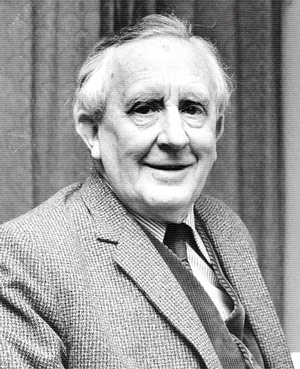
I've become more fascinated with C.S. Lewis and J.R.R Tolkien and in particular their theology of the gospel and myth, etc. But I started to read the other day a bunch of quotes from Tolkien about the Eucharist and how it was basically the centre of his faith (as Christ should be).
These quotes are from a letter of Tolkien to his son who was struggling with his Catholic faith.
"I have suffered grievously in my life from stupid, tired, dimmed, and even bad priests; but I now know enough about myself to be aware that I should not leave the Church (which for me would mean leaving the allegiance of Our Lord) for any such reasons: I should leave because I did not believe, and should not believe any more, even if I had never met any one in orders who was not both wise and saintly. I should deny the Blessed Sacrament, that is: call Our Lord a fraud to His face.... I find it for myself difficult to believe that anyone who has ever been to Communion, even once, with at least right intention, can ever again reject Him without grave blame. (however, He alone knows each unique soul and its circumstances.) The only cure for sagging or fainting faith is communion. Though always Itself, perfect and complete and inviolate, the Blessed Sacrament does not operate completely and once for all in any of us. Like the act of Faith it must be continuous and grow by excercise. Frequency is of the highest effect. Seven times a week is more nourishing than seven times at intervals"
later in the letter Tolkien makes these claims about Protestantism:
"I myself am convinced by the Petrine claims, nor looking around the world does there seem much doubt which (if Christianity is true) is the True Church, the temple of the Spirit dying but living, corrupt but holy, self-reforming and rearising. But for me that Church of which the Pope is the acknowledged head on earth has as chief claim that it is the one that has (and still does) ever defended the Blessed Sacrament, and given it most honour, and put it (as Christ plainly intended) in the prime place. 'Feed my sheep' was His last charge to St Peter; and since His words are always first to be understood literally, I suppose them to refer primarily to the Bread of Life. It was against this that the W. European revolt (or Reformation) was really launched – 'the blasphemous fable of the Mass' – and faith/works a mere red herring."
These quotes are from a letter of Tolkien to his son who was struggling with his Catholic faith.
"I have suffered grievously in my life from stupid, tired, dimmed, and even bad priests; but I now know enough about myself to be aware that I should not leave the Church (which for me would mean leaving the allegiance of Our Lord) for any such reasons: I should leave because I did not believe, and should not believe any more, even if I had never met any one in orders who was not both wise and saintly. I should deny the Blessed Sacrament, that is: call Our Lord a fraud to His face.... I find it for myself difficult to believe that anyone who has ever been to Communion, even once, with at least right intention, can ever again reject Him without grave blame. (however, He alone knows each unique soul and its circumstances.) The only cure for sagging or fainting faith is communion. Though always Itself, perfect and complete and inviolate, the Blessed Sacrament does not operate completely and once for all in any of us. Like the act of Faith it must be continuous and grow by excercise. Frequency is of the highest effect. Seven times a week is more nourishing than seven times at intervals"
later in the letter Tolkien makes these claims about Protestantism:
"I myself am convinced by the Petrine claims, nor looking around the world does there seem much doubt which (if Christianity is true) is the True Church, the temple of the Spirit dying but living, corrupt but holy, self-reforming and rearising. But for me that Church of which the Pope is the acknowledged head on earth has as chief claim that it is the one that has (and still does) ever defended the Blessed Sacrament, and given it most honour, and put it (as Christ plainly intended) in the prime place. 'Feed my sheep' was His last charge to St Peter; and since His words are always first to be understood literally, I suppose them to refer primarily to the Bread of Life. It was against this that the W. European revolt (or Reformation) was really launched – 'the blasphemous fable of the Mass' – and faith/works a mere red herring."

These are some strong words but I think it's so fascinating how Communion meant so much to Tolkien, at all the tough times, it was what kept him there. I once read that Tolkien was furious with C.S. Lewis for not including a reference to the Eucharist in the Narnia books. Tolkien said to Lewis that any attempt to tell Christ's passion narritive without mentioning the institution of the Lord's Supper, was a failed attempt.
"Out of the darkness of my life, so much frustrated, I put before you the one great thing to love on earth: the Blessed Sacrament ... There you will find romance, glory, honour fidelity, and the true way of all your loves on earth, and more than that: Death by the divine paradox, that which ends life, and demands the surrender of all, and yet by the taste (or foretaste) of which alone can what you seek in your earthly relationships (love, faithfulness, joy) be maintained, or take on that complexion of reality, of eternal endurance, which every man's heart desires...:"
Finally Tolkien writes:
"I fell in love with the Blessed Sacrament from the beginning – and by the mercy of God never have fallen out again: but alas! I indeed did not live up to it. I brought you all up [his children] ill and talked to you too little. Out of wickedness and sloth I almost ceased to practise my religion...I failed as a father. Now I pray for you all, unceasingly, that the Healer (the Hælend as the Saviour was usually called in Old English) shall heal my defects, and that none of you shall ever cease to cry Benedictus qui venit in nomme Domini. [Blessed is he who comes in the name of the Lord] (from the Psalms and the Triumphal entry, and the Mass)"
Tolkien attended Mass every morning (as a child) and helped out as an altar boy and later as a server, he was raised by a Catholic priest.
"...happy are those who are called to his supper..." - Liturgy of the Eucharist (Novus Ordo)

Dinner Table In Heaven
So I made a new banner for this blog, and I was just thinking, if I had one wish when I got to Heaven, it's that I'd get to sit at a table for dinner one night (if there is food, and night) with Ravi Zacharias, St. Augustine, St. Paul, John Wesley, C.S. Lewis, and J.R.R. Tolkien. They're my heroes, and have contributed so much to my faith. I also hope Philip, Jared, and I will be able to finally figure out who is right in our debate and be able to sit in fellowship as well.
Sunday, April 20, 2008
C.S. Lewis - Awesome Quote
"This is the whole of Christianity. There is nothing else. It is easy to get muddled about that. It is easy to think that the Church has alot of different objects - education, building, missions, holding services...The Church exists for nothing else but to draw men into Christ, to make them little Christs. If they are not doing that, all the cathedrals, clergy, missions, sermons, even the Bible itself, are simply a waste of time. God became man for no other purpose." - C.S. Lewis in "Mere Christianity"
I am glad that there are men like C.S. Lewis and St. Augustine, who in my opinion can teach things to Christians of every branch and denomination. I think Lewis hits the nail on the head with this quote I read this morning. I love that he says 'even the Bible'. It's so easy to forget the simple faith, as the Church Fathers said "God become man in all ways but sin, so that man might become like God in all ways but essence".
I am glad that there are men like C.S. Lewis and St. Augustine, who in my opinion can teach things to Christians of every branch and denomination. I think Lewis hits the nail on the head with this quote I read this morning. I love that he says 'even the Bible'. It's so easy to forget the simple faith, as the Church Fathers said "God become man in all ways but sin, so that man might become like God in all ways but essence".
Subscribe to:
Posts (Atom)