Showing posts with label church. Show all posts

Thursday, July 9, 2009

Super Post, Must Read - Today's Catholicism - Variety in the Roman Kirk

"Thou art Peter, and on this rock will I build my Church" - The Gospel According to St. Matthew, Chapter 16, Verse 18

What's the Rock?
For Protestants it is St. Peter's confession - God bless them, as a former Protestant I have to say I believe they do more to advance the Catholic faith by teaching orthodox Christological and Trinitarian and Biblical theology than 9 out of 10 of the lapsed Catholics you meet throughout high school and wherever Italians and Francophones dwell.

Catholics believe St. Peter is the Rock (along with his successors, the bishops of Rome, or "popes"), but as a little bit of a tour of the Roman Church, I've replaced 'the Rock' with those things which some Catholics emphasize the most.

What's the Rock?: Abortion


I once told a Catholic "Christ died to start a Church, not a Pro-life Movement"

I've been reading the American Papist blog today and a number of the other "top" Catholic blogs and I find them dreadfully boring. They're just Abortion this, Abortion that, Abortion... yes, if I lived during the Holocaust I would be talking about how horrible it is, but the point is, the Gospel must still be preached, theology must still be taught, the Liturgy should still be refined, etc. As a student of Political Science, it is my firm conviction that abortion will never be illegal, and that probably something worse will come up eventually that Catholics will rave about all the more.

Needless to say, I am pro-life, I do think abortion is a moral evil, but I do think it is a subordinate issue. I have a friend who was a lapsed Catholic for over a year and he was HEAVILY involved in the pro-life movement, i'll never forget when I said to him "salvation is by grace" and he said "what's grace?" - that almost stopped my conversion immediately, but I'm simply saying all of this to emphasize how abortion has usurped the message of salvation which after all is the whole purpose of Christianity.

What's the Rock: Charismatic Gifts of the Holy Spirit


Charles Spurgeon (still one of my heroes) once said in regards the Wesleyan movement that he didn't care about being filled with enthusiasm, and that the only emotion he wanted to feel deeply was repentance. I agree with him. But there are some things I like about the Charismatics, the fact that they actually believe the Bible is one refreshing thing. I empathize with Lutheran Theologian Paul Tillich who once said "I am excited for the day when we can all talk about God again without embarrassment". This article in first things by the Episcopal (famous Catholic sympathizer) writer Philip Jenkins is all about the Charismatic movement (specifically in the global south):

http://www.firstthings.com/article/2007/01/believing-in-the-global-south-17

Their stories fill me with hope that once again supernaturalism will triumph over the arbitrary western tyrant of naturalism.

What's the Rock: All Things Idolatry


C.S. Lewis said that Catholicism goes wrong when it becomes the world-old folk religion of amulets and magic. In spite of Newman's wonderful sophistry about "dulia" and "hyper-dulia" and "latria" I've been unfortunate enough to have to read medieval british books on popular Piety and they always talk about how we should "worshippe the Saintes in a goodley waye" or some other myspelld idolatri. It's really annoying how they write. In any case, many Roman Christians in my estimation easily jump over the line from mere dulia (devotion) to latria (worship). Maybe it's just me, but my own brain has a worship and non-worship switch. Anyway, I still like the saints but I think the Anglican Communion has a healthier theology on them... it could be worse, we could be East Orthodox, there's worship for you (I don't know the Greek word for Latria otherwise I'd use it to sound smart).

I find that others are so ridiculous about protecting the Eucharist that it is just ridiculous. I understand respect and treating the Eucharist in a worthy way, and I believe transubstantiation, but seriously, we are talking about the same Jesus right? They stopped serving the Eucharist by intinction (dipping the bread into the wine and giving it to the communicant) because a drop of the blood might fall on the ground. ... does anyone in the Catholic Church remember that Christ's blood was poured out onto the ground for our sake. That he was despised, trampled, and spat on. I think he can take a carpet at St. Alexander's parish church.

And for the life of me, I'm tired of trying to explain my way out of awkward moments at mealtime when a Protestant friend or family member will ask me about upside-down buried statues of St. Joseph and real estate. (St. Thomas More, pray for the destruction of idolatry and false veneration!)

What's the Rock?: The Church


Dave Armstrong and many Protestant Converts boast about the awesomeness of the Church and use grandiose statements about how humungous and gigantic "our" (as if they did any of it) Ancient Communion is. They teach what the (self-proclaimed) Bishop James White describes as sola ecclesia, or 'the church alone' for salvation. I don't believe this is official church teaching - and neither would Protestants if they had to sit through the dreaded "subsistit in" debates which are now every discussion on Vatican II (the council says that true Christianity -or something to that effect - "Subsist in the Catholic Church", the debate is thus, 'are Protestants unknowingly in the Catholic Church, or is this Feeneyism - only the visible Catholic Church is the true elect church). Anyway, whether they changed Tridentine declarations or not (I think they kind of did) Vatican II now teaches something much closer to a catholic/orthodox view of Tradition, that Scripture is materially sufficient as the source of faith and morals and that Tradition is the interpretive lens.

The Church and Ecclesiology is important, but even Papa Benny says that the more offices and mechanisms the Church adds for itself the more the Spirit is quenched.

What's the Rock?: Social Gospel


This group is the inverse of the previous group, they seem to think that Jesus was a 1st century Che Gueverra who was killed for resisting "the man". The whole purpose of Church is to protect the poor and the innocent. To accept Homosexuals and outcasts. Like the Charismatics, I don't have as much of a problem with the Social Gospel people, they do a hell of alot more to live their faith than I do. But my issue is always with their watered-down theology, and dodgy leftist politics. This group reminds me of a female Catholic theology student I talked with the other day with whom I voiced my concern "I think the Church (Catholic) has contradicted itself" and she replied to the effect of "so what? you thought we were infallible?". Strangely when the Catholic Church advertised "Infallibility", I assumed it's adherents believed in it, but it's ok, I still do, but not with the fervor I used to, and now with the knowledge that many in the fold do not.

What's the Rock?: Christ
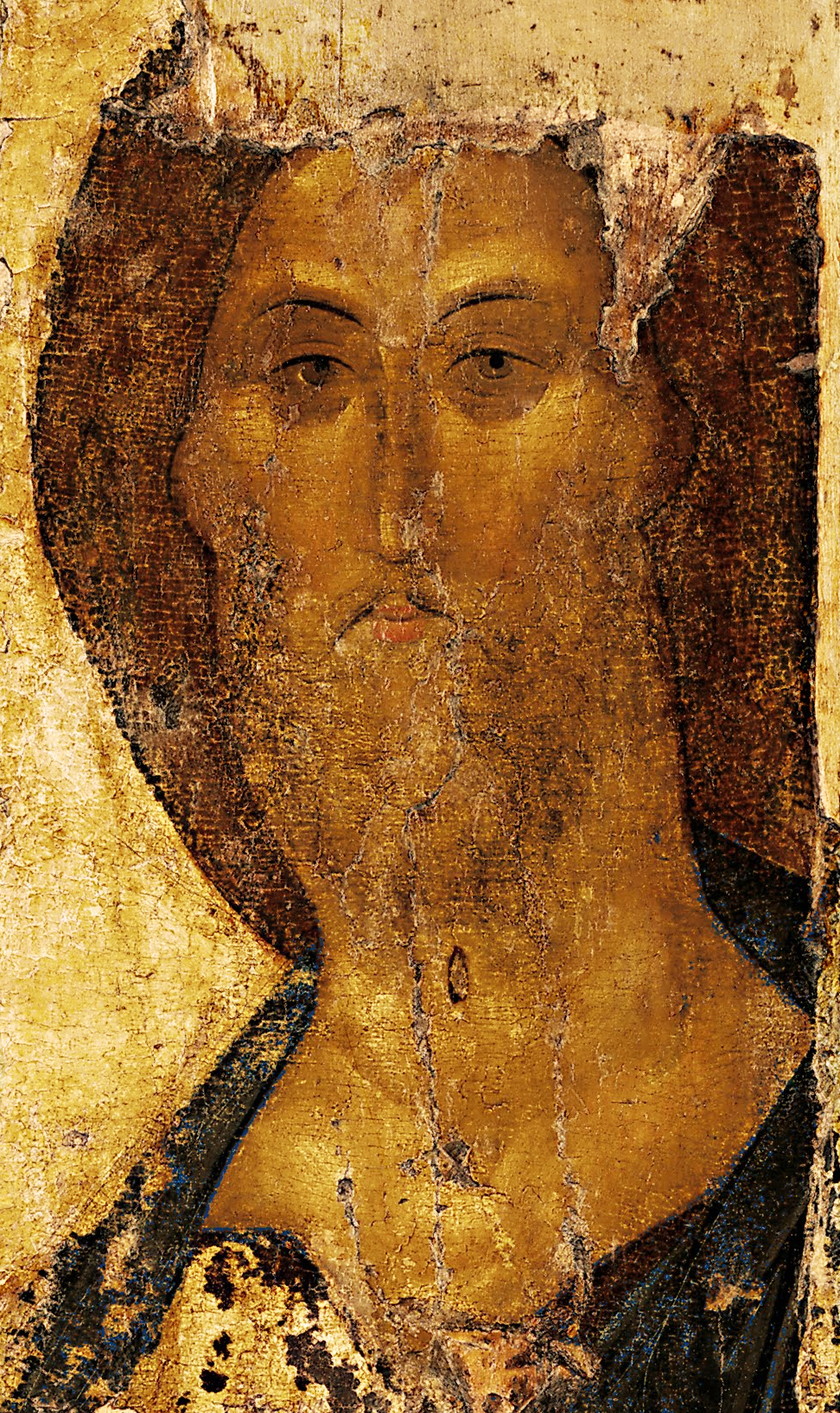


This final group are to me the group I associate myself with. I have found a small communion of Catholics (most of which are dead) with whom I associate myself. St. Thomas More, the Venerable Cardinal John Henry Newman, G.K. Chesterton, Peter Kreeft, Henry Nouwen, Thomas Howard, Richard John Neuhaus and to a lesser extent J.R.R. Tolkien & the Anglo-Catholics (C.S. Lewis, and others). These are the people who always centre Roman Catholic theology on the person, work, and teachings of Jesus. When they discuss the faith, they talk about the love of Christ, about the mercy of God, about true repentance and Christian living. They emphasize the Eucharist, the Church, the Blessed Virgin Mary, and all the saints only to point to Christ. Peter Kreeft says that Protestants will only become Catholics if they see the Christo-centric nature of Catholicism (which for me was like finding Waldo, but it is there somewhere). I feel at home with the Anglican converts to Rome, because most of them seem to share this similar view, a view taught quite alot in Traditional Anglicanism (may she rest in peace), and I feel like a thoroughly English Catholic. My faith isn't centred on abortion, or 'christian' marxism, or speaking in tongues, it's about Jesus. It's not that those things are wrong, it's just that they are subordinate in importance. To Sum this camp up, I'll close with a quote I love by C.S. Lewis about this:

"This is the whole of Christianity. There is nothing else. It is so easy to get muddled about that. It is easy to think that the Church has a lot of different objectives -- education, building, missions, holding services. The Church exists for nothing else but to draw men into Christ, to make them little Christ's. If they are not doing that, all the cathedrals, clergy, missions, sermons, even the Bible itself, are simply a waste of time. God became Man for no other purpose. It is even doubtful, you know, whether the whole universe was created for any other purpose."

Tuesday, February 3, 2009

Observations In The Church of Rome (Pt.5) - A Love-Hate Relationship

I was talking to Claire the other day and complaining about the Pro-Life movement, the Rosary, and the RCIA program and she said "Are you even Catholic!?" because I was criticizing the Church so much. It was a funny question because I find if I criticized the Roman Catholic Church from the outside, I criticize it more from the inside, but these are very different criticisms and are motivated in an entirely different way.

From outside the Church I criticized all the typical Protestant complaints about Sola Fide, Sola Scriptura, etc. But little to none of that was based on evidence, and it was motivated by a direct hatred for the Church. My Grandmother told me that Catholic Churches actually had rooms where they tortured "Christians" (I only believed Protestants were Christians, and I didn't know the Orthodox Church existed.). Those were the kind of typical problems I had with it. I criticized it to show it's untruth's, illegitimacy, and charlatanism. Funnily enough, I went on a tour of our Cathedral yesterday and I didn't see the Torture room, but I bet it's just hidden.

If someone asked me if I was a Reformer, I would probably say yes. I am all for Reforming the Church, if that is understood to be, challenging it in new ways, trying to bring a spirit of renewal, and urging it to act as it should. But I am not a Rebel. My understanding is that the Church is not something you and 2 friends can start in your basement. And even though the 3 people in the basement might be starting it for completely Christian ideals and goals, I still couldn't call it a Church in the proper theological sense (but that's a whole other issue)

So from within the Church I criticize it because I love it. I believe in the Innerancy of the Magesterium's official Church teaching, but I also believe that this teaching is not making it to the Laity, the People of God, the rest of the Church. It exists in the Catechism, it exists in the speeches of the Popes and nearly everything they do. But it doesn't exist in the minds of most ordinary Catholics. And for this reason, I criticize day and night the Catholic Church. Not because of what it teaches, but who it teaches. It rarely makes it to the front lines as it were.

Just look at this quote from JP II
"God passionately desires and ardently yearns for our salvation... Nothing is greater than this: that the blood of God was poured out for us."- Pope John Paul II.

That's the gospel my friends, nothing could be clearer. And that's what the Church teaches officially. But like I said, when you get down to the local church you'll find the misinformation, the heresy (almost always Pelagianism or Judaism, ie. telling the story of salvation without mentioning Christ), and the apathy which is rampant (in my diocese at least).

I heard my dad explain once about the way that a parent gets angry at their children not because they hate them, but because they see them doing stupid things and not living up to their full potential. It is in this way that I get angry with my Church.

But as the hero of Western Christian theology said, "If you are silent, be silent out of love. If you speak, speak out of love."- St. Augustine. That's what I try to do.

Finally as a Reformer within the Church I find myself in good company, and I love this quote:

"The more administrative machinery we construct, be it the most modern, the less place there is for the Spirit, the less place there is for the Lord, and the less freedom there is. It is my opinion that we ought to begin an unsparing examination of conscience on this point at all levels in the Church." - Joseph Cardinal Ratzinger, now Pope Benedict XVI

If the Pope is for Reform, count me in.

Sunday, April 20, 2008

C.S. Lewis - Awesome Quote

"This is the whole of Christianity. There is nothing else. It is easy to get muddled about that. It is easy to think that the Church has alot of different objects - education, building, missions, holding services...The Church exists for nothing else but to draw men into Christ, to make them little Christs. If they are not doing that, all the cathedrals, clergy, missions, sermons, even the Bible itself, are simply a waste of time. God became man for no other purpose." - C.S. Lewis in "Mere Christianity"

I am glad that there are men like C.S. Lewis and St. Augustine, who in my opinion can teach things to Christians of every branch and denomination. I think Lewis hits the nail on the head with this quote I read this morning. I love that he says 'even the Bible'. It's so easy to forget the simple faith, as the Church Fathers said "God become man in all ways but sin, so that man might become like God in all ways but essence".

Sunday, April 13, 2008

Worship is Scary: Fearing God

I just got back from Mass at St. Alexander's. It is a fairly modern Roman Catholic church, there are giant stained-glass windows and a huge Jesus with outstretched arms at the centre of the church. There are the stations of the cross (via crucis), pews, pianos, not too different from some Anglican churches aside from the obvious things I've mentioned. The Homily (sermon) was on Jesus the Good Shepherd, and all of the liturgy was about Jesus actually, every other word was Christ, and Mary and the Pope only got one name drop a piece the whole time. One thing was unusual though to my low church experience, we had to kneel for the Eucharist - which if you believe as I do, it's Jesus, it isn't that big of a deal to have to kneel - and we had things to recite that I didn't know - luckily I have memorized the Apostles Creed etc, but not everything.

I was thinking, as I knelt and dodged the people rushing forward and back to the pews in a synchronized pattern, man this is a bit strange and uncomfortable to me. Then I thought about what the Mass claims to be and a few other things. The Mass is supposed to be (it can be argued of course) an ancient service handed down by the apostles, and I figure if I felt comfortable through all of it, and it simply catered to my needs, how would that by Christ-centred and Historic Christianity. I started to think, maybe worshipping God IS supposed to be a bit scary.

Proverbs says 'the fear of the Lord is the beginning of wisdom', but we are to love God perfectly and St. John writes that 'perfect love casts out fear' it's a bit of a paradox. Some people translate 'fear' as 'reverence', and that might be closer to it. I decided to go through the bible and see whether worship involved fear.

In Exodus 19 it describes when God is about to give the law to Moses. It says that God descended onto the mountain in a dense cloud, and that "all the people who were in the camp trembled". In Exodus 24:17 it says "the LORD was like a devouring fire on the top of the mountain in the sight of the people of Israel". I can't find it now - I wish I could, but I read a verse the other day where the people of God were to go before the Lord but they were too terrified and wanted Moses to do it, because they were afraid. These are God's people here, Israel, the body which now includes the church (for you covenant theologians out there). It is interesting to me that God's worship was on his terms, his way, not what was comfortable, little to nothing about the law was 'like everyone else' or 'comfortable'.

In Isaiah 6 when Isaiah has a vision of heaven, even the angels cover their faces from God, and the description of heaven is scary. I mean they burn his lips with a coal for his ordination, come on!

In the gospels Jesus message and God's truth got him killed. And he said lots of scary things about fearing God who can kill the body and the soul.

In Acts 4 the believers pray for boldness because they are persecuted so much. In Acts 5 God strikes Ananias and Sapphira DEAD for commiting a high handed sin against God (or a mortal sin for Catholics). God is scary, there's no getting around it.

Philippians 3:20 it says that 'our citizenship is in Heaven' St. Paul describes the church as a colony of Heaven - something the Philippians understood as the city of Philippi was a Roman colony of Greece. The people were different from the surrounding towns, they spoke Latin, they had Roman culture and Roman food etc. So when Paul describes what we are to be like - it is a description of something unrecognizable to the culture, completely 'un-seeker sensitive' in appearance, but seeker sensitive in love/charity. Likewise Peter's epistle calls us 'aliens in this world'.

Finally in Revelation 4, when St. John is witnessing the worship in Heaven, he describes a crazy Rainbow-colored, lightning-shooting, throne with people chanting a liturgy over and over for all eternity, falling on their faces before God, surrounded by strange scary sounding animals. This is God. This is worship, and it's not hard to imagine that being in the presence of Almighty God worshipping the Creator of the Universe, maybe should fill us with 'fear and trembling' - as we are told by Paul to work out our salvation in. (Phil.2.12)

I guess the thesis of all this is, I think Bill Hybels is wrong, God wants loving people, but still, people who fear him, people called out to be different and strange to those around them. Not churches that are afraid to put up crosses because they might 'offend' people... maybe that offends Jesus, I mean he seemed a little attached to the cross if I remember (forgive me for that off colour joke).

Sunday, February 24, 2008

Ekklesia Veritas - The True Body of Christ?

"One holy, catholic, and apostolic church" - Nicene Creed

This creed sent me in search of the true church. I trusted it because it proves the Trinity, but it had led me to at least 2 major problems.

1. It says that baptism is for the forgiveness of sins - which I still haven't even got to yet in my search.

2. The Church as recognized and defined by the early church against the threat of heresy (mainly gnosticism) that it had to be 4 things:

a. One - Unified. What kind of unity? in the gospel? in Christ? in the Holy Spirit? No the Church at the time was unified by a shared communion - like the Roman Catholic Church or the Anglican Church.

b. Holy - Seperated distinct from the people all around - like the Jews were to the Canaanites. It means that the church is set apart, and actively different and morally pure. I don't know if any church fully meets that standard. The Amish are good at the 'set apart' bit, but not at the Catholic, or Aposotlic bit.

c. catholic - universal. Protestants usually just say universal and quickly move on, however this is important. The amish are a great glimpse at an entirely local church. They are not universal. Many protestant denominations are 90% white middle class families, in Canada, US, and UK - that isn't Catholic. Many Roman Catholics argue that even saying catholic means universal is not enough, but that it means in submission to Rome, but since the Greek Fathers might disagree, we'll leave that out for a bit.

d. Apostolic. There is debate here and now because of the Reformation. Protestants believe this means that the church holds to the teachings of the apostles and thus it is apostolic. But it is hard to argue that at the time, many believed this. It has always meant until 1517 that the church has apostolic succession, that the offices of bishops and priests have been passed on to the church today in a direct line to Christ. The only protestant churches that may argue this - though not superbly - are the Anglicans (who have the best case), the Lutherans, and some Reformed (though Calvin was never ordained, unlike Luther).

So for this reason and Paul's writing in Ephesians that there is one church, and his criticism of denominationalism in Corinthians led me to the Roman Catholic Church. I figured unless I would doubt all the other dogmas of the faith I would have to convert. However, it was not that easy. I saw that many of their dogmas even if they had little basis in scripture, still worked (like purgatory). Though they did do many things -which no amount of reading will I think ever change my mind - which I utterly disagree with. The elevate Mary to the place of co-redemptrix and they are tricky with the wording of everything so as to not 'technically' fall into unbiblical heresy. However still, to claim a person was born without sin and ascended into heaven and is a mediator of Christ's grace... to pray to her more than to the Lord Jesus Christ. That is wrong. And it doesn't matter what wording you have. It is clear from Paul in Romans that people have always tried to worship creatures rather than the creator. And the whole 2nd commandment issue - don't even get me started (that's why East Orthodox is out as well). The biggest thing however is the Pope. For I heard one Catholic Theologian say he is 'in essence, God on Earth', they call him the head of the Church - Christ is the head. So I could never be a part of an organization that usurps Christ's titles and pays more attention to his mother than him.

Where does this leave me? Anglicanism. It seemed like the perfect answer. It is one communion, catholic - universal (composed of many poor in central america etc.), apostolic (when the CofE was established all catholic bishops and priests made anglican, and the line has continued). However is it Holy? I am disturbed by many things within the Anglican church. I attended a service at my local Anglican church and the Female Priest said that Paul in 2 Tim was praying like a Pharisee and was too proud and not humble and that already the church had lost it's way. Also my diocese of Niagara was I think the first in the world to bless gay marriages. Homosexuality is wrong. Marriage is a sacrament of the church and should not be put upon even Christians and non-Christians, let alone those who are practicing homosexuals. I have no problem saying Christians who are struggling with homosexuality are as Christian as I or anyone is. But I have a problem with blessing it. The Anglican Church has been destroyed by Liberal Theology. Thus in Canada and the Episcopal Church in the U.S. The Anglican church is nearly brought to nothing. However in England there are many godly leaders and there has been a great history of good Anglican thinkers. You have Dr. Rowan Williams, the Archbishop of Canterbury. I think that man is a genius and I respect him highly. You have Dr. N.T. Wright one of the best New Testament scholars around and I love his stuff on the resurrection and the authority of scripture. You have C.S. Lewis, John Stott, and many others. So maybe I could be an Anglican in England or elsewhere? I simply fear there is no perfect church, and that is why I am becoming more and more partial to Calvin and the other reformers' view on the Church. That we find our unity in Christ, that the church is holy because he is holy, that it is universal because every tongue, tribe, and nation will declare Jesus is Lord, and that these confessions of Christ are being made in every place in each church and thus the church is catholic, and that each church is only apostolic in so much as it's teaching agrees with the Apostles and their teaching.