Ironically I've started a very very small Reformed fight with my anti-Calvin Lutheran arguments about the Eucharist.
To be honest, I don't think the Real Presence or Absence of Christ in the Eucharist is really an issue (as we Catholics don't even believe they have a valid Eucharist, so really it IS just bread and wine). The real arguments are:
1. How dare you say we don't have a valid eucharist! / Does confecting the Eucharist require Holy Orders?
2. Is the Eucharist a Sacrifice (the biggest question)?
3. Is grace bestowed (and venial sin forgiven) through the Eucharist

Showing posts with label Eucharist. Show all posts
Showing posts with label Eucharist. Show all posts
Monday, October 19, 2009

Why Luther and I Think Calvin Is Wrong About The Eucharist
Ascension doesn't pose a problem unless you're a modernist who doesn't believe Jesus actually multiplied the loaves and fish in the feeding miracles, God can create as much of his body as he wants (which I'm sure is what GODzilla's redemptive message was). As well we can choose to or not to heed St. Augustine's warning that it is dangerous to think too greatly about the Ascension (and he didn't even know about the stratosphere, space, etc).
But to add more Augustine:
"For just as he remained with us even after his ascension, so we too are already in heaven with him, even though what is promised us has not yet been fulfilled in our bodies.
Christ is now exalted above the heavens, but he still suffers on earth all the pain that we, the members of his body, have to bear. He showed this when he cried out from above: Saul, Saul, why do you persecute me? and when he said: I was hungry and you gave me food.
Why do we on earth not strive to find rest with him in heaven even now, through the faith, hope and love that unites us to him? While in heaven he is also with us; and we while on earth are with him." - St. Augustine of Hippo "Sermon on the Feast of the Ascension)
This however is my argument that oldest and most hated of Christian arguments: It's a mystery!
Luther's response is much more Biblical and difficult to refute:
"The cup of blessing which we bless, is it not the communion of the blood of Christ? The bread which we break, is it not the communion of the body of Christ?" - 1 Corinthians 10:16
Now unless St. Paul was really throwing us through a loop and the rhetorical answer was "no" it would appear that all Calvinist and Zwinglian interpretations which basically make it the Holy Spirit are at a loss here. It's the communion of the BODY and BLOOD of Christ NOT the SPIRIT of Christ. There. don't blame me, blame Sts. Paul, Augustine, and (un-st. ?) Martin Luther, and possibly God.
But to add more Augustine:
"For just as he remained with us even after his ascension, so we too are already in heaven with him, even though what is promised us has not yet been fulfilled in our bodies.
Christ is now exalted above the heavens, but he still suffers on earth all the pain that we, the members of his body, have to bear. He showed this when he cried out from above: Saul, Saul, why do you persecute me? and when he said: I was hungry and you gave me food.
Why do we on earth not strive to find rest with him in heaven even now, through the faith, hope and love that unites us to him? While in heaven he is also with us; and we while on earth are with him." - St. Augustine of Hippo "Sermon on the Feast of the Ascension)
This however is my argument that oldest and most hated of Christian arguments: It's a mystery!
Luther's response is much more Biblical and difficult to refute:
"The cup of blessing which we bless, is it not the communion of the blood of Christ? The bread which we break, is it not the communion of the body of Christ?" - 1 Corinthians 10:16
Now unless St. Paul was really throwing us through a loop and the rhetorical answer was "no" it would appear that all Calvinist and Zwinglian interpretations which basically make it the Holy Spirit are at a loss here. It's the communion of the BODY and BLOOD of Christ NOT the SPIRIT of Christ. There. don't blame me, blame Sts. Paul, Augustine, and (un-st. ?) Martin Luther, and possibly God.
Friday, October 16, 2009
The Book of Concord/Luther on the Real Presence
"Dr. Luther has also more amply expounded and confirmed this opinion from God's Word in the Large Catechism, where it is written: What, then, is the Sacrament of the Altar? Answer: It is the true body and blood of our Lord Jesus Christ, in and under the bread and wine, which we Christians are commanded by the Word of Christ to eat and to drink. 21] And shortly after: It is the 'Word,' I say, which makes and distinguishes this Sacrament, so that it is not mere bread and wine, but is, and is called. the body and blood of Christ. 22] Again: With this Word you can strengthen your conscience and say: If a hundred thousand devils, together with all fanatics, should rush forward, crying, How can bread and wine be the body and blood of Christ? I know that all spirits and scholars together are not as wise as is the Divine Majesty in His little finger. Now, here stands the Word of Christ: "Take, eat; this is My body. Drink ye all of this; this is the new testament in My blood," etc. Here we abide, and would like to see those who will constitute themselves His masters, and make it different from what He has spoken. 23] It is true, indeed, that if you take away the Word, or regard it without the Word, you have nothing but mere bread and wine. But if the words remain with them, as they shall and must, then, in virtue of the same, it is truly the body and blood of Christ. For as the lips of Christ say and speak, so it is, as He can never lie or deceive." - The Book of Concord on the Holy Supper 20.
My friend is becoming Lutheran, and I am excited for him, but I just thought I'd post Luther's view on the Eucharist because it has actually helped me understand the Catholic doctrine of the Real Presence from the medieval stance. Pelikan shows in his book on the catholic tradition in the medieval times, it was the words of Christ/the promise which was the guarentee of his presence. When I am having trouble believing in the Real Presence (more like trouble FEELING rather than Believing/Intellectually assenting), I think back to my Baptist roots and the infallibility of Scripture and the fact that Christ said it, and it is so. That usually gets me, and Luther says it great here so plainly, the Calvinists and the Zwinglians can talk about a Presence but it isn't Christ's presence, it's equivocation and the Spirit not the Body of Christ, and so he reminds us not only that Jesus cannot lie, but also cannot deceive.
My friend is becoming Lutheran, and I am excited for him, but I just thought I'd post Luther's view on the Eucharist because it has actually helped me understand the Catholic doctrine of the Real Presence from the medieval stance. Pelikan shows in his book on the catholic tradition in the medieval times, it was the words of Christ/the promise which was the guarentee of his presence. When I am having trouble believing in the Real Presence (more like trouble FEELING rather than Believing/Intellectually assenting), I think back to my Baptist roots and the infallibility of Scripture and the fact that Christ said it, and it is so. That usually gets me, and Luther says it great here so plainly, the Calvinists and the Zwinglians can talk about a Presence but it isn't Christ's presence, it's equivocation and the Spirit not the Body of Christ, and so he reminds us not only that Jesus cannot lie, but also cannot deceive.
Saturday, August 29, 2009
Immutability of God & The Sacrifice and Presence of Christ in the Eucharist
"Every generous act of giving, with every perfect gift, is from above, coming down from the Father of lights, with whom there is no variation or shadow due to change." - Epistle of St. James Chapter 1, Verse 17
This verse was in the reading of the Mass tonight, I've been thinking about it alot ever since I read how influential it was in the catholic medieval tradition in Jaroslav Pelikan's third volume on the Christian Tradition.
I was thinking about going to the Latin mass and the way the priest opened up the tabernacle and how every eye was fixed on the inside. Then I realized how the Sacrifice of the Mass is tied to the Immutability of God.
I was reminded of Bp. N.T. Wright's book where he talks about the parousia of Christ, the second advent/second coming, and how it really seems to mean in Greek the idea of something that is already a reality being revealed. It's as if something was already there (the Kingdom of God) and suddenly everyone realizes the hidden reality.
I was thinking that the sacrifice of the mass is like that. At the consecration we are given a glimpse into the window of the changeless nature of Christ's eternal self-giving love. Christ's Spirit which is present within our souls in an invisible matter, is suddenly joined by Christ's body and blood in a real physical manner for a few moments. It's as if when the tabernacle is opened, we see through it as a window into the scene of the Crucifixion, we offer our sorrow for our sins, and the sacrifice of worship, as St. John and the Blessed Virgin did at the foot of the cross.
God's immutability and simplicity of nature are a mystery, and the beatific vision always reminds me of a beautiful painting which we'll all enjoy in perfect satisfaction forever. And the promise is from "the Father of lights, with whom there is no variation or shadow due to change"
...but maybe that's just a stupid or heretical idea...
This verse was in the reading of the Mass tonight, I've been thinking about it alot ever since I read how influential it was in the catholic medieval tradition in Jaroslav Pelikan's third volume on the Christian Tradition.
I was thinking about going to the Latin mass and the way the priest opened up the tabernacle and how every eye was fixed on the inside. Then I realized how the Sacrifice of the Mass is tied to the Immutability of God.
I was reminded of Bp. N.T. Wright's book where he talks about the parousia of Christ, the second advent/second coming, and how it really seems to mean in Greek the idea of something that is already a reality being revealed. It's as if something was already there (the Kingdom of God) and suddenly everyone realizes the hidden reality.
I was thinking that the sacrifice of the mass is like that. At the consecration we are given a glimpse into the window of the changeless nature of Christ's eternal self-giving love. Christ's Spirit which is present within our souls in an invisible matter, is suddenly joined by Christ's body and blood in a real physical manner for a few moments. It's as if when the tabernacle is opened, we see through it as a window into the scene of the Crucifixion, we offer our sorrow for our sins, and the sacrifice of worship, as St. John and the Blessed Virgin did at the foot of the cross.
God's immutability and simplicity of nature are a mystery, and the beatific vision always reminds me of a beautiful painting which we'll all enjoy in perfect satisfaction forever. And the promise is from "the Father of lights, with whom there is no variation or shadow due to change"
...but maybe that's just a stupid or heretical idea...
Sunday, August 23, 2009
Glimpse of Luther - Humorous Church History
I'm reading Pelikan's 4th volume of Church History "Reformation of Church and Dogma" and I find Luther's contradictory nature really hillarious. I'm honestly, honestly, honestly, not trying to anger Protestants or Luther-admirers. I just seriously think it's hillarious how Luther was too "extreme" for the Lutherans.
For example, Christian Theology has always said that man in some way after the fall retained the Image of God, and has somehow allowed for a portion of free will (even Calvin did this I believe.). But Luther in his effort to completely destroy the idea of Free Will proposed in his commentary on Genesis that it was wrong to say we could even understand man before the fall (with Free Will) and:
"much less was it correct to say that the image [of God] was still present, for "it was lost through sin in Paradise."... In its place had come death and the fear of death..."These and similar evils are the image of the devil, who stamped them on us."" - Jaroslav Pelikan paraphrasing Martin Luther's Anthropolgy "The Christian Tradition" Vol. 4 p.142
But it gets better than Luther just saying Man is now in the Image of Satan.
Melancthon after Luther's death declared this view (in this case shared by Valla) to be "Manichean" (Ibid p.143) and argued his own view against those who "falsely contend" (Ibid p.144) Luther's view. So according to Lutheran Dogmatics systematized by Melancthon after Luther's death, Martin Luther himself would be condemned as a Manichee (which is exactly what the Roman Catholics were contending against him).
I also found an amazing treasure trove of quotes on Dave Armstrong's blog about the complete disagreement between the Reformers on the issue of the Eucharist. You should really check it out:
http://socrates58.blogspot.com/2009/08/quiz-on-early-protestant-disharmony.html
My favourite was a quote of Philip Schaff the famous Lutheran historian on Martin Luther's views on Ulrich Zwingli:
"He went so far as to call Zwingli a non-Christian (Unchrist), and ten times worse than a papist (March, 1528, in his Great Confession on the Lords Supper). . . . He saw in the heroic death of Zwingli and the defeat of the Zurichers at Cappel (1531) a righteous judgment of God, and found fault with the victorious Papists for not exterminating his heresy (Wider etliche Rottengeister, Letter to Albrecht of Prussia, April, 1532, in De Wette's edition of L. Briefe, Vol. IV. pp. 352, 353)." - Philip Schaff
lol. so the same Luther who called the Roman Church the Whore of Babylon, believes that it is a better Church than the Zwinglian churches and that God used it to judge Zwingli, and that it should've been HARSHER on him. hah, now I know why the Lutherans always feel closer to us Papists than the Anabaptists (and even the Reformed sometimes)
There you have it, another humorous episode of Church History. Tune in next time for the account of the Catholic villagers who tried to make a dog, a saint!
For example, Christian Theology has always said that man in some way after the fall retained the Image of God, and has somehow allowed for a portion of free will (even Calvin did this I believe.). But Luther in his effort to completely destroy the idea of Free Will proposed in his commentary on Genesis that it was wrong to say we could even understand man before the fall (with Free Will) and:
"much less was it correct to say that the image [of God] was still present, for "it was lost through sin in Paradise."... In its place had come death and the fear of death..."These and similar evils are the image of the devil, who stamped them on us."" - Jaroslav Pelikan paraphrasing Martin Luther's Anthropolgy "The Christian Tradition" Vol. 4 p.142
But it gets better than Luther just saying Man is now in the Image of Satan.
Melancthon after Luther's death declared this view (in this case shared by Valla) to be "Manichean" (Ibid p.143) and argued his own view against those who "falsely contend" (Ibid p.144) Luther's view. So according to Lutheran Dogmatics systematized by Melancthon after Luther's death, Martin Luther himself would be condemned as a Manichee (which is exactly what the Roman Catholics were contending against him).
I also found an amazing treasure trove of quotes on Dave Armstrong's blog about the complete disagreement between the Reformers on the issue of the Eucharist. You should really check it out:
http://socrates58.blogspot.com/2009/08/quiz-on-early-protestant-disharmony.html
My favourite was a quote of Philip Schaff the famous Lutheran historian on Martin Luther's views on Ulrich Zwingli:
"He went so far as to call Zwingli a non-Christian (Unchrist), and ten times worse than a papist (March, 1528, in his Great Confession on the Lords Supper). . . . He saw in the heroic death of Zwingli and the defeat of the Zurichers at Cappel (1531) a righteous judgment of God, and found fault with the victorious Papists for not exterminating his heresy (Wider etliche Rottengeister, Letter to Albrecht of Prussia, April, 1532, in De Wette's edition of L. Briefe, Vol. IV. pp. 352, 353)." - Philip Schaff
lol. so the same Luther who called the Roman Church the Whore of Babylon, believes that it is a better Church than the Zwinglian churches and that God used it to judge Zwingli, and that it should've been HARSHER on him. hah, now I know why the Lutherans always feel closer to us Papists than the Anabaptists (and even the Reformed sometimes)
There you have it, another humorous episode of Church History. Tune in next time for the account of the Catholic villagers who tried to make a dog, a saint!
Sunday, May 3, 2009
Eucharistic Faith
I've greatly enjoyed being Catholic so far, I'm getting comfortable with the new phraseology , instead of "as believers" I hear "by virtue of our baptism", etc. I feel like God has been teaching me very new things, different from what I am used to. I don't feel like he's teaching me theology so much as he is giving me experiences. I've been reading the parables more and I've found it amazing how important images were in explaining God and his Kingdom. I've therefore been trying to dig deep into the blessed sacrament and understand what it means to me.
I've been learning recently, what is commonly called in the Anglican and Catholic spheres "Eucharistic Faith". It's a faith fed by the Eucharist - Christ himself. As much as I love Aristotelian Metaphysics I don't like talking about Transubstantiation - though I believe it - but I like talking about 'The Real Presence' and how I meet Jesus in the sacrament. Instead of going into a hack job defense of transubstantiation, I'm just going to leave that to the Catholic apologists and tell the stories.
This morning at mass I was feeling a little cynical, I was feeling as though God would never talk to me or care about me, and at the same time praying that he would. I felt as though my prayers were screamed at a wall or lost somewhere in the space between earth and heaven. And in honesty when the Priest holds up the host and says "behold the lamb of God who taketh away the sins of the world" my first thought is not usually "amen", but "I do believe, Lord help my unbelief". Today as the bishop consecrated the hosts I looked up at a picture of Jesus at the last supper and remembered in my mind the words of St. John Chrysostom that the banquet we celebrate now and the banquet of Christ's last supper are "in no way different". I love those words "in no way different". And I imagined that as I took the communion I was sitting at the table with Jesus. As I received Christ physically I knelt in my pew and closed my eyes. I began to pray to Jesus and it felt as if he was right there, words fail me in describing it, other than to say RIGHT THERE, within me, as if I was whispering my prayer into his ear. I felt like I was in another world as I made my words known to the Word of God and when I finally opened my eyes, suddenly I felt back on earth. I can't explain it, no one will probably understand it, Protestants will probably find it blasphemous and from Satan, and Catholics will probably find it trite and stereotypical.
But it was the most real spiritual experience I've had in a while. And so I understand the Eucharistic faith, and Holy Communion remains for me a light in the darkness. I was thinking today of the spiritual depression I'd had and then thinking about 2 lines from Tolkien "in the darkness a light still shines" and "may it be a light to you, when all other lights fail". So I've felt incredibly blessed to be Catholic - not to say others can't have meaningful experiences, maybe I'm missing out on the way God is speaking to them. However for my part, I'm learning to love the Eucharist and to meet Jesus there, and it fills me with hope to think that my faith can physically be fed in communion and that it remains a sign that God has not abandoned us, and that Christ will be with us, until the very end of the age.
May the Lord grant you an encounter with the risen Christ in the Eucharist, the good gift, the mysterium fidei.
I've been learning recently, what is commonly called in the Anglican and Catholic spheres "Eucharistic Faith". It's a faith fed by the Eucharist - Christ himself. As much as I love Aristotelian Metaphysics I don't like talking about Transubstantiation - though I believe it - but I like talking about 'The Real Presence' and how I meet Jesus in the sacrament. Instead of going into a hack job defense of transubstantiation, I'm just going to leave that to the Catholic apologists and tell the stories.
This morning at mass I was feeling a little cynical, I was feeling as though God would never talk to me or care about me, and at the same time praying that he would. I felt as though my prayers were screamed at a wall or lost somewhere in the space between earth and heaven. And in honesty when the Priest holds up the host and says "behold the lamb of God who taketh away the sins of the world" my first thought is not usually "amen", but "I do believe, Lord help my unbelief". Today as the bishop consecrated the hosts I looked up at a picture of Jesus at the last supper and remembered in my mind the words of St. John Chrysostom that the banquet we celebrate now and the banquet of Christ's last supper are "in no way different". I love those words "in no way different". And I imagined that as I took the communion I was sitting at the table with Jesus. As I received Christ physically I knelt in my pew and closed my eyes. I began to pray to Jesus and it felt as if he was right there, words fail me in describing it, other than to say RIGHT THERE, within me, as if I was whispering my prayer into his ear. I felt like I was in another world as I made my words known to the Word of God and when I finally opened my eyes, suddenly I felt back on earth. I can't explain it, no one will probably understand it, Protestants will probably find it blasphemous and from Satan, and Catholics will probably find it trite and stereotypical.
But it was the most real spiritual experience I've had in a while. And so I understand the Eucharistic faith, and Holy Communion remains for me a light in the darkness. I was thinking today of the spiritual depression I'd had and then thinking about 2 lines from Tolkien "in the darkness a light still shines" and "may it be a light to you, when all other lights fail". So I've felt incredibly blessed to be Catholic - not to say others can't have meaningful experiences, maybe I'm missing out on the way God is speaking to them. However for my part, I'm learning to love the Eucharist and to meet Jesus there, and it fills me with hope to think that my faith can physically be fed in communion and that it remains a sign that God has not abandoned us, and that Christ will be with us, until the very end of the age.
May the Lord grant you an encounter with the risen Christ in the Eucharist, the good gift, the mysterium fidei.
Thursday, April 9, 2009
Rant: The Sacrifice of the Mass
So tonight was Maundy Thursday Mass of the Lord's Supper, and the Bishop just went on and on about how we have to believe in the Sacrifice of the Mass and Transubstantiation and how people don't talk about it anymore but we have to believe it. Then he lamented over the poor communities that "only" had the bible/gospel and worship and works of charity. Indeed, how sad to think of a biblical community spreading the gospel, worshipping the Lord, and loving their neighbours, what a deficient ecclesial community. Seriously man, it's communion, everyone has it, everyone eats it, and everyone agrees, it tastes like wine and bread (or in parts of the Evangelical tradition, goldfish crackers and cool-aid). He went on and on to quote Trent about the Sacrifice of the Mass, etc. But here's my beef: I think Trent just ratified the Church Fathers - see this proof text/quote mine of Roman Catholic apologetics (http://www.catholic.com/library/Sacrifice_of_the_Mass.asp)
But what does it matter that it is a sacrifice? That's my question. How does that make it any different? Because if you ask Catholics about it they have no answers, and if you look at the Catechism etc, it just says that it's not a 're-sacrificing' so what is it then. It's just a word. Sacrifice. Oblation. It's not even a 'real' sacrifice anyway because it's not taking away anyone's sins, it's like if someone took a picture of the crucifixion and said this is a re-displaying of the Sacrifice, and then everyone bowed down to the photo and we had the Liturgy of the Kodak and we all sat around talking about the Sacrifice of the Photo.
I just don't get it. For me the only reason the Sacrifice of the Mass is at all meaningful is because of the Sacrifice of Calvary. As Bp. N.T. Wright says, 'Jesus didn't give us a theological exposition to understand his death, he gave us a meal'. So I believe it's the body and blood of Christ, because Jesus says so, and if his spirit and body cannot be separated then if he is spiritually present he is bodily present, and all the Church Fathers all unilaterally agree on the Real Presence. So to me, the doctrine's full meaning is that Christ is present with us and actually dwells in us and we receive Him physically.
But what's the point of all the bowing and worship. I mean the Apostles lived with him and they didn't kneel before him / genuflect. They didn't bow down and worship him all the time. No, he washed THEIR feet - which we did tonight. Christ was trampled for our sake. In fact I think it would be a better tradition to take the host and smash it, or stomp on it. Because that's what happened to Jesus. He was pierced for our transgressions, he died for OUR sins. By his wounds we are healed. So why are we going through all of this ritual, Jesus said it himself "For even the Son of Man did not come into the world to serve but to be served and give his life as a ransom for many".
So our thoughts should be, "Jesus died for us", crucifixion, etc. The Eucharist is the memorial of Christ's death, not of the Eucharist. Jesus' purpose was not to eat a meal for the sake of eating a meal. Again it, like all of his life, was pointing to the cross, and our reconciliation and communion with God.
So that's how I feel, and that's why I get frustrated when I have to say the words "I believe and profess all that the holy Catholic Church believes, teaches, and proclaims to be revealed of God" for my confirmation, because while I agree with Rome, St. Catharines is a long way from Rome...
St. Thomas Aquinas Pray that we would truly understand the Eucharist, that it would lead us to Christ and not traditionalism and sacramentalism for their own sakes.
But what does it matter that it is a sacrifice? That's my question. How does that make it any different? Because if you ask Catholics about it they have no answers, and if you look at the Catechism etc, it just says that it's not a 're-sacrificing' so what is it then. It's just a word. Sacrifice. Oblation. It's not even a 'real' sacrifice anyway because it's not taking away anyone's sins, it's like if someone took a picture of the crucifixion and said this is a re-displaying of the Sacrifice, and then everyone bowed down to the photo and we had the Liturgy of the Kodak and we all sat around talking about the Sacrifice of the Photo.
I just don't get it. For me the only reason the Sacrifice of the Mass is at all meaningful is because of the Sacrifice of Calvary. As Bp. N.T. Wright says, 'Jesus didn't give us a theological exposition to understand his death, he gave us a meal'. So I believe it's the body and blood of Christ, because Jesus says so, and if his spirit and body cannot be separated then if he is spiritually present he is bodily present, and all the Church Fathers all unilaterally agree on the Real Presence. So to me, the doctrine's full meaning is that Christ is present with us and actually dwells in us and we receive Him physically.
But what's the point of all the bowing and worship. I mean the Apostles lived with him and they didn't kneel before him / genuflect. They didn't bow down and worship him all the time. No, he washed THEIR feet - which we did tonight. Christ was trampled for our sake. In fact I think it would be a better tradition to take the host and smash it, or stomp on it. Because that's what happened to Jesus. He was pierced for our transgressions, he died for OUR sins. By his wounds we are healed. So why are we going through all of this ritual, Jesus said it himself "For even the Son of Man did not come into the world to serve but to be served and give his life as a ransom for many".
So our thoughts should be, "Jesus died for us", crucifixion, etc. The Eucharist is the memorial of Christ's death, not of the Eucharist. Jesus' purpose was not to eat a meal for the sake of eating a meal. Again it, like all of his life, was pointing to the cross, and our reconciliation and communion with God.
So that's how I feel, and that's why I get frustrated when I have to say the words "I believe and profess all that the holy Catholic Church believes, teaches, and proclaims to be revealed of God" for my confirmation, because while I agree with Rome, St. Catharines is a long way from Rome...
St. Thomas Aquinas Pray that we would truly understand the Eucharist, that it would lead us to Christ and not traditionalism and sacramentalism for their own sakes.
Sunday, September 14, 2008
God is good - a simple observation
God is good. Among every other attribute the scriptures tell us this fact. They even implore us “taste and see that the Lord is good”. Today in mass everyone around me was doing just that (partaking in the Eucharist), and as I walked up I grudgingly wondered how much longer it would be till I was ‘in the club’ so to speak, until I got to join in, until I could taste and see that the Lord is good myself. But as I approach Fr. Peter he put down the Jesus/wafer and smiled while giving me a blessing. “The Lord be with you Andrew” and he signed the cross on my forehead. As I walked back to my pew I felt so much better, I don’t know how to describe it, it was like when I was baptized at my Baptist Church and I felt this overwhelming feeling of grace, today I felt some sort of grace. It was for me a beautiful image of a priest acting in persona Christi. I was always taught that the curtain ripping in the temple meant that we never needed a priest again, that any man who tried to claim spiritual authority was a heretic or worse a Catholic. But today I saw the beauty of spiritual fatherhood and it coincided perfectly with a verse I read in the bible.
“Even though you have ten thousand guardians in Christ, you do not have many fathers, for in Christ Jesus I became your father through the gospel” (1 Cor 4:15).
I understood what St. Paul was to the Corinthians now, he was an example in faith, a Bishop who corrected their errors, but more than that, a father in the gospel who showed them in some small way the Fatherhood of God. Of course if a person abused this position (as has occurred in many sex scandals, etc) the image could be the exact opposite, but it can also be of great encouragement. I guess I was just writing this story to say that the Lord is good, and is teaching me this through his servants.
God is good, and I will live with that. In the triumphal entry in St. Luke’s gospel it describes Jesus entering the town, and the Pharisees are upset, the people are crying out hosanna (‘save us’) and other cries that anticipated the messiah, and this would probably not escape the notice of the Roman guards. Jesus has this entry in fulfillment of Jewish scriptures (Zechariah) and people are crying to them as their king. This is when the pharisses say “Teacher, rebuke your disciples” (Lk. 19:39) and this I guess was a reasonable request, for if he did not rebuke them he risked causing a riot and a rebellion with Roman force to crush it. But the Pharisees miss the cosmic significance, they miss the God they worship, even though he is standing in front of them (and we probably would too). But Jesus says this classic line to them, “If they kept quiet, the stones will cry out.” (Lk. 19:40). It’s as if Jesus is saying: ‘I am Good, I am God, this is the day Israel has been waiting for since God first called Abraham, but if you miss this, if you refuse to recognize the significance of this, Creation itself will speak be your witness’.
Even in the bad times of life I must always remember the simple truth I sung to kids in Church of England schools over and over again during outreach: “our God is a good God, he’s a good good good good God”.
“Even though you have ten thousand guardians in Christ, you do not have many fathers, for in Christ Jesus I became your father through the gospel” (1 Cor 4:15).
I understood what St. Paul was to the Corinthians now, he was an example in faith, a Bishop who corrected their errors, but more than that, a father in the gospel who showed them in some small way the Fatherhood of God. Of course if a person abused this position (as has occurred in many sex scandals, etc) the image could be the exact opposite, but it can also be of great encouragement. I guess I was just writing this story to say that the Lord is good, and is teaching me this through his servants.
God is good, and I will live with that. In the triumphal entry in St. Luke’s gospel it describes Jesus entering the town, and the Pharisees are upset, the people are crying out hosanna (‘save us’) and other cries that anticipated the messiah, and this would probably not escape the notice of the Roman guards. Jesus has this entry in fulfillment of Jewish scriptures (Zechariah) and people are crying to them as their king. This is when the pharisses say “Teacher, rebuke your disciples” (Lk. 19:39) and this I guess was a reasonable request, for if he did not rebuke them he risked causing a riot and a rebellion with Roman force to crush it. But the Pharisees miss the cosmic significance, they miss the God they worship, even though he is standing in front of them (and we probably would too). But Jesus says this classic line to them, “If they kept quiet, the stones will cry out.” (Lk. 19:40). It’s as if Jesus is saying: ‘I am Good, I am God, this is the day Israel has been waiting for since God first called Abraham, but if you miss this, if you refuse to recognize the significance of this, Creation itself will speak be your witness’.
Even in the bad times of life I must always remember the simple truth I sung to kids in Church of England schools over and over again during outreach: “our God is a good God, he’s a good good good good God”.
Thursday, September 11, 2008
The Sacraments: Are They A Lie?
I think that the Reformation initially retained a Sacramental Piety, however I've come to realize once more how important the Sacraments are in the discussion of theology. If the sacraments are means of communicating grace (Catholicism) or if they are superstitious and empty rituals.
This is also not so much a Catholic - Protestant issue, as it is a more specific Calvinist & Zwinglian versus Catholic and to a lesser extent Lutheran and Anglican.
The question is not simply one of whether there are 7 Sacraments: Baptism, Communion, Confirmation, Penance, Marriage, Extreme Unction, and Holy Orders, or just the first 2. It is also a question of what do the sacraments do? what is their purpose. The question after that though is one of the very character of God. Does God care about the outward and physical or is he only concerned with the inner and spiritual.
The problem is that our Christian Ethics are Ontological rather than Teleological - they are based on the motive of the doer, rather than just the outcome. Was it T.S. Eliot who said the greatest sin was doing the right thing for the wrong reason? (if not it was some other British poet). SO one has to question why God would imbue special powers to actions.
The Calvinist position as I understand it is that God works effectually outside the sacraments in that the baptism which forgives you is the baptism of the Holy Spirit which occurs at the moment of saving faith. The infant baptism is just a covenantal sign, but ultimately it has no purpose other than marking the visible from the invisible church, but since in Calvinistic Ecclesiology (doctrine of the Church) the 'true' church is always the invisible church anyway, so there really isn't any point in being in the 'visible' church.
The Catholic position as I've argued before is that the sacraments have power. They actually are objective means of receiving grace. Every time you receive the Eucharist you are recieving the physical body, blood, soul, and divinity of Christ (I don't know how one receives his soul if it's his body, but there is probably something about it in Aquinas or a Scholastic, so I won't argue it...maybe I got it wrong by including his soul, nevermind). Likewise when you are absolved and forgiven of your sins by a priest you are forgiven by God Himself.
There are many biblical and historical arguments I've already listed in favour of a literal interpretation of Christ's words about the Holy Communion, and the Sacrament of Confession/Penance, and an argument for regenerative baptism (it forgives your sins). If you wish to see more just check out one of these sites: http://socrates58.blogspot.com/2007/10/topical-index-pages.html, or http://www.phatmass.com/directory/
The basic question though is why God would promise such Power to the Church? Why would he give frail men the ability to bind and loose, why would he give the keys of the Kingdom to St. Peter and allow men to determine who enters the Kingdom of Heaven. In all honesty, it gives me two thoughts:
1) God has stupidly given too much power to the Church
2) The Bible must be written by the Church as a means to claim supernatural power
The third option of course is that the Sacraments actually do have power and are efficatious, that God does care about physical actions. As C.S. Lewis put it in his defense of grace through the sacraments in Mere Christianity, God has no problem with matter, he created it, and it's no use trying to be more spiritual than God.
I was thinking the other day about Rob Bell's "The gods aren't angry" and how he proposes that none of the Israelite offerings in the Old Covenent satisfied God as he didn't 'need' blood. He also asked the question "Does your God need to hurt someone so that he can love?" it sounds like a great atheistic question and I've finally come to believe (as all Christians holding to either Calvin's Substitution or St. Anselm's Satisfaction theology of Atonement should) that yes God does have to hurt so that he can Love. But in essence he hurts himself, in Christ, he provides the sacrifice, which becomes an eternal part of his nature (Christ's eternal sacrifice).
I also remembered the 2 stories of God's anger towards violations of his covenants. The Second is of course 1 Corinthians 11 where St. Paul writes that those who partook of the Eucharist in an unworthy manner 'drank God's wrath against themselves' and 'were guilty of the body and blood of our Lord' and that this misuse resulted in illness and death. The first however is more obscure, I read about it in Exodus 4 at Capernwray Bible School and it was a blessing to be 'forced' to read the whole bible so that now I am more aware of all these extra stories.
The story is about Moses going into Egypt after receiving his mission from God in the Burning Bush, Zipporah and Moses are travelling with their son when we hear this:
"On the way, at a place where they spent the night, the Lord met him and tried to kill him. But Zipporah took a flint and cut off her son’s foreskin, and touched Moses’ feet with it, and said, ‘Truly you are a bridegroom of blood to me!’ So he let him alone. It was then she said, ‘A bridegroom of blood by circumcision.’ "" - Exodus 4:24-26
It seems odd to us that God would plan on killing Moses for not performing this outward circumcision rite. We are constantly taught in the New Testament that "circumcision nor uncircumcision availeth anything" (Gal 5) and likewise by St. Stephen the Martyr that we are to have 'circumcised hearts' not dead rituals. However it seems that in this story God disagrees, not in a way contradictory to the New Testament but in a way contradictory to my former interpretation. What if God really does care about the Sacraments about his Covenantal signs and realities. It isn't all bad though, it's also a huge gift, for maybe God really does work through the sacraments. Maybe that is why the Eucharist means 'the Good Gift' (or at least that's what someone told me).
The real question then is why no angel killed Zwingli? but I guess 'where sin abounded grace abounded all the more' (Rm 5.20)
An interesting book on this topic which I hope to buy soon is Dr. Scott Hahn's "Swear to God: God's Promise and Power of the Sacraments" http://www.amazon.com/Swear-God-Promise-Power-Sacraments/dp/0385509316/ref=sr_1_11?ie=UTF8&s=books&qid=1221099823&sr=1-11.
This is also not so much a Catholic - Protestant issue, as it is a more specific Calvinist & Zwinglian versus Catholic and to a lesser extent Lutheran and Anglican.
The question is not simply one of whether there are 7 Sacraments: Baptism, Communion, Confirmation, Penance, Marriage, Extreme Unction, and Holy Orders, or just the first 2. It is also a question of what do the sacraments do? what is their purpose. The question after that though is one of the very character of God. Does God care about the outward and physical or is he only concerned with the inner and spiritual.
The problem is that our Christian Ethics are Ontological rather than Teleological - they are based on the motive of the doer, rather than just the outcome. Was it T.S. Eliot who said the greatest sin was doing the right thing for the wrong reason? (if not it was some other British poet). SO one has to question why God would imbue special powers to actions.
The Calvinist position as I understand it is that God works effectually outside the sacraments in that the baptism which forgives you is the baptism of the Holy Spirit which occurs at the moment of saving faith. The infant baptism is just a covenantal sign, but ultimately it has no purpose other than marking the visible from the invisible church, but since in Calvinistic Ecclesiology (doctrine of the Church) the 'true' church is always the invisible church anyway, so there really isn't any point in being in the 'visible' church.
The Catholic position as I've argued before is that the sacraments have power. They actually are objective means of receiving grace. Every time you receive the Eucharist you are recieving the physical body, blood, soul, and divinity of Christ (I don't know how one receives his soul if it's his body, but there is probably something about it in Aquinas or a Scholastic, so I won't argue it...maybe I got it wrong by including his soul, nevermind). Likewise when you are absolved and forgiven of your sins by a priest you are forgiven by God Himself.
There are many biblical and historical arguments I've already listed in favour of a literal interpretation of Christ's words about the Holy Communion, and the Sacrament of Confession/Penance, and an argument for regenerative baptism (it forgives your sins). If you wish to see more just check out one of these sites: http://socrates58.blogspot.com/2007/10/topical-index-pages.html, or http://www.phatmass.com/directory/
The basic question though is why God would promise such Power to the Church? Why would he give frail men the ability to bind and loose, why would he give the keys of the Kingdom to St. Peter and allow men to determine who enters the Kingdom of Heaven. In all honesty, it gives me two thoughts:
1) God has stupidly given too much power to the Church
2) The Bible must be written by the Church as a means to claim supernatural power
The third option of course is that the Sacraments actually do have power and are efficatious, that God does care about physical actions. As C.S. Lewis put it in his defense of grace through the sacraments in Mere Christianity, God has no problem with matter, he created it, and it's no use trying to be more spiritual than God.
I was thinking the other day about Rob Bell's "The gods aren't angry" and how he proposes that none of the Israelite offerings in the Old Covenent satisfied God as he didn't 'need' blood. He also asked the question "Does your God need to hurt someone so that he can love?" it sounds like a great atheistic question and I've finally come to believe (as all Christians holding to either Calvin's Substitution or St. Anselm's Satisfaction theology of Atonement should) that yes God does have to hurt so that he can Love. But in essence he hurts himself, in Christ, he provides the sacrifice, which becomes an eternal part of his nature (Christ's eternal sacrifice).
I also remembered the 2 stories of God's anger towards violations of his covenants. The Second is of course 1 Corinthians 11 where St. Paul writes that those who partook of the Eucharist in an unworthy manner 'drank God's wrath against themselves' and 'were guilty of the body and blood of our Lord' and that this misuse resulted in illness and death. The first however is more obscure, I read about it in Exodus 4 at Capernwray Bible School and it was a blessing to be 'forced' to read the whole bible so that now I am more aware of all these extra stories.
The story is about Moses going into Egypt after receiving his mission from God in the Burning Bush, Zipporah and Moses are travelling with their son when we hear this:
"On the way, at a place where they spent the night, the Lord met him and tried to kill him. But Zipporah took a flint and cut off her son’s foreskin, and touched Moses’ feet with it, and said, ‘Truly you are a bridegroom of blood to me!’ So he let him alone. It was then she said, ‘A bridegroom of blood by circumcision.’ "" - Exodus 4:24-26
It seems odd to us that God would plan on killing Moses for not performing this outward circumcision rite. We are constantly taught in the New Testament that "circumcision nor uncircumcision availeth anything" (Gal 5) and likewise by St. Stephen the Martyr that we are to have 'circumcised hearts' not dead rituals. However it seems that in this story God disagrees, not in a way contradictory to the New Testament but in a way contradictory to my former interpretation. What if God really does care about the Sacraments about his Covenantal signs and realities. It isn't all bad though, it's also a huge gift, for maybe God really does work through the sacraments. Maybe that is why the Eucharist means 'the Good Gift' (or at least that's what someone told me).
The real question then is why no angel killed Zwingli? but I guess 'where sin abounded grace abounded all the more' (Rm 5.20)
An interesting book on this topic which I hope to buy soon is Dr. Scott Hahn's "Swear to God: God's Promise and Power of the Sacraments" http://www.amazon.com/Swear-God-Promise-Power-Sacraments/dp/0385509316/ref=sr_1_11?ie=UTF8&s=books&qid=1221099823&sr=1-11.
Thursday, August 21, 2008
J.R.R Tolkien & Eucharistic Theology
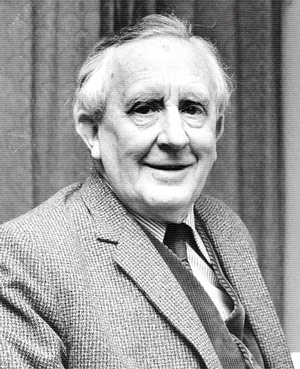
I've become more fascinated with C.S. Lewis and J.R.R Tolkien and in particular their theology of the gospel and myth, etc. But I started to read the other day a bunch of quotes from Tolkien about the Eucharist and how it was basically the centre of his faith (as Christ should be).
These quotes are from a letter of Tolkien to his son who was struggling with his Catholic faith.
"I have suffered grievously in my life from stupid, tired, dimmed, and even bad priests; but I now know enough about myself to be aware that I should not leave the Church (which for me would mean leaving the allegiance of Our Lord) for any such reasons: I should leave because I did not believe, and should not believe any more, even if I had never met any one in orders who was not both wise and saintly. I should deny the Blessed Sacrament, that is: call Our Lord a fraud to His face.... I find it for myself difficult to believe that anyone who has ever been to Communion, even once, with at least right intention, can ever again reject Him without grave blame. (however, He alone knows each unique soul and its circumstances.) The only cure for sagging or fainting faith is communion. Though always Itself, perfect and complete and inviolate, the Blessed Sacrament does not operate completely and once for all in any of us. Like the act of Faith it must be continuous and grow by excercise. Frequency is of the highest effect. Seven times a week is more nourishing than seven times at intervals"
later in the letter Tolkien makes these claims about Protestantism:
"I myself am convinced by the Petrine claims, nor looking around the world does there seem much doubt which (if Christianity is true) is the True Church, the temple of the Spirit dying but living, corrupt but holy, self-reforming and rearising. But for me that Church of which the Pope is the acknowledged head on earth has as chief claim that it is the one that has (and still does) ever defended the Blessed Sacrament, and given it most honour, and put it (as Christ plainly intended) in the prime place. 'Feed my sheep' was His last charge to St Peter; and since His words are always first to be understood literally, I suppose them to refer primarily to the Bread of Life. It was against this that the W. European revolt (or Reformation) was really launched – 'the blasphemous fable of the Mass' – and faith/works a mere red herring."
These quotes are from a letter of Tolkien to his son who was struggling with his Catholic faith.
"I have suffered grievously in my life from stupid, tired, dimmed, and even bad priests; but I now know enough about myself to be aware that I should not leave the Church (which for me would mean leaving the allegiance of Our Lord) for any such reasons: I should leave because I did not believe, and should not believe any more, even if I had never met any one in orders who was not both wise and saintly. I should deny the Blessed Sacrament, that is: call Our Lord a fraud to His face.... I find it for myself difficult to believe that anyone who has ever been to Communion, even once, with at least right intention, can ever again reject Him without grave blame. (however, He alone knows each unique soul and its circumstances.) The only cure for sagging or fainting faith is communion. Though always Itself, perfect and complete and inviolate, the Blessed Sacrament does not operate completely and once for all in any of us. Like the act of Faith it must be continuous and grow by excercise. Frequency is of the highest effect. Seven times a week is more nourishing than seven times at intervals"
later in the letter Tolkien makes these claims about Protestantism:
"I myself am convinced by the Petrine claims, nor looking around the world does there seem much doubt which (if Christianity is true) is the True Church, the temple of the Spirit dying but living, corrupt but holy, self-reforming and rearising. But for me that Church of which the Pope is the acknowledged head on earth has as chief claim that it is the one that has (and still does) ever defended the Blessed Sacrament, and given it most honour, and put it (as Christ plainly intended) in the prime place. 'Feed my sheep' was His last charge to St Peter; and since His words are always first to be understood literally, I suppose them to refer primarily to the Bread of Life. It was against this that the W. European revolt (or Reformation) was really launched – 'the blasphemous fable of the Mass' – and faith/works a mere red herring."

These are some strong words but I think it's so fascinating how Communion meant so much to Tolkien, at all the tough times, it was what kept him there. I once read that Tolkien was furious with C.S. Lewis for not including a reference to the Eucharist in the Narnia books. Tolkien said to Lewis that any attempt to tell Christ's passion narritive without mentioning the institution of the Lord's Supper, was a failed attempt.
"Out of the darkness of my life, so much frustrated, I put before you the one great thing to love on earth: the Blessed Sacrament ... There you will find romance, glory, honour fidelity, and the true way of all your loves on earth, and more than that: Death by the divine paradox, that which ends life, and demands the surrender of all, and yet by the taste (or foretaste) of which alone can what you seek in your earthly relationships (love, faithfulness, joy) be maintained, or take on that complexion of reality, of eternal endurance, which every man's heart desires...:"
Finally Tolkien writes:
"I fell in love with the Blessed Sacrament from the beginning – and by the mercy of God never have fallen out again: but alas! I indeed did not live up to it. I brought you all up [his children] ill and talked to you too little. Out of wickedness and sloth I almost ceased to practise my religion...I failed as a father. Now I pray for you all, unceasingly, that the Healer (the Hælend as the Saviour was usually called in Old English) shall heal my defects, and that none of you shall ever cease to cry Benedictus qui venit in nomme Domini. [Blessed is he who comes in the name of the Lord] (from the Psalms and the Triumphal entry, and the Mass)"
Tolkien attended Mass every morning (as a child) and helped out as an altar boy and later as a server, he was raised by a Catholic priest.
"...happy are those who are called to his supper..." - Liturgy of the Eucharist (Novus Ordo)

Sunday, August 10, 2008
The Good Gift
Holy Communion, the Eucharist, the Good Gift, is extremely important. For example, Christ says of it 'this is my body - this is my blood' and in John 6 Jesus says:
To me the most amazing thing is that St. Paul or any other NT epistle rarely ever quotes Christ, there is probably only a handful of phrases St. Paul even knew from Jesus, he most likely did not ever read the gospels (maybe mark - which I don't think includes these phrases). This means that the early church had such a high view of the Eucharist that it passed on the exact or near exact words of Jesus. St. Paul says he received it from the Lord (does this mean in his vision? maybe). All in all, it goes to show me that the early christians were very reverent when it came to communion - or rather were not, and thus invoked the wrath of St. Paul.
"Very truly, I tell you, unless you eat the flesh of the Son of Man and drink his blood, you have no life in you. Those who eat my flesh and drink my blood have eternal life, and I will raise them up on the last day; for my flesh is true food and my blood is true drink."As well, I read this passage the other day and was astonished again, it's St. Paul in 1 Corinthians 11 discussing the abuses of the Eucharist (to Protestants, no this does not mean the Corinthians weren't using Welch's Grape Juice and Goldfish crackers, and to the Catholics no this does not mean they were using a priest from SSPX)
"For I received from the Lord what I also handed on to you, that the Lord Jesus on the night when he was betrayed took a loaf of bread, and when he had given thanks, he broke it and said, ‘This is my body that is for you. Do this in remembrance of me.’ In the same way he took the cup also, after supper, saying, ‘This cup is the new covenant in my blood. Do this, as often as you drink it, in remembrance of me.’ For as often as you eat this bread and drink the cup, you proclaim the Lord’s death until he comes. Whoever, therefore, eats the bread or drinks the cup of the Lord in an unworthy manner will be answerable for the body and blood of the Lord. Examine yourselves, and only then eat of the bread and drink of the cup. For all who eat and drink without discerning the body, eat and drink judgement against
themselves. For this reason many of you are weak and ill, and some
have died."
To me the most amazing thing is that St. Paul or any other NT epistle rarely ever quotes Christ, there is probably only a handful of phrases St. Paul even knew from Jesus, he most likely did not ever read the gospels (maybe mark - which I don't think includes these phrases). This means that the early church had such a high view of the Eucharist that it passed on the exact or near exact words of Jesus. St. Paul says he received it from the Lord (does this mean in his vision? maybe). All in all, it goes to show me that the early christians were very reverent when it came to communion - or rather were not, and thus invoked the wrath of St. Paul.
Subscribe to:
Posts (Atom)