Showing posts with label saints. Show all posts

Sunday, August 23, 2009

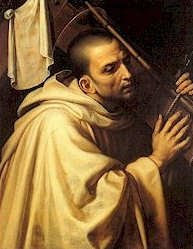
St. Robert Bellarmine: Fasting, Legalism, and Cheap Grace

I try to read a bit of everyone to get my head around the Catholic Tradition. I've read some St. Augustine, St. Bernard of Clairvaux, St. Thomas Aquinas, and only a tiny bit of St. Thomas More & St. Edmund Campion, and some modern saints and theologians like Cardinal Newman and JPII.

But the theological era I probably know least about in the Catholic Tradition is the Catholic Counter/Catholic-Reformation. From Trent to Vatican I, I am in need of learning.

The other problem I find is that these writers tend to be the "scary" Catholics. The super-guilt promoting, super-Marian, ultramontantists. But the one thing I like is that they know proper Catholic morality. What Lutherans would call "the Law". St. Robert Bellarmine a counter/Catholic-Reformation Cardinal and Tridentine theologian. Here is just a taste of his writing on fasting:

"This is also the constant doctrine of the holy fathers: Tertullian says: “As we refrain from the use of food, so our fasting satisfies God." (De Jejunio) St. Cyprian: “Let us appease the anger of an offended God, by fasting and weeping, as he admonishes us. "(De Lapsis) St. Basil: "Penance, without fasting, is useless and vain; by fasting satisfy God." (De Jejunio) St. Chrysostom: "God, like an indulgent father, offers us a cure by fasting." St. Ambrose also says: "Fasting is the death of sin, the destruction of our crimes, and the remedy of our salvation." St. Jerome, in his Commentary on the third chapter of Jonas, remarks: "Fasting and sackcloth are the arms of penance, the help of sinners." St. Augustine likewise says: “No one fasts for human praise, but for the pardon of his sins." So also St. Bernard in his 66th Sermon on the Canticles: “I often fast, and my fasting is a satisfaction for sin, not a superstition for impiety."" - St. Robert Bellarmine "The Art of Dying Well" Ch. VIII p. 21

But what some would call his legalism (even though here he just ends up quoting Church Fathers), I find to be an authentic assessment of the Christian moral tradition. The thing I find disturbing about modern Jesuit-style moral theology is that it diminishes sin to a point that promotes legalism rather than repentance or abstinence. Philip Yancey in his book "What's So Amazing About Grace" says that those who have a low view of the law actually end up having a lower view of grace and the gospel. Bonhoeffer calls a similar issue "cheap grace" where we cheapen the forgiveness and grace of God because of a moral laxity that doesn't understand how deeply we've offended him. While St. Robert here seems harsh, he also writes the solution to sin, which IS a reality:


"nothing can be imagined more useful than for those who value their salvation, , twice every day, morning and night, diligently to examine their conscience; what they have done during the night, or the preceding day; what they have said, desired, or thought of, in which sin may have entered; and if they shall discover anything mortal, let them not defer seeking the remedy of true contrition, with a resolution to approach the sacrament of penance on the very first opportunity. Wherefore, let them ask of God the gift of contrition, let them ponder on the enormity of sin, let them detest their sins from their heart, and seriously ask themselves who is the "offended and the offenders." Man, a worm, offends God the Almighty; a base slave, the Lord of heaven and earth! Spare not then your tears, nor cease to strike your breast: in fine, make a firm resolution never more to offend God, never more to irritate the best of Fathers. If this examination be continued morning and night, or at least once in the day, it can scarcely happen that we shall die in sin, or mad, or delirious. Thus it will be, that every preparation being made for a good death, neither its uncertainty will trouble us, nor the happiness of eternal life fail us." - St. Robert Bellarmine "The Art of Dying Well" Ch. VI

Repentance, true repentance is necessary. When we understand sin in it's entirety and God's mercy in it's entirety we avoid cheap grace and legalism.

Fasting is a practice I need to cultivate.

Wednesday, August 5, 2009

The Joys of Catholicism (4) - Saints in Our Midst

I love the stories of great Catholics who have served Christ in ways beyond anything I will probably ever do. here is one example. He isn't a saint (yet), but Cardinal Nguyen Van Thuan was a Vietnamese bishop who was imprisoned during the Vietnam war and lived an amazing life in general. When he was imprisoned he celebrated mass in the darkness by memory using 3 drops of wine and 1 drop of water in his palm and tiny pieces of broken bread. When he was transferred out of solitary confinement at one point he wrote:

"When the Communists put me in the hold of the boat, the Hai-Phong, along with 1500 other prisoners and moved us to the North, I said to myself, "Here is my cathedral, here are the people God has given me to care for, here is my mission: to ensure the presence of God among these, my despairing, miserable brothers. It is God's will that I am here. I accept his will". And from that minute onwards, a new peace filled my heart and stayed with me for thirteen years." -Cardinal Nguyen Van Thuan


here is more of his story: http://www.card-fxthuan.org/hiswords.php?words=faith

When I feel like Elijah and that there is no one faithful left, I turn to the saints in our midst, the priests and modern saints of the Church to guide and encourage me that really there are thousands of faithful Catholics for Christ.

Cardinal Thuan is in the process of being canonized, it always gives me faith to hear of the love those suffering servants have and how Christ sustains his faithful even in the most desperate times. He writes that one night he wanted to share something with his captors/guards but he had nothing and suddenly the thought came to him: "You are still very rich. You have the love of Christ in your heart. Love them as Jesus loves you". And so he did, and eventually befriended his guards.

I don't think I could do it, I'd probably lose my faith in prison or in intense suffering, I don't think I'm spiritually mature enough to take that kind of suffering for the kingdom. Fr. Henri Nouwen writes in his Genessee diary the same thing as he meditates on the persecuted peoples of the world.


Cardinal Thuan pray that Christ would fill me with his love as he did with you, may I like you be granted the faith, hope, and charity to endure trials for the sake of the gospel and to love my enemies.

"Yea, and all that will live godly in Christ Jesus shall suffer persecution" - 2 Timothy 3:12

Monday, July 27, 2009

The Joys of Catholicism (3) - Spirituality

My old Baptist Pastor (John) who has always been a spiritual guide to me ever since I was a child under his teaching gave me 4 books yesterday. He has continued to accept me and encourage me in the Christian faith even though I've gone to Rome. The books he gave me were his favourites of the late Fr. Henri Nouwen (Dutch Catholic priest, Harvard Lecturer, L'Arche Community Pastor, Ontario-dweller, author of the famous "The Return of the Prodigal Son" http://www.amazon.com/Return-Prodigal-Son-Story-Homecoming/dp/0385473079/ref=sr_1_1?ie=UTF8&s=books&qid=1248798612&sr=1-1)

Anyway, I've been reading his insights as well as bits and pieces of Thomas Merton, Thomas a Kempis, and St. Bernard of Clairvaux and really enjoyed their deep spirituality. Like the charismatic movement, I think christian spirituality is an area where Protestants and Catholics can come together in mutual respect and appreciation alot.


I grew up hearing Nouwen quoted from the pulpit and at bible school, only to find out he was a Roman! But I'm enjoying a book about his spiritual journey at a Trappist monastery. I also was reading his thoughts on celibacy which were very interesting (he was gay apparently, but lived chaste and celibate his whole life, and the Catholic Church denies the view that people have homosexual orientations, only that they commit the acts, so he is still clean in our books).

Monastic spirituality is something I greatly enjoy. I can't say I feel much empathy with R.C. Sproul when he attacks it in his book on the Holiness of God or when the Reformers mocked it (Zwingli broke chastity how many times?!). I have alot of the Mennonite Brethren mindset and framework that sees Christian brotherhood in the purified monastic sense that the early Anabaptists had. I still remember hearing this quote from a lecture on "The Transforming Friendship of Jesus" at Capernwray:

"If there's anything that Roman Catholics can teach Protestants, it is how to do devotions. They're experts at it. For more than a thousand years, Roman Catholics have had monks who wanted nothing more than to experience Christ" - Tony Campolo "Following Jesus Without Embarrassing God" p.65

That's probably one of my greatest joys in Catholicism. For example, I was at mass one day and I was about 20 minutes early. I sat there looking at the stained-glass windows and in my peripheral vision I caught a middle-aged man kneeling with his eyes clenched shut and his hands clasped tightly, his lips were moving silently and he was sweating in prayer. He sat there for at least 15 minutes on his knees praying. I get crabby in the 2 minutes of the Mass we have to kneel for...

As I read things about Dorothy Day, Mother Teresa, Henri Nouwen, Jean Vanier, and St. Maximilian Kolbe it gives me the same joy, and passion, to follow Jesus, to take up my cross along with these 'common saints', heroes of the people. These are the Roman Catholics that get quoted in Evangelical books. They are the ones who show ecumenism by love and exemplify that favoured quote of mine "where there cannot be a unity of faith, there can be a unity of love" - Hans Urs Von Balthusar.

Below I've just put some quotes I've found that are reminiscent of the deep spirituality I've found in the Roman Catholic Tradition.

*******

“Our faithfulness will depend on our willingness to go where there is brokenness, loneliness, and human need. If the church has a future it is a future with the poor in whatever form.”

“Still, when we remain faithful to our discipline (praying), even if it is only ten minutes a day, we gradually come to see–by the candlelight of our prayers–that there is a space within us where God dwells and where we are invited to dwell with God. Once we come to know that inner, holy place, a place more beautiful and precious than any place we can travel to, we want to be there and be spiritually fed.”


Father Henri Nouwen


*******

"Acquire the habit of speaking to God as if you were alone with Him, familiarly and with confidence and love, as to the dearest and most loving of friends."

"Ask those who love Him with a sincere love, and they will tell you that they find no greater or prompter relief amid the troubles of their life than in loving conversation with their Divine Friend."

"God is displeased at the diffidence of souls who love Him sincerely and whom He Himself loves."

"Your God is ever beside you - indeed, He is even within you."

"True, He is infinite Majesty, but He is also infinite Goodness and infinite Love. There can be no greater Lord than God; neither can there be a more ardent lover than He."


-St. Alphonsus Liguori

*******

"When we have spiritual reading at meals, when we have the rosary at night, when we have study groups, forums, when we go out to distribute literature at meetings, or sell it on the street corners, Christ is there with us."

"Don't call me a saint. I don't want to be dismissed so easily."


Dorothy Day

7 Issues - Vulgate, Saints, Development, Works, Communion, Unity, Tradition

I've just picked 6 random things to discuss concerning the Christian Tradition that I've thought about recently. I could write for pages and pages about them, but I'll try to sum up the thoughts as briefly as possible.

Vulgate
Bible translations are in general deceptive. The Vulgate and the NIV are the 2 archetypal mistranslations I can think of that SEEM (note this word) to be translated solely for the purpose of deceiving people about the bible. It horrifies me to know how much Mariology was based on the Vulgate's rendering of Genesis 3:15 which makes it appear that Mary not Jesus would crush Satan. The issue is of course, how much Latin Mariology has to do with this passage, as the Greek's seem to have given Mary similar titles like "mediatrix". This brings me to my next point.

Mary and Mediation
While the Greeks also teach ALOT more about Mariology than Protestants would like to admit, they've still not reached Rome. It seems like from the 10th to 12th century (this is all according to Pelikan's book I haven't read alot here) there is this native Mariology that is intrinsically tied to Christology. As a former Protestant it boggles my mind as there is always a dichotemy between Mary and Christ, and just when I see these proto-protestant descriptions by St. Bernard of Christ's righteousness as being our righteousness, and justification being his remission of our sins alone, there it is! an entire book with the title abbreviated as (De Laud. Virg.) Now my one year of Latin reminds me that the verb Laudo Laudere Laudatum Laudatavi or something like that means to worship. So obviously this isn't a secret protestantism if he's worshipping Mary by his own word choice. But I just find it annoying how Catholicism while it allows you to seek mediation solely through Christ, it always encourages you to seek saintly mediation. It always tries to shove as many people in line as possible. Now this doesn't mean they're wrong or whatever, and Catholic apologists have answers to each of these issues, but at the same time, I have to add an amen to N.T Wright who says:

"(after saying that saintly intercession is not in the New Testament or in "the earliest Fathers" he writes) ... we should be very suspicious of the medieval idea that the saints can function as friends at court so that while we might be shy of approaching the King ourselves, we know someone who is, as it were, one of us, to whom we can talk freely and who will maybe put in a good word for us. The practice seems to me to call into question, and even actually to deny by implication, the immediacy of access to God through Jesus Christ and in the Spirit, which is promised again and again in the New Testament...you have a royal welcome awaiting you in the throne room...why would you bother hanging around the outer lobby trying to persuade someone there, however distinguished, to go in and ask for you? To question this, even by implication, is to challenge one of the central blessings and privileges of the gospel." - Bp. N.T. Wright "Surprised By Hope" p. 172 (Purgatory, Paradise, Hell)

I read the exact same critique of C.S. Lewis in his book "Letters to Malcolm" -who even though he believes in Purgatory - denies any purpose to praying to saints. Even Maccabbees only has praying for the dead, not asking saints to pray for us.

Development of Doctrine

Are the Eastern Theologians correct in attacking the development of doctrine. The Protestant argument only makes sense - as the Catholic argument only makes sense, if we hold to the development of doctrine. The Easterners kind of deny it or at least set a point which it cannot move past. I'm not decided on this issue yet, but it's an interesting point. Penal Substitution / Substitutionary Atonement models of Calvin and other Reformed theologians I see as a development of Anselmic Satisfaction doctrines, and the penitential system of Catholicism is a development from the general principle of repentance and temporal punishment for sin. The Orthodox seem to have ended doctrinal development with 1054, and this may be a result of their fracture and disunity, but it might be an interesting opposing theory to the idea that doctrine develops.

Works
It was Anglican Divine Richard Hooker who finally showed me how there is no such thing as a doctrine of salvation by faith and works. If you attach works as necessary for salvation, you are teaching salvation by works. This seems to go against Romans 4:5... But I still think James 2 teaches it. St. Augustine teaches it. All the Fathers teach it. So really the Protestants may be right that we all (Orthodox and Catholics) teach salvation by works, but the question then becomes, does the bible? This of course leads to other issues and questions about the defectibility of the Church, tradition, etc. But it's still a valid issue I have to think more about, and whether there is a Pauline vs. Augustinian (and even Patristic) issue here.

Communion in both kinds

I hate that the Latins don't do communion in both kinds. It's pretty stupid, and I didn't realize they did it when I started, because when I was confirmed I was allowed to partake of the cup and I assumed I'd always have that privilege. The Orthodox are clearly more faithful to the command "take this all of you and drink from it"

Unity

But in spite of all else, I am constantly reminded of the Patristic and early medieval doctrine of Church Unity. St. Augustine says that there is never, any, just reason for schism. Never.... so was he wrong? (as well as Eph. 4 one bread, one faith, one body, one Lord, etc) The invisible Church thing is just B.S. to me right now, he started a visible Church.

Tradition
I think Tradition is important to the point of being beyond important, I think whatever your doctrines of Soteriology and Sacraments, they cannot alienate the majority of the Church throughout the ages. As long as the canon issue is unresolved, the authority of Tradition remains.

Sunday, July 19, 2009

Good Catholic Quotes for the Day

"He who walking on the sea could calm the bitter waves, who gives life to the dying seeds of the earth; he who was able to loose the mortal chains of death, and after three days' darkness could bring again to the upper world the brother for his sister Martha: he, I believe, will make Damasus rise again from the dust."- St. Damasus (from an epitaph written for himself)

"To love God is something greater than to know Him." - St. Thomas Aquinas

"You cannot please both God and the world at the same time, They are utterly opposed to each other in their thoughts, their desires, and their actions." - St. John Vianney

"Stop entertaining those vain fears. Remember it is not feeling which constitutes guilt but the consent to such feelings. Only the free will is capable of good or evil. But when the will sighs under the trial of the tempter and does not will what is presented to it, there is not only no fault but there is virtue." - Padre Pio

"The devil strains every nerve to secure the souls which belong to Christ. We should not grudge our toil in wresting them from Satan and giving them back to God."- St. Sebastian

"God gave Himself to you: give yourself to God." - Blessed Robert Southwell

Friday, July 3, 2009

T.G.I.F Quote - St. Bernard "On Loving God"

I was reading St. Bernard of Clairvaux's treatise "On Loving God" tonight and found these wonderful passage about the grace of God and the Lord's love for his faithful, if you have some spare time, check out the book here (http://www.leaderu.com/cyber/books/onloving/onloving.html)

"He gave Himself for us unworthy wretches? And being God, what better gift could He offer than Himself? Hence, if one seeks for God's claim upon our love here is the chiefest: Because He first loved us (I John 4:19)" - St. Bernard of Clairvaux "On Loving God". Chapter I, 5.

"So it behoves us, if we would have Christ for a frequent guest, to fill our hearts with faithful meditations on the mercy He showed in dying for us, and on His mighty power in rising again from the dead. ... surely there is proof enough and to spare in that Christ died for our sins and rose again for our justification, and ascended into heaven that He might protect us from on high, and sent the Holy Spirit for our comfort. Hereafter He will come again for the consummation of our bliss. In His Death He displayed His mercy, in His Resurrection His power; both combine to manifest His glory." - St. Bernard of Clairvaux "On Loving God". Chapter III, 5.


"What could result from the contemplation of compassion so marvelous and so undeserved, favor so free and so well attested, kindness so unexpected, clemency so unconquerable, grace so amazing except that the soul should withdraw from all sinful affections, reject all that is inconsistent with God's love, and yield herself wholly to heavenly things? No wonder is it that the Bride, moved by the perfume of these unctions, runs swiftly, all on fire with love, yet reckons herself as loving all too little in return for the Bridegroom's love. And rightly, since it is no great matter that a little dust should be all consumed with love of that Majesty which loved her first and which revealed itself as wholly bent on saving her. For 'God so loved the world that He gave His only-begotten Son, that whosoever believeth in Him should not perish but have everlasting life' (John 3:16). This sets forth the Father's love. But 'He hath poured out His soul unto death,' was written of the Son (Isa. 53:12). And of the Holy Spirit it is said, 'The Comforter which is the Holy Ghost whom the Father will send in My name, He shall teach you all things, and bring all things to your remembrance, whatsoever I have said unto you' (John 14:26). It is plain, therefore, that God loves us, and loves us with all His heart; for the Holy Trinity altogether loves us, if we may venture so to speak of the infinite and incomprehensible Godhead who is essentially one." - St. Bernard of Clairvaux "On Loving God" Chapter IV, 5.

Wednesday, June 17, 2009

Why The Mediators?

A constant accusation against Catholicism is that the Roman Church places mediators between men and God in addition to that of Christ - our one mediator (1 Tim 2:5). But a closer examination of the passage shows us that St. Paul commands us to intercede for each other:

"I urge that supplications, prayers, intercessions, and thanksgivings should be made for everyone, for kings and all who are in high positions, so that we may lead a quiet and peaceable life in all godliness and dignity. This is right and is acceptable in the sight of God our Saviour, who desires everyone to be saved and to come to the knowledge of the truth. For there is one God; there is also one mediator between God and humankind,Christ Jesus, himself human, who gave himself a ransom for all—this was attested at the right time." -1 Timothy 2 (NRSV)

Catholicism confuses alot of people (myself included) because of it's complexity, 2000 years of Tradition filled with monks, councils, and canon law make almost every issue very full of discussion and various decisions. There are two sides at least to every issue. In terms of mediation, Catholicism actually dogmatically requires no intermediary for salvation but Jesus Christ. The Council of Trent states that the sacramental salvic graces of baptism and absolution can be granted by God merely at their desire. As well, while Mortal Sin requires priestly confession for absolution by the same council, the Catechism of the Catholic Church also states that Mortal Sin can be absolved by the penitent's perfect contrition (sorrow for sins because the penitent loves God and has offended Him).

Therefore dogmatically, a person without any priest or church can - according to Catholicism - be saved by Christ. But, the thing that confuses people is that this is not the normative mode the Church believes to occur. Rather, God has ordained the Church to be his vessel/vehicle of salvation. He has left us a priesthood to offer the Eucharist, and to offer pardon for sins in his name. The problem with mediators is that people see them as obstructions rather than bridges or highways for God's grace.

Personally I get worried every time I go to confession - worrying I won't be forgiven. But each time I am absolved, I am reminded in a real tangible way, that God has forgiven me.

So again the question remains, why have a mediator? It's a question I've asked alot myself, and I've found the answer to be, appropriately enough: because God desires it. I've learned that God is understood in Catholicism as wanting to incorporate people into his work, he has appointed angels to carry prayers (see the book of Daniel), apostles to spread his word, the church to administer his sacraments, and saints (living and dead) to offer intercessions.

Someone explained to me at the beginning of my foray into Catholicism that the saints should be signs pointing to God, and God should not be viewed in the pagan sense, as competing with his creatures for glory. That he freely gives his work to angels and men to carry out, and to share in his eternal glory.

The best explanation of the Catholic understanding of God is actually in J.R.R Tolkien's "The Silmarillion" in the creation story, where the one God creates angels/demi-gods to create and watch over his creation, each is given a task and they work together in harmony. Men end up worshipping these demi-gods as polytheists accidentally. Thus Tolkien also explains his theory of how polytheism and Natural Theology / Common Grace fit together. Just another unlikely way that Tolkien helped me understand Catholicism.

Wednesday, February 4, 2009

Chesterton on Saints

"The saint is a medicine because he is an antidote. Indeed that is why the saint is often a martyr; he is mistaken for a poison because he is an antidote. He will generally be found restoring the world to sanity by exaggerating whatever the world neglects, which is by no means always the same element in every age. Yet each generation seeks its saint by instinct; and he is not what the people want, but rather what the people need. . . . Therefore it is the paradox of history that each generation is converted by the saint who contradicts it most."