Thursday, July 9, 2009

Super Post, Must Read - Today's Catholicism - Variety in the Roman Kirk

"Thou art Peter, and on this rock will I build my Church" - The Gospel According to St. Matthew, Chapter 16, Verse 18

What's the Rock?
For Protestants it is St. Peter's confession - God bless them, as a former Protestant I have to say I believe they do more to advance the Catholic faith by teaching orthodox Christological and Trinitarian and Biblical theology than 9 out of 10 of the lapsed Catholics you meet throughout high school and wherever Italians and Francophones dwell.

Catholics believe St. Peter is the Rock (along with his successors, the bishops of Rome, or "popes"), but as a little bit of a tour of the Roman Church, I've replaced 'the Rock' with those things which some Catholics emphasize the most.

What's the Rock?: Abortion


I once told a Catholic "Christ died to start a Church, not a Pro-life Movement"

I've been reading the American Papist blog today and a number of the other "top" Catholic blogs and I find them dreadfully boring. They're just Abortion this, Abortion that, Abortion... yes, if I lived during the Holocaust I would be talking about how horrible it is, but the point is, the Gospel must still be preached, theology must still be taught, the Liturgy should still be refined, etc. As a student of Political Science, it is my firm conviction that abortion will never be illegal, and that probably something worse will come up eventually that Catholics will rave about all the more.

Needless to say, I am pro-life, I do think abortion is a moral evil, but I do think it is a subordinate issue. I have a friend who was a lapsed Catholic for over a year and he was HEAVILY involved in the pro-life movement, i'll never forget when I said to him "salvation is by grace" and he said "what's grace?" - that almost stopped my conversion immediately, but I'm simply saying all of this to emphasize how abortion has usurped the message of salvation which after all is the whole purpose of Christianity.

What's the Rock: Charismatic Gifts of the Holy Spirit


Charles Spurgeon (still one of my heroes) once said in regards the Wesleyan movement that he didn't care about being filled with enthusiasm, and that the only emotion he wanted to feel deeply was repentance. I agree with him. But there are some things I like about the Charismatics, the fact that they actually believe the Bible is one refreshing thing. I empathize with Lutheran Theologian Paul Tillich who once said "I am excited for the day when we can all talk about God again without embarrassment". This article in first things by the Episcopal (famous Catholic sympathizer) writer Philip Jenkins is all about the Charismatic movement (specifically in the global south):

http://www.firstthings.com/article/2007/01/believing-in-the-global-south-17

Their stories fill me with hope that once again supernaturalism will triumph over the arbitrary western tyrant of naturalism.

What's the Rock: All Things Idolatry


C.S. Lewis said that Catholicism goes wrong when it becomes the world-old folk religion of amulets and magic. In spite of Newman's wonderful sophistry about "dulia" and "hyper-dulia" and "latria" I've been unfortunate enough to have to read medieval british books on popular Piety and they always talk about how we should "worshippe the Saintes in a goodley waye" or some other myspelld idolatri. It's really annoying how they write. In any case, many Roman Christians in my estimation easily jump over the line from mere dulia (devotion) to latria (worship). Maybe it's just me, but my own brain has a worship and non-worship switch. Anyway, I still like the saints but I think the Anglican Communion has a healthier theology on them... it could be worse, we could be East Orthodox, there's worship for you (I don't know the Greek word for Latria otherwise I'd use it to sound smart).

I find that others are so ridiculous about protecting the Eucharist that it is just ridiculous. I understand respect and treating the Eucharist in a worthy way, and I believe transubstantiation, but seriously, we are talking about the same Jesus right? They stopped serving the Eucharist by intinction (dipping the bread into the wine and giving it to the communicant) because a drop of the blood might fall on the ground. ... does anyone in the Catholic Church remember that Christ's blood was poured out onto the ground for our sake. That he was despised, trampled, and spat on. I think he can take a carpet at St. Alexander's parish church.

And for the life of me, I'm tired of trying to explain my way out of awkward moments at mealtime when a Protestant friend or family member will ask me about upside-down buried statues of St. Joseph and real estate. (St. Thomas More, pray for the destruction of idolatry and false veneration!)

What's the Rock?: The Church


Dave Armstrong and many Protestant Converts boast about the awesomeness of the Church and use grandiose statements about how humungous and gigantic "our" (as if they did any of it) Ancient Communion is. They teach what the (self-proclaimed) Bishop James White describes as sola ecclesia, or 'the church alone' for salvation. I don't believe this is official church teaching - and neither would Protestants if they had to sit through the dreaded "subsistit in" debates which are now every discussion on Vatican II (the council says that true Christianity -or something to that effect - "Subsist in the Catholic Church", the debate is thus, 'are Protestants unknowingly in the Catholic Church, or is this Feeneyism - only the visible Catholic Church is the true elect church). Anyway, whether they changed Tridentine declarations or not (I think they kind of did) Vatican II now teaches something much closer to a catholic/orthodox view of Tradition, that Scripture is materially sufficient as the source of faith and morals and that Tradition is the interpretive lens.

The Church and Ecclesiology is important, but even Papa Benny says that the more offices and mechanisms the Church adds for itself the more the Spirit is quenched.

What's the Rock?: Social Gospel


This group is the inverse of the previous group, they seem to think that Jesus was a 1st century Che Gueverra who was killed for resisting "the man". The whole purpose of Church is to protect the poor and the innocent. To accept Homosexuals and outcasts. Like the Charismatics, I don't have as much of a problem with the Social Gospel people, they do a hell of alot more to live their faith than I do. But my issue is always with their watered-down theology, and dodgy leftist politics. This group reminds me of a female Catholic theology student I talked with the other day with whom I voiced my concern "I think the Church (Catholic) has contradicted itself" and she replied to the effect of "so what? you thought we were infallible?". Strangely when the Catholic Church advertised "Infallibility", I assumed it's adherents believed in it, but it's ok, I still do, but not with the fervor I used to, and now with the knowledge that many in the fold do not.

What's the Rock?: Christ
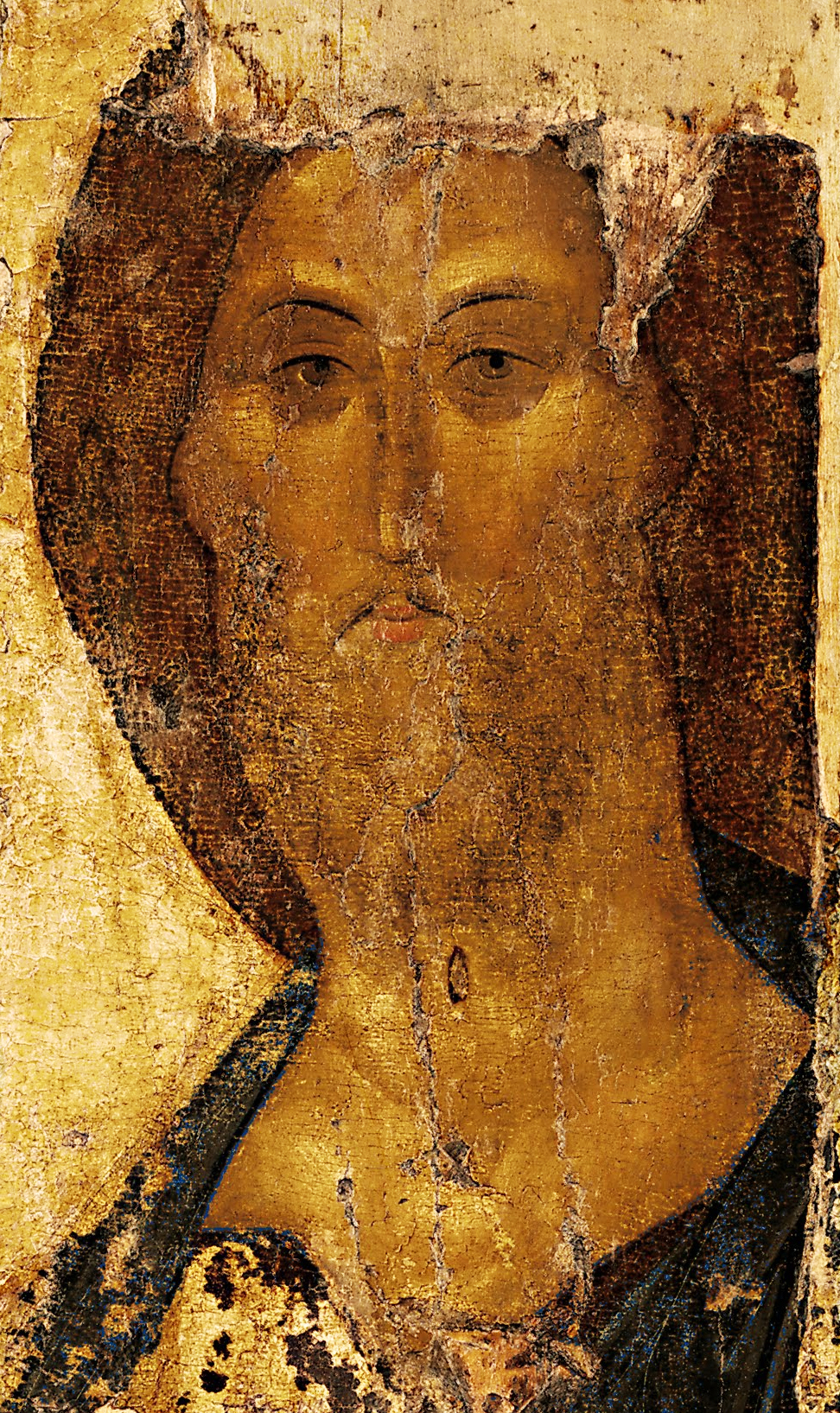


This final group are to me the group I associate myself with. I have found a small communion of Catholics (most of which are dead) with whom I associate myself. St. Thomas More, the Venerable Cardinal John Henry Newman, G.K. Chesterton, Peter Kreeft, Henry Nouwen, Thomas Howard, Richard John Neuhaus and to a lesser extent J.R.R. Tolkien & the Anglo-Catholics (C.S. Lewis, and others). These are the people who always centre Roman Catholic theology on the person, work, and teachings of Jesus. When they discuss the faith, they talk about the love of Christ, about the mercy of God, about true repentance and Christian living. They emphasize the Eucharist, the Church, the Blessed Virgin Mary, and all the saints only to point to Christ. Peter Kreeft says that Protestants will only become Catholics if they see the Christo-centric nature of Catholicism (which for me was like finding Waldo, but it is there somewhere). I feel at home with the Anglican converts to Rome, because most of them seem to share this similar view, a view taught quite alot in Traditional Anglicanism (may she rest in peace), and I feel like a thoroughly English Catholic. My faith isn't centred on abortion, or 'christian' marxism, or speaking in tongues, it's about Jesus. It's not that those things are wrong, it's just that they are subordinate in importance. To Sum this camp up, I'll close with a quote I love by C.S. Lewis about this:

"This is the whole of Christianity. There is nothing else. It is so easy to get muddled about that. It is easy to think that the Church has a lot of different objectives -- education, building, missions, holding services. The Church exists for nothing else but to draw men into Christ, to make them little Christ's. If they are not doing that, all the cathedrals, clergy, missions, sermons, even the Bible itself, are simply a waste of time. God became Man for no other purpose. It is even doubtful, you know, whether the whole universe was created for any other purpose."

Tuesday, July 7, 2009

My Strange Theory/Heresy of Justification From the Psalms

I realized as I read Lewis' reflections on the Psalms today that I could never stand before Holy God and be judged righteous. "Enter not into judgement with Thy servant, for in Thy sight shall no man living be justified." (Psalm 143:2).

My theology therefore in trying to dodge around Trent which merely says anathema to those who believe justification comes from the SOLE imputation of Christ's righteousness. So I tend to theorize and teach this version (probably heretical) of justification, probably the only justification theology based almost solely on the Psalms.

So we already have Psalm 143 saying that no living person will be deemed righteous by himself (or herself). Then in Psalm 32 "Happy are those whose transgression is forgiven, whose sin is covered. Happy are those to whom the Lord imputes no iniquity". So now it is the idea that the sin of the individual is washed away in Baptism and by faith and repentance actual sin is imputed to Christ on the cross (somehow it time travels?). So then we have an individual who has no sin on their soul, they are forgiven (Ps 51:1). Then we have God judging a person only on their merits which he has given them by grace and worked through them (Phil 2:13).

I also tend to assume that the only mortal sin is that of not having faith. I think this places me somewhere between Catholicism and Arminianism.

All this is my personal theology - officially I've submitted to that of the Roman Catholic Church

But on judgment day I think the only words I will be able to get out are those of David:
"according to your abundant mercy
blot out my transgressions." - Ps 51

I've just read a funny thing on the Catholic Encyclopedia under Justification it says:
"We have seen that Protestants claim the following three qualities for justification: certainty, equality, the impossibility of ever losing it. Diametrically opposed to these qualities are those defended by the Council of Trent (sess. VI, cap. 9-11): uncertainty (incertitudo), inequality (inaequalitas), amissibility (ammisibilitas)."

Why would anyone defend uncertainty, inequality, and amissibility. Like I know the whole 'they're true' or 'they're biblical' argument works, but just at a personal level, I want to know what kind of people think about the gospel and think of those concepts and thinks they're worthy of a fight to defend. Who loses sleep at night over the thought that some are content and certain in their trust of God's grace. It boggles my mind...

Augustine and Chrysostom on John 1:12

I'm doing a bible study on John's Gospel tonight and I was reading some of the Patristic commentaries and I found these two quotes on John 1:12 - a verse I had to memorize in bible school:

"But to all who received him, who believed in his name, he gave power to become children of God." - John 1:12

"all, He says, are deemed worthy the same privilege; for faith and the grace of the Spirit, removing the inequality caused by worldly things, has moulded all to one fashion, and stamped them with one impress, the King's. What can equal this lovingkindness? A king, who is framed of the same clay with us, does not deign to enrol among the royal host his fellow-servants, who share the same nature with himself, and in character often are better than he, if they chance to be slaves; but the Only-Begotten Son of God did not disdain to reckon among the company of His children both publicans, sorcerers, and slaves, nay, men of less repute and greater poverty than these, maimed in body, and suffering from ten thousand ills. Such is the power of faith in Him, such the excess of His grace. And as the element of fire, when it meets with ore from the mine, straightway of earth makes it gold, even so and much more Baptism makes those who are washed to be of gold instead of clay; the Spirit at that time falling like fire into our souls, burning up the image of the earthy (1 Corinthians 15:49), and producing the image of the heavenly, fresh coined, bright and glittering, as from the furnace-mould." - St. John Chrysostom Homily 10 on the Gospel of John

"But John adds: As many as received Him. What did He afford to them? Great benevolence! Great mercy! He was born the only Son of God, and was unwilling to remain alone. Many men, when they have not sons, in advanced age adopt a son, and thus obtain by an exercise of will what nature has denied to them: this men do. But if any one have an only son, he rejoices the more in him; because he alone will possess everything, and he will not have any one to divide with him the inheritance, so that he should be poorer. Not so God: that same only Son whom He had begotten, and by whom He created all things, He sent into this world that He might not be alone, but might have adopted brethren. For we were not born of God in the manner in which the Only-begotten was born of Him, but were adopted by His grace. For He, the Only-begotten, came to loose the sins in which we were entangled, and whose burden hindered our adoption: those whom He wished to make brethren to Himself, He Himself loosed, and made joint-heirs. ...He did not fear to have joint-heirs, because His heritage does not become narrow if many are possessors. Those very persons, He being possessor, become His inheritance, and He in turn becomes their inheritance. Hear in what manner they become His inheritance: "The Lord has said unto me, You are my Son, this day have I begotten You. Ask of me, and I will give You the nations for Your inheritance". Hear in what manner He becomes their inheritance. He says in the Psalms: "The Lord is the portion of mine inheritance, and of my cup". Let us possess Him, and let Him possess us: let Him possess us as Lord; let us possess Him as salvation, let us possess Him as light. What then did He give to them who received Him? To them He gave power to become sons of God, even to them that believe in His name; that they may cling to the wood and cross the sea." - St. Augustine of Hippo Tractate 2, On the Gospel of John, 13.

Saturday, July 4, 2009

C.S. Lewis Being My Hero Again

In the last week I've read "C.S. Lewis and the Catholic Church" by Joseph Pearce, "The Great Divorce" by C.S. Lewis and read the majority of "Surprised by Joy" and "The Screwtape Letters" by C.S. Lewis.

The closest theologian I could place Lewis next to is Richard Hooker the Anglican Divine (and philosophically, G.K. Chesterton). Anyway, I just read this quote which reminded me of why I love C.S. Lewis so much. He was such an ecumenical bad-ass a true via media Anglican, a man after my own heart. He writes in the Screwtape Letters (in Devil's Advocate):

"The real fun [when attacking Christians] is working up hatred between those who say "mass" and those who say "holy communion" when neither party could possibly state the difference between, say, Hooker's doctrine and Thomas Aquinas', in any form which would hold water for five minutes. And all the purely indifferent things - candles and clothes and what not- are an admirable ground for our activities. We have quite remove from men's minds what that pestilent fellow Paul used to teach about food and other unessentials" - C.S. Lewis "The Screwtape Letters" p 84

He then talks about "high" Anglicans genuflecting and crossing themselves and "low" church brothers being offended and how they should get over it. LOL, Luther called the Mass "a damnable impiety" and Lewis sees it as irrelevant. He was in the best sense of the word an Anglican. It's a shame they're led by a druid arian these days....

It's also funny that Lewis refers to the anonymous Christian's religious leader as "Fr." aka Father. And he makes reference to Maritain as being a true theologian they (demons) should be worried about. Jacques Maritain was a Catholic Neo-Thomistic Theologian. Oh Lewis, he's so flippant when it comes to the Reformation, he acts as if it were a glass of spilled milk or something.

Friday, July 3, 2009

T.G.I.F Quote - St. Bernard "On Loving God"

I was reading St. Bernard of Clairvaux's treatise "On Loving God" tonight and found these wonderful passage about the grace of God and the Lord's love for his faithful, if you have some spare time, check out the book here (http://www.leaderu.com/cyber/books/onloving/onloving.html)

"He gave Himself for us unworthy wretches? And being God, what better gift could He offer than Himself? Hence, if one seeks for God's claim upon our love here is the chiefest: Because He first loved us (I John 4:19)" - St. Bernard of Clairvaux "On Loving God". Chapter I, 5.

"So it behoves us, if we would have Christ for a frequent guest, to fill our hearts with faithful meditations on the mercy He showed in dying for us, and on His mighty power in rising again from the dead. ... surely there is proof enough and to spare in that Christ died for our sins and rose again for our justification, and ascended into heaven that He might protect us from on high, and sent the Holy Spirit for our comfort. Hereafter He will come again for the consummation of our bliss. In His Death He displayed His mercy, in His Resurrection His power; both combine to manifest His glory." - St. Bernard of Clairvaux "On Loving God". Chapter III, 5.


"What could result from the contemplation of compassion so marvelous and so undeserved, favor so free and so well attested, kindness so unexpected, clemency so unconquerable, grace so amazing except that the soul should withdraw from all sinful affections, reject all that is inconsistent with God's love, and yield herself wholly to heavenly things? No wonder is it that the Bride, moved by the perfume of these unctions, runs swiftly, all on fire with love, yet reckons herself as loving all too little in return for the Bridegroom's love. And rightly, since it is no great matter that a little dust should be all consumed with love of that Majesty which loved her first and which revealed itself as wholly bent on saving her. For 'God so loved the world that He gave His only-begotten Son, that whosoever believeth in Him should not perish but have everlasting life' (John 3:16). This sets forth the Father's love. But 'He hath poured out His soul unto death,' was written of the Son (Isa. 53:12). And of the Holy Spirit it is said, 'The Comforter which is the Holy Ghost whom the Father will send in My name, He shall teach you all things, and bring all things to your remembrance, whatsoever I have said unto you' (John 14:26). It is plain, therefore, that God loves us, and loves us with all His heart; for the Holy Trinity altogether loves us, if we may venture so to speak of the infinite and incomprehensible Godhead who is essentially one." - St. Bernard of Clairvaux "On Loving God" Chapter IV, 5.

Thursday, July 2, 2009

The Difficult Gospel - Issues with Catholicism (2)

Philosophy
1. I just read the best argument I've ever read against Catholic apologetics : http://scholasticus.wordpress.com/2007/10/08/that-protestantism-is-not-inherently-vicious/#more-95 - I didn't say it was genius or even astonishing, but that among the cookie-cutter arguments against Catholicism, this is actually a reasonable, unique, and non-polemical argument.

His argument is that Protestantism trusts authority based on Expertise, whereas Catholicism trusts authority based on Office (Papacy).

It also shows that for one who believes the Magesterium to be an inerrant interpretor of Scripture, no argument using Scripture can levelled against such a person. Which is philosophically also true.

Historical Theology
2. The claim has been made - I haven't had time to investigate it thoroughly - that the Council of Trent affirms the "Two-Source Theory" of Revelation, that Revelation was partim et partim partly written and partly unwritten, and that Trent declared Tradition and Scripture to be the two sources for faith and morals. Whereas Vatican II taught to the contrary that Scripture - God's written word, was materially sufficient and that Tradition was merely a tool of interpretation. Ergo=> the Roman Church taught Sola Scriptura - a fact that would finally get my Reformed friends to recant Sola Scriptura , the Catholics taught it lol.

Personal Experience (part 1)
3. a) I felt peace while in the Roman Catholic Church for about a month after I joined. Quite possibly because whether officially damned or officially saved, at least there was some closure. I also stopped reading theology. I just started up again and have found the same old feelings and frustrations. The constant weight of my own soul upon my shoulders. The fact that at any moment I could fail to persevere and lose my salvation.

It's EXACTLY like when Jonathon Edwards is writing in Sinners in the Hands of an Angry God about how men are on the very precipice of Hell, waiting to fall into it for eternity, completely helpless. Just imagine that Sermon without the gracious call at the end to repentence and salvation. And then imagine living that for your whole life.

The resistible intrinsic grace of Catholicism seems so weak to the dominating extrinsic grace of Protestantism. The problem being that both pale in comparison to the complete extrinsic grace of Universalism. If it's a game of which theology makes me personally feel nice, then the Quakers win every time.

Personal Experience (part 2)
3. b) The problem of course is that part of me wants my free-wheeling Lutheran Anti-Nomianism (which the Reformers didn't really teach, but I always malign them as teaching) which allows me to live a life of sin free of guilt and in the constant blessing of salvation. I want, in short, God to bless my hedonism. I would plunge into the depths of my sloth and gluttony, and burn only with lust. And I would baptize all that unholiness with the doctrine of imputed righteousness.

I would use the snow to preserve my dungheap.

This too is against the religion of the bible which states in 1 John that those who deliberately sin continually have neither seen him, nor know him.

Solution
4. Find The Gospel in Catholicism - The whole Roman system is based around the idea that humanity is always thinking it will be saved and constantly doubting the reality of Hell and the wrath of God. There remains for ones like myself who are terrified and (mostly) obedient children to be the ones constantly fearing judgment when we should least (maybe). I'm tired of the Law, I need some Gospel. If there really remains no Gospel in Catholicism then I'll have to rethink some things (become a deist after all or an anti-nomian lutheran). But I'm sure Pascal, A Kempis, De Sales, or others have hidden it somewhere. I'm sure in one of the vaults of the Vatican, the gratuitous grace and mercy of God has been hidden festering next to the doctrine of Predestination.

Wednesday, July 1, 2009

Newman : Sermon 2 - The Religion of the Pharisee

I was saying to an Evangelical Seminarian friend of mine that the prayer I pray every night has been either the Jesus Prayer (in English or Latin) or a modified version of it: 'Lord Jesus Christ, Son of the living God, have mercy on me, a sinful man'. This comes from the story of the Pharisee and the Tax Collector in St. Luke's account chapter 18, verse 3.

I read a sermon by the Venerable John Henry Cardinal Newman about it today : http://www.newmanreader.org/works/occasions/sermon2.html

It was an alright sermon, if you don't like Newman I wouldn't bother reading it.

His main message was that Paganism was the Same Religion of all mankind and that of the Pharisee. It was based on self-sufficiency and social rewards. He calls it 'religious in the worst sense of the word'. It is not a religion of repentance, but pride. He states that the "The Catholic saints alone confess sin, because the Catholic saints alone see God" and his argument is that because as Christians we see God, we know we can never reach his standard without resting wholly on his grace and mercy. Thus the prayer of the Christian is always for God's grace and mercy.

"...whether it be the thief on the cross, Magdalen at the feast, or St. Paul before his martyrdom:—not that one of them may not have, what another has not, but that one and all have nothing but what comes from Him, and are as nothing before Him, who is all in all.... Let us thank Him for all that He has done for us, for what He is doing by us; but let nothing that we know or that we can do, keep us from a personal, individual adoption of the great Apostle's words, "Christ Jesus came into this world to save sinners, of whom I am the chief." - John Henry Cardinal Newman 1856

I love Newman, he always focuses on God's grace, he's very Augustinian.