Showing posts with label Ecclesiology. Show all posts

Thursday, December 1, 2011

The Church of the East ; Philip Jenkins ; Cornelius


No one has been sent to us Orientals by the Pope. The holy apostles aforesaid taught us and we still hold today what they handed down to us. -Rabban Bar Sauma c. 1290


I read way too much of this book tonight, instead of doing my homework.

It's funny because the more I read about Orthodoxy both Eastern and Oriental, and the more Confessional Anglicans and Lutherans I read, the more I am overwhelmed by the fact that we all confess the same traditional faith. Where we diverge is obviously important, but the fact that we all agree on the Trinity, largely the first 7 ecumenical councils, and to differing degrees, the Old and New Testament, there's actually a lot in common by way of heritage.

And it's also funny because at the same time, I'm amazed at how absent Christ can be in faiths that bear his name. Suddenly one's identity becomes based on who is the true catholicos, or who is the real head of the church. In reality, I think we should be looking to the Lord Jesus Christ our Saviour. As a Protestant Christian I also think the bishops of the world should stop claiming to be "more bishop-y than other bishops" (to quote my old Reformed professor of religious philosophy). If a bishop or a pastor is a shepherd, this should always be remembered to be at best a visible analogy or sign of Christ who is the True head of the Church, the real universal shepherd.

You can have all the unified ecclesiastical bodies in the world and yet lose your soul.

I'm struck by the story of Cornelius in Acts 10, who was an unbaptized gentile that prayed. And yet when St. Peter arrives at his door, he exclaims so beautifully:

"So Peter opened his mouth and said: "Truly I understand that God shows no partiality, but in every nation anyone who fears him and does what is right is acceptable to him. As for the word that he sent to Israel, preaching good news of peace through Jesus Christ ( he is Lord of all), you yourselves know what happened throughout all Judea, beginning from Galilee after the baptism that John proclaimed: how God anointed Jesus of Nazareth with the Holy Spirit and with power. He went about doing good and healing all who were oppressed by the devil, for God was with him. And we are witnesses of all that he did both in the country of the Jews and in Jerusalem. They put him to death by hanging him on a tree, but God raised him on the third day and made him to appear, not to all the people but to us who had been chosen by God as witnesses, who ate and drank with him after he rose from the dead. And he commanded us to preach to the people and to testify that he is the one appointed by God to be judge of the living and the dead. To him all the prophets bear witness that everyone who believes in him receives forgiveness of sins through his name."

While Peter was still saying these things, the Holy Spirit fell on all who heard the word. And the believers from among the circumcised who had come with Peter were amazed, because the gift of the Holy Spirit was poured out even on the Gentiles. For they were hearing them speaking in tongues and extolling God. Then Peter declared, "Can anyone withhold water for baptizing these people, who have received the Holy Spirit just as we have?" And he commanded them to be baptized in the name of Jesus Christ. Then they asked him to remain for some days."

This is my new ecclesiology.


(John Woo is a Chinese-American Lutheran, just threw him in here to show an 'eastern Christian')

Wednesday, June 2, 2010

Ecclesiology (1) - Church Structure

The area in-between the *** are personal reflections and not properly arguments, so feel free to skip them.

***
Preface:

I've now decided on my soteriology, an absolutely basic understanding that "For whosoever shall call upon the name of the Lord shall be saved." (Romans 10:13), regardless of whether they are Roman Catholic, Eastern Orthodox, Anglican, Lutheran, Reformed or (ana)Baptist. That most simple gospel, that if I ask God for forgiveness, for the sake of Jesus Christ, he will not withhold it from me, because he desires that all should be saved, over and above the retension of a visible unified Church. So I have accepted this much of the Reformation, that God freely offers his grace to any whom the Spirit regenerates. The fact that Paul could rebuke Peter on a gospel issue, means to me that soteriology must come first.

But now comes the next challenge must be dealt with: Ecclesiology.
***


1. Which style of Church Governance is correct?

Episcopal
:

This model has support from Acts 1, and the succession of Matthias to Judas "bishopric" in the King James, or apostolic office. What does that mean however? The Fathers seem to indicate that each city or geographic diocese (a Roman Province decided on by the Pagan Imperial powers) had a bishop who was a figure of unity. However, if Paul and Peter were both in Rome, then that raises questions about the nature of the rule of 'one bishop one diocese'. In fact, if the Pope has universal jurisdiction, then really there is either only one global diocese/bishop, or 2 bishops in every diocese (again going against Tradition).

Likewise, the Methodists made a strong argument. For example, Timothy was allegedly to be appointed as Bishop of Ephesus, this tends to be the Roman Catholic argument. However, look at 1 Tim 4:14 "Neglect not the gift that is in thee, which was given thee by prophecy, with the laying on of the hands of the presbytery (or priesthood)." If Timothy was given his ministry (bishop) by the laying on of hands by the presbytery/priesthood, this means his succession was passed on by the priesthood, and not by the Episcopate. This means, as the Methodists will tell you, that all that is required to make a church is at least 3 priests validly ordained in apostolical succession, and they could then vote in a bishop (in the Alexandrian and Nicene Tradition, which states that bishops must be elected). An interesting argument to be sure.

Anyone arguing for a congregationalist style of church government like the Presbyterians, Lutherans, and Baptists, would have to base their argument on the ecclesial 'popular sovereignty' of Christians. They argue (quite rightly in terms of linguistics) that 'ecclesia's (churches) were assemblies in ancient Greece. For example, in Athens, the Ecclesia was a group of around 5000 men who would elect a leader like Pericles. Baptists argue that their 'bishops' (pastors) are elected by the congregations and that the 'laying on of hands' really means the raised hands that were used in voting. While the burden of proof is on them to show the truth to this unsubstantiated claim, it is still one argument. The case can be made that Presbyter/Priest, and Pastor/Bishop are actually all equivalent terms, and that in the hierarchy there is only two offices: laity and pastorate/presbytery.


***
I accept the authority of Scripture, the Fathers, and Tradition, and so the second two sources seem nigh unanimous in their support for the episcopal system of governance. As St. Ignatius of Antioch so harshly warned "do nothing without the bishop", and the Didache and other early texts seem to make the sacramental validity of the Eucharist to be dependent on either the presence or permission of a bishop in the line of apostles. I don't believe Tradition teaches a Petrine supremacy of jurisdiction though.

So, that leaves the Anglican Church of Canada, the Orthodox Church in America, and the Anglican Network/Anglican Church in North America (Evangelical & Anglo-Catholic split). I think Eastern Orthodoxy has gone against Antiquity and Tradition (ironically enough) by calling early medieval teachings 'apostolic tradition' (and thus falling into a quasi-Roman gnosticism of 'the secret tradition of the apostles'). The Anglican Church of Canada has gone against nature and grace by blessing homosexual unions and supporting abortion, leaving me the Anglican Church in North America, of which I am currently seeking membership.
***

Sunday, May 16, 2010

Aquinas and Balthasar ftw...

"...a Church cannot be a "branch" of a historical unity which no longer exists" - Hans Urs Von Balthasar (The Office of Peter) p. 91

""our Lord says: “There shall be one fold and one shepherd” (John 10:16).

But let one say that the one head and one shepherd is Christ, who is one spouse of one Church; his answer does not suffice. For, clearly, Christ Himself perfects all the sacraments of th Church: it is He who baptizes; it is He who forgives sins; it is He, the true priest, who offered Himself on the altar of the cross, and by whose power His body is daily consecrated on the altar—nevertheless, because He was not going to be with all the faithful in bodily presence, He chose ministers to dispense the things just mentioned to the faithful, as was said above. By the same reasoning, then, when He was going to withdraw His bodily presence from the Church, He had to commit it to one who would in His place have the care of the universal Church. Hence it is that He said to Peter before His ascension: “Feed My sheep” (John 21:17); and before His passion: “You being once converted confirm your brethren” (Luke 22:32); and to him alone did He promise: “I will give to you the keys of the kingdom of heaven” (Mat. 16:19), in order to show that the power of the keys was to flow through him to others to preserve the unity of the Church.

But it cannot be said that, although He gave Peter this dignity, it does not flow on to others. For, clearly, Christ established the Church so that it was to endure to the end of the world; in the words of Isaiah (9:7): “He shall sit upon the throne of David and upon His kingdom to establish and strengthen it with judgment and with justice from henceforth and forever.” It is clear that He so established therein those who were then in the ministry that their power was to be passed on to others even to the end of time; especially so, since He Himself says: “Behold I am with you all days even to the consummation of the world” (Mat. 28:20).

By this, of course, we exclude the presumptuous error of some who attempt to withdraw themselves from the obedience and the rule of Peter by not recognizing in his successor, the Roman Pontiff, the pastor of the universal Church." - St. Thomas Aquinas Summa Contra Gentiles 4, 76. http://dhspriory.org/thomas/ContraGentiles4.htm#76

ok. I submit, and reject Anglicanism and other expedients as attempts for me to escape the divine command of being converted, the painful reality of sanctification, and my need to repent. It's not that I like Catholicism, it's that there is nowhere else. Henceforth, I will continue trying to find a way to like it.

I'm sorry for disappointing everyone who reads this at some point, either today, or in the last few weeks.

Friday, October 16, 2009

Different Views of the Catholic Church & The Development of Doctrine

As I've read Catholic ecclesiology I've noticed two distinct traditions of understanding Church Dogmatics. In a weird way they seem counter-intuitive, as the Traditional Catholics seem to advocate the development of Doctrine, and the Nouvelle Theologie seems to advocate a Reformation-style jump backwards.

The First View: (I'll call it the Development of Doctrine)

Cardinal Newman and Tolkien and others tend to see theological growth in the Church as the Development of Doctrine. That doctrines existed in "seed" form and eventually grew. So that Mary's Assumption was in seed form (in the gnostics?...not going to try to defend this one) and over time it became more obvious (don't know how) but that basically enough people talked about it and so it then becomes Catholic dogma. This is the view when people tell you that the Church is like a tree growing gradually over time and expanding to higher and higher heights. Others would argue that doctrinal innovation and modernism could spring out of this view, yet strangely, this seems to be the view of the Anti-Vatican II Catholics. They didn't want to go ad fontes because the early church was just an immature version of the current Church. (if that makes sense)

The Second View: (I'll call it the "flight to antiquity" view in honor of Calvin's attack that this is what Catholics do)
This seems to be the view of many of the "Nouvelle Theologie" people / ressourcement theology. A return back to Patristics and Scriptural exegesis. They focus on the fact that the faith was once delivered to the saints, and will continue in a constant return to the same old truths expressed in new ways. This seems to be a fairly "protestant" view (if you can call it that. Except that Patristics are almost on par with Scripture, as is generally the case in Catholicism. This view seems to be quite popular among Catholic-converts and in general with people who aren't keen on new Marian doctrines and extended emphasis on things that have been recently emphasized.

The Third View: (Super-Traditionalist)
I do acknowledge a possible third view however, that of the super-traditionalists (as I'll call them) who think every new definition was there from the beginning, just no one talked about it (kind of like when the Reformed tell you the Fathers all taught the 5 solas, but forgot to mention them except in their pseudo condemnations of them). Sometimes this becomes a mixing of groups one and two by saying that all the dogmas as we now understand them were there in the beginning. The oath against modernism that SSPX takes deliberately recants the idea that doctrine develops (how I don't yet fully understand), and they seem to fall into this last view.

My View: I tend to go with the first people like Newman. I generally hate people who think Left Behind was basically Revelation word for word just in a modern context, and others who think Jesus taught Adam Smith's wealth of nations, or that Extrinsic imputed righteousness was in the Bible even though it wasn't. But a part of my detestation for such a historical ignorance is people who try to say that the Immaculate Conception is a clear biblical doctrine. There are a few proof texts you could bend to try and make say that, and some patristic phrases that seem to possibly indicate something like the sinlessness of Mary, but by and large it's a construct of scholasticism. But my argument would be: so is everyone elses theology.

I've said it a thousand times, and I'll say it again. You can't know what the bible means for complex theological questions. I don't know if Paul was made to pass the test on Chalcedonian orthodoxy if he would get it correct. My argument would be that you either have faith in Pentecost and Christ's Church with all of it's developments, or you become a Quaker. Of course most people try to make some wacky mix of the two, but to me, those are the only two totally logical perspectives.

Thursday, October 1, 2009

More Victorian Insights on Catholicism: Thomas Babington Macaulay (not just a funny name)

My main area of study so far in University has been Anglo-American History / British and American History. Our school teaches it chronologically so last year we had 600-1000 (suspiciously no class on 1000-1485 What happened?!) and 1485-1832, and this year I have one from 1832-Present. We're studying the Victorian Era, Lord Palmerstone, etc. This is why I did the post on Nightingale's theology. But here's a very strange piece of evaluative ecclesiastics. It was written by (Lord) Thomas Babington Macaulay, an Evangelical Anglican (as far as I know) who ended up not converting to Catholicism, but simply gained a great appreciation from it through history. Here's what he wrote:

"There is not, and there never was on this earth, a work of human policy so well deserving of examination as the Roman Catholic Church. The history of that Church joins together the two great ages of human civilisation. No other institution is left standing which carries the mind back to the times when the smoke of sacrifice rose from the Pantheon, and when camelopards and tigers bounded in the Flavian amphitheatre. The proudest royal houses are but of yesterday, when compared with the line of the Supreme Pontiffs. That line we trace back in an unbroken series, from the Pope who crowned Napoleon in the nineteenth century to the Pope who crowned Pepin in the eighth; and far beyond the time of Pepin the august dynasty extends, till it is lost in the twilight of fable. The republic of Venice came next in antiquity. But the republic of Venice was modern when compared with the Papacy; and the republic of Venice is gone, and the Papacy remains. The Papacy remains, not in decay, not a mere antique, but full of life and youthful vigour. The Catholic Church is still sending forth to the farthest ends of the world missionaries as zealous as those who landed in Kent with Augustin, and still confronting hostile kings with the same spirit with which she confronted Attila. The number of her children is greater than in any former age. Her acquisitions in the New World have more than compensated for what she has lost in the Old. Her spiritual ascendency extends over the vast countries which lie between the plains of the Missouri and Cape Horn, countries which a century hence, may not improbably contain a population as large as that which now inhabits Europe. The members of her communion are certainly not fewer than a hundred and fifty millions; and it will be difficult to show that all other Christian sects united amount to a hundred and twenty millions. Nor do we see any sign which indicates that the term of her long dominion is approaching. She saw the commencement of all the governments and of all the ecclesiastical establishments that now exist in the world; and we feel no assurance that she is not destined to see the end of them all. She was great and respected before the Saxon had set foot on Britain, before the Frank had passed the Rhine, when Grecian eloquence still flourished at Antioch, when idols were still worshipped in the temple of Mecca. And she may still exist in undiminished vigour when some traveller from New Zealand shall, in the midst of a vast solitude, take his stand on a broken arch of London Bridge to sketch the ruins of St. Paul's."

I was talking to a Catholic Philosophy student (doctoral candidate) yesterday from Quebec and he said it wasn't surprising that I converted after studying history, and said that the Church needs historians more than it needs theologians which I thought interesting. Maybe I'll continue in Anglo-American Catholic history for graduate work...

Saturday, September 12, 2009

Clarifications on Plurality in Catholic Dogma, Judging Others, and Refusing Christ's Church

Here are some clarifications I wanted to make because of the comments I received on the last post. I don't know who the anonymous commenter was, but I'll have to respond to them as well.

Is There A Plurality In Catholic Dogma?
An FSSP (orthodox Traditional) priest once told me that I shouldn't listen to what priests or for that matter Catholics say on something, I should just go to the Catechism and the Creeds. As I noted in the last blog, there are Cardinals who have heterodox views (universalism is a tricky situation because I don't know if Hell has ever been ecumenically defined as having people in it, but I assume there is and that he didn't voice these views till AFTER he became a Cardinal). Hans Kung is a classic example of someone who is a modernist protestant Catholic priest. He has openly written a book against the infallibility of the Papacy, denies almost every Marian doctrine, grossly misrepresents the Council of Trent as being somehow Protestant/Reformed, and criticizes all of the Churches sexual ethics, and much more. His status as a Catholic professor has been removed, but has he been excommunicated? No. Has the Pope openly denounced him as a heretic? No (Ratzinger kindly did in nicer words while he was still an Archbishop).

So the problem people seem to have is that the Roman Catholic Church only officially teaches from Rome, and many others around the world, even those within her walls, deny the Dogmas. The Church couldn't keep up with all the heretical claims if it tried. This is why always going from the Catechism is necessary. There really isn't alot of plurality in Catholicism officially, just practically.

Am I Condemning You?
Rev. Jay Bennett asked a really good question since I always get tired of him condemning me: "are you condemning me?". To answer this I will say: the Church is condemning you, I am merely restating what the Church says. I think there IS a difference here. For example, when I asked Rev. Bennett about the Presbyterian view on the status of the Catholic Church he kindly showed me the Westminster Confession which teaches that the Pope is the Anti-Christ. If I asked an Anglican what he thought of my Church, he could go to the 39 Articles and say that it has most certainly erred in matters of faith. So lets not act as if Catholicism is the only religion claiming exclusivity, Christianity is inherently exclusive.

But all of this is greatly different from saying "You personally are condemned by God and out of his grace". I can't know that, but I'm not going to pull the relativistic Catholic response of "God isn't limitted to the sacraments" and then NOT tell you about what the Roman Church teaches on those who wilfully reject the sacraments.

Canonically I've heard that Protestants are considered Material Heretics (there's Aristotle again) and if they are invincibly ignorant, not necessarily considered outside of a state of grace. But if they learn about Catholicism and wilfully reject it, they become Formal Heretics. I need to learn what the Orthodox are considered to help shed light on the full meaning of this.

Refusing Christ's Church Wilfully:

Jesus when he sends the 70 in St. Luke's Gospel (10:16) says to the missionaries:

"‘Whoever listens to you listens to me, and whoever rejects you rejects me, and whoever rejects me rejects the one who sent me.’"

Catholics as well as Orthodox Christian understand this to be a part of the phrase of St. Cyprian "Outside the Church There Is No Salvation". If you reject the Church you are rejecting Christ, as St. Joan of Arc said famously, they are one and the same thing.

Invincible Ignorance:

Here's the definition which I cannot seem to understand:

"So far as fixing human responsibility, the most important division of ignorance is that designated by the terms invincible and vincible. Ignorance is said to be invincible when a person is unable to rid himself of it notwithstanding the employment of moral diligence, that is, such as under the circumstances is, morally speaking, possible and obligatory. This manifestly includes the states of inadvertence, forgetfulness, etc. Such ignorance is obviously involuntary and therefore not imputable. On the other hand, ignorance is termed vincible if it can be dispelled by the use of "moral diligence"." - Catholic Encyclopedia on "Ignorance"

I'm not a good judge of this, as I've been Catholic all of 6 months or so, but I would assume theology students like Matt and Jay are not invincibly ignorant.

Conclusion:

So terrible as it is, I believe the gospel forces me to affirm with Christ that anyone who rejects his true representatives rejects him. It is a matter of Christ's authority, from which the Church derives her authority, and the Church is visible, for otherwise how could Christ command us to "If the member refuses to listen to them, tell it to the church" (Matt. 18:17 - Thank you Pelikan for that handy prooftext).

Thus I hope everyone comes to penitance and is saved, but that is up to Christ, I can only obey his word, which teaches me to obey his Church.

And I'm hoping to be a Jesuit, so having everyone pissed off at me, is probably good training.

Ad Maiorem Dei Gloriam.

Friday, September 11, 2009

A Traditionalist, a Pelagian, and a Modernist Walk into a bar...

"No one can find salvation except in the Catholic Church. Outside the Church you can find everything except salvation. You can have dignities, you can have Sacraments, you can sing "alleluia", answer "Amen", have faith in the name of the Father, the Son, and the Holy Ghost, and preach it too; But never can you find salvation except in the Catholic Church." - St. Augustine of Hippo

"There is indeed one universal church of the faithful, outside of which nobody at all is saved, in which Jesus Christ is both priest and sacrifice." - 4th Lateran Council. 1215 C.E.

"Urged by faith, we are obliged to believe and to maintain that the Church is one, holy, catholic, and also apostolic. We believe in her firmly and we confess with simplicity that outside of her there is neither salvation nor the remission of sins." - Unam Sanctam. 1302 C.E.

"This holy Council first of all turns its attention to the Catholic faithful. Basing itself on scripture and tradition, it teaches that the Church, a pilgrim now on earth, is necessary for salvation: the one Christ is mediator and the way of salvation; he is present to us in his body which is the Church. He himself explicitly asserted the necessity of faith and baptism (cf. Mk. 16:16; John 3:5), and thereby affirmed at the same time the necessity of the Church which men enter through baptism as through a door. Hence they could not be saved who, knowing that the Catholic Church was founded as necessary by God through Christ, would refuse either to enter it, or to remain in it" - Vatican II "Lumen Gentium"

A Traditionalist, A Modernist, and A Pelagian Analysis

Catholic doctrine hasn't changed after Vatican II despite what you may have been told by your local modernists. When the Church says that there is no salvation outside the Church, it is important to note that if you have a Trinitarian baptism, you have been "saved" and are within the Church. But the Magesterium also teaches that those who are invincibly ignorant of Catholicism are not to be held accountable of it, and that "somehow" (Key word) people outside the visible boundaries of the Roman Church are able to be saved as well. Thus it was taught to young Irish immigrants that their Anglican neighbours were still loved by God because they didn't mean to commit the sin of schism. That is the acceptable doctrine of invincible ignorance. But a Traditionalist would probably say that if you've read this blog you are no longer invincibly ignorant (sorry for damning my Protestant readers, in the words of the Baptists: "Turn or Burn"). I've never heard an orthodox Catholic answer to the question: what if someone dies in repentance of their sin but refuses still to acknowledge the Catholic Church as valid and does not desire her absolution even though they know what she claims to be. I'm assuming the answer is that they are not saved.

Then another Catholic might say God "Freely accepts those who do what is right and fear him" (To quote St. Peter in his speech to Cornelius). They might say that Jews and even "godly pagans" are saved because they are doing good works. The idea that those who do good works outside of Christ are rewarded with Heaven is the Pelagian heresy. Now in this view's defense they might say that it is only semi-pelagianism in that all good works of humans come from grace. But I would quote Hebrews to say "without faith it is impossible to please him" and quote Romans to say "how can they believe in Him whom they have not heard of". So I don't think ordinarily those outside Christendom are saved, but who knows, it's up to God.

Finally you will find the modernist, even at the highest levels of our Church. For example, take the former president of the Catholic bishops of England and Wales, Cardinal Cormac Murphy-O'Connor who is a universalist. And his universalism isn't even based on scripture, tradition, or reason, no he's with Wesley on this in giving credence to emotions. He says he believes all will be saved because it will make him feel better in Heaven.

So there you have it, a cross-section of the whore that is our Church, and yet our mother (To quote St. Augustine).

Mortal Sin:

"And this is the boldness we have in him, that if we ask anything according to his will, he hears us. And if we know that he hears us in whatever we ask, we know that we have obtained the requests made of him. If you see your brother or sister* committing what is not a mortal sin, you will ask, and God will give life to such a one—to those whose sin is not mortal. There is sin that is mortal; I do not say that you should pray about that. All wrongdoing is sin, but there is sin that is not mortal. We know that those who are born of God do not sin, but the one who was born of God protects them, and the evil one does not touch them. " - 1 John 5:14-18

The list of mortal sins is traditionally the list Jesus gives to the rich young ruler when he says "do this and live" in St. Luke's gospel. But Catholic moral theology holds that for a mortal sin to occur, it has to be a grave matter, with full knowledge of it's sinfulness, and full assent of the will.

So in regards to a question someone asked, yes if you are a baptized Protestant and have sinned gravely and willfully (I know I do this weekly), then according to Catholic teaching you have killed God's grace in your soul, and St. John the Divine says that people shouldn't even pray for you (though I'd pray for you anyway).

So seek priestly absolution (Jn 20:23), or persist in arrogance and heresy. Those are the mean-spirited, harsh, and unpastoral words I am obligated to say by Canon Law.

May God have mercy on our souls.

Wednesday, July 22, 2009

More Ecclesiology From Your Favourite Ignorant Papist

I openly admit I am no expert on ecclesiology, but as a layman, I read Pelikan, Cardinal Newman, and J.N.D. Kelly as well as Traditional Anglicans and Eastern Orthodox Christians. From such reading I've seen that the Church must be a visible hierarchical Episcopate with valid apostolic succession. No doctrine, no issue, can violate this. It seems that it is an inviolable tradition of the Church and only leaves the Roman Catholic Church and the Eastern Orthodox Church as the two possible options for those who would adhere to traditional ecclesiology (I exclude the European Lutheran Churches and the Anglican Communion from the list, who ordain women and thus destroy their succession).

I've chosen the Roman Catholic Church for many reasons, and the local Eastern Orthodox Churches have saved me the trouble of investigation by declining membership to those not fluent in a Slavic language (I don't remember that in the bible or the fathers).

If of course you accept Scripture Alone as authoritative, this is a different matter. But for anyone who accepts the binding authority of apostolic tradition on the conscience of a Christian, the idea that the Church can exist visibly outside the historic episcopate in a normative sense is wrong.

As a member of the Roman Church, I enjoyed this:

"not only did the church decide which books belonged in the catholic canon of Scripture; it was also the attestation of "the holy see of Rome" that provided credentials for the church fathers..." - Jaroslav Pelikan "The Christian Tradition" Vol. 3, pg. 48

"So fundamental was the unity of the catholic church to Christian faith and life that apart from its fellowship all faith was vain and all good works devoid of reward; only within "the unity of the catholic church and the concord of the Christian religion" could either faith or works have any value. Those who set themselves against this unity not only in questions of dogma but also in matters of church discipline and practice, were without excuse, even if they claimed to adhere to the authority of the Old and New Testament and to that of the trinitarian dogma of the church" - Jaroslav Pelikan "The Christian Tradition" Vol.3 Pg. 45 "The City of God"

Thursday, July 9, 2009

Super Post, Must Read - Today's Catholicism - Variety in the Roman Kirk

"Thou art Peter, and on this rock will I build my Church" - The Gospel According to St. Matthew, Chapter 16, Verse 18

What's the Rock?
For Protestants it is St. Peter's confession - God bless them, as a former Protestant I have to say I believe they do more to advance the Catholic faith by teaching orthodox Christological and Trinitarian and Biblical theology than 9 out of 10 of the lapsed Catholics you meet throughout high school and wherever Italians and Francophones dwell.

Catholics believe St. Peter is the Rock (along with his successors, the bishops of Rome, or "popes"), but as a little bit of a tour of the Roman Church, I've replaced 'the Rock' with those things which some Catholics emphasize the most.

What's the Rock?: Abortion


I once told a Catholic "Christ died to start a Church, not a Pro-life Movement"

I've been reading the American Papist blog today and a number of the other "top" Catholic blogs and I find them dreadfully boring. They're just Abortion this, Abortion that, Abortion... yes, if I lived during the Holocaust I would be talking about how horrible it is, but the point is, the Gospel must still be preached, theology must still be taught, the Liturgy should still be refined, etc. As a student of Political Science, it is my firm conviction that abortion will never be illegal, and that probably something worse will come up eventually that Catholics will rave about all the more.

Needless to say, I am pro-life, I do think abortion is a moral evil, but I do think it is a subordinate issue. I have a friend who was a lapsed Catholic for over a year and he was HEAVILY involved in the pro-life movement, i'll never forget when I said to him "salvation is by grace" and he said "what's grace?" - that almost stopped my conversion immediately, but I'm simply saying all of this to emphasize how abortion has usurped the message of salvation which after all is the whole purpose of Christianity.

What's the Rock: Charismatic Gifts of the Holy Spirit


Charles Spurgeon (still one of my heroes) once said in regards the Wesleyan movement that he didn't care about being filled with enthusiasm, and that the only emotion he wanted to feel deeply was repentance. I agree with him. But there are some things I like about the Charismatics, the fact that they actually believe the Bible is one refreshing thing. I empathize with Lutheran Theologian Paul Tillich who once said "I am excited for the day when we can all talk about God again without embarrassment". This article in first things by the Episcopal (famous Catholic sympathizer) writer Philip Jenkins is all about the Charismatic movement (specifically in the global south):

http://www.firstthings.com/article/2007/01/believing-in-the-global-south-17

Their stories fill me with hope that once again supernaturalism will triumph over the arbitrary western tyrant of naturalism.

What's the Rock: All Things Idolatry


C.S. Lewis said that Catholicism goes wrong when it becomes the world-old folk religion of amulets and magic. In spite of Newman's wonderful sophistry about "dulia" and "hyper-dulia" and "latria" I've been unfortunate enough to have to read medieval british books on popular Piety and they always talk about how we should "worshippe the Saintes in a goodley waye" or some other myspelld idolatri. It's really annoying how they write. In any case, many Roman Christians in my estimation easily jump over the line from mere dulia (devotion) to latria (worship). Maybe it's just me, but my own brain has a worship and non-worship switch. Anyway, I still like the saints but I think the Anglican Communion has a healthier theology on them... it could be worse, we could be East Orthodox, there's worship for you (I don't know the Greek word for Latria otherwise I'd use it to sound smart).

I find that others are so ridiculous about protecting the Eucharist that it is just ridiculous. I understand respect and treating the Eucharist in a worthy way, and I believe transubstantiation, but seriously, we are talking about the same Jesus right? They stopped serving the Eucharist by intinction (dipping the bread into the wine and giving it to the communicant) because a drop of the blood might fall on the ground. ... does anyone in the Catholic Church remember that Christ's blood was poured out onto the ground for our sake. That he was despised, trampled, and spat on. I think he can take a carpet at St. Alexander's parish church.

And for the life of me, I'm tired of trying to explain my way out of awkward moments at mealtime when a Protestant friend or family member will ask me about upside-down buried statues of St. Joseph and real estate. (St. Thomas More, pray for the destruction of idolatry and false veneration!)

What's the Rock?: The Church


Dave Armstrong and many Protestant Converts boast about the awesomeness of the Church and use grandiose statements about how humungous and gigantic "our" (as if they did any of it) Ancient Communion is. They teach what the (self-proclaimed) Bishop James White describes as sola ecclesia, or 'the church alone' for salvation. I don't believe this is official church teaching - and neither would Protestants if they had to sit through the dreaded "subsistit in" debates which are now every discussion on Vatican II (the council says that true Christianity -or something to that effect - "Subsist in the Catholic Church", the debate is thus, 'are Protestants unknowingly in the Catholic Church, or is this Feeneyism - only the visible Catholic Church is the true elect church). Anyway, whether they changed Tridentine declarations or not (I think they kind of did) Vatican II now teaches something much closer to a catholic/orthodox view of Tradition, that Scripture is materially sufficient as the source of faith and morals and that Tradition is the interpretive lens.

The Church and Ecclesiology is important, but even Papa Benny says that the more offices and mechanisms the Church adds for itself the more the Spirit is quenched.

What's the Rock?: Social Gospel


This group is the inverse of the previous group, they seem to think that Jesus was a 1st century Che Gueverra who was killed for resisting "the man". The whole purpose of Church is to protect the poor and the innocent. To accept Homosexuals and outcasts. Like the Charismatics, I don't have as much of a problem with the Social Gospel people, they do a hell of alot more to live their faith than I do. But my issue is always with their watered-down theology, and dodgy leftist politics. This group reminds me of a female Catholic theology student I talked with the other day with whom I voiced my concern "I think the Church (Catholic) has contradicted itself" and she replied to the effect of "so what? you thought we were infallible?". Strangely when the Catholic Church advertised "Infallibility", I assumed it's adherents believed in it, but it's ok, I still do, but not with the fervor I used to, and now with the knowledge that many in the fold do not.

What's the Rock?: Christ
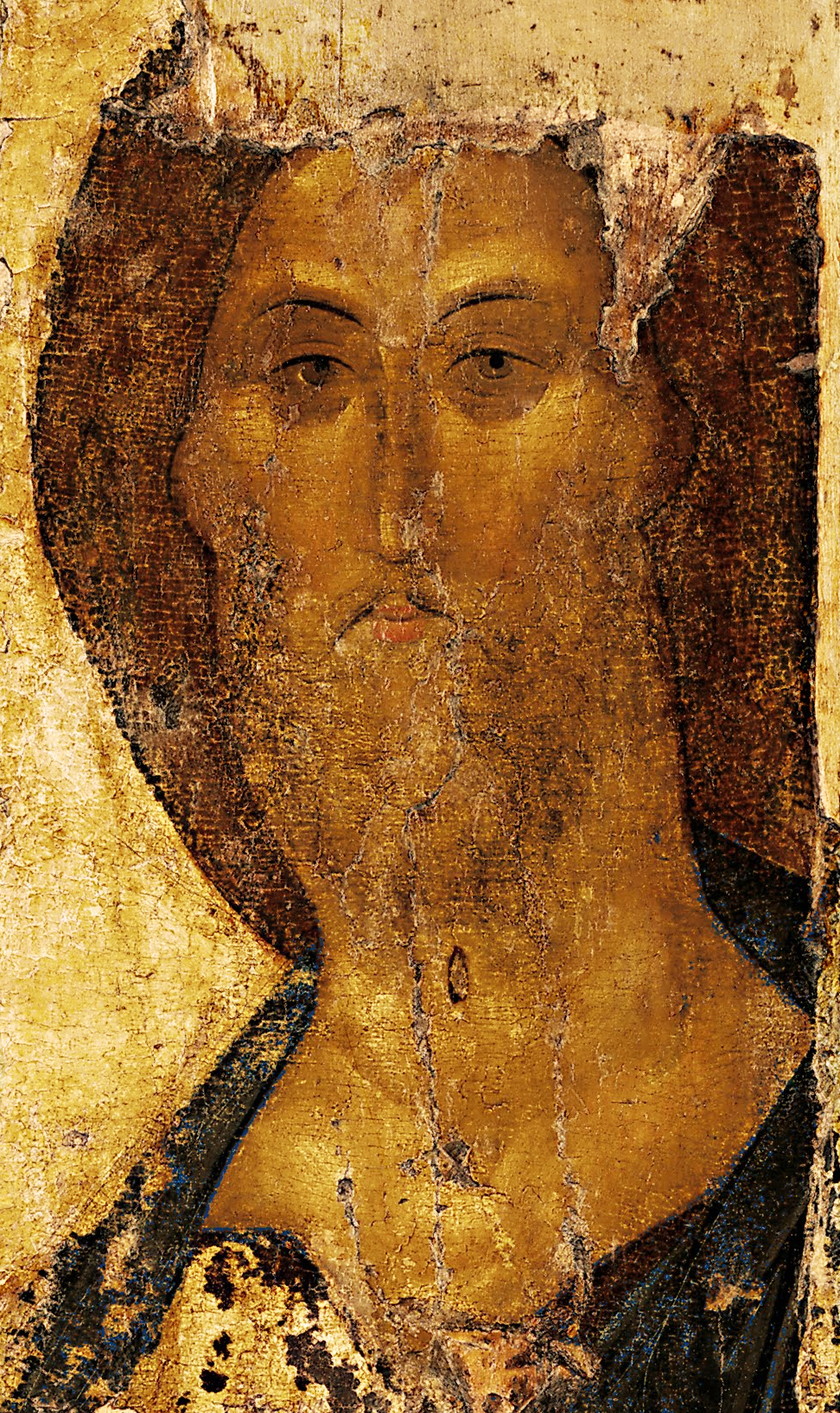


This final group are to me the group I associate myself with. I have found a small communion of Catholics (most of which are dead) with whom I associate myself. St. Thomas More, the Venerable Cardinal John Henry Newman, G.K. Chesterton, Peter Kreeft, Henry Nouwen, Thomas Howard, Richard John Neuhaus and to a lesser extent J.R.R. Tolkien & the Anglo-Catholics (C.S. Lewis, and others). These are the people who always centre Roman Catholic theology on the person, work, and teachings of Jesus. When they discuss the faith, they talk about the love of Christ, about the mercy of God, about true repentance and Christian living. They emphasize the Eucharist, the Church, the Blessed Virgin Mary, and all the saints only to point to Christ. Peter Kreeft says that Protestants will only become Catholics if they see the Christo-centric nature of Catholicism (which for me was like finding Waldo, but it is there somewhere). I feel at home with the Anglican converts to Rome, because most of them seem to share this similar view, a view taught quite alot in Traditional Anglicanism (may she rest in peace), and I feel like a thoroughly English Catholic. My faith isn't centred on abortion, or 'christian' marxism, or speaking in tongues, it's about Jesus. It's not that those things are wrong, it's just that they are subordinate in importance. To Sum this camp up, I'll close with a quote I love by C.S. Lewis about this:

"This is the whole of Christianity. There is nothing else. It is so easy to get muddled about that. It is easy to think that the Church has a lot of different objectives -- education, building, missions, holding services. The Church exists for nothing else but to draw men into Christ, to make them little Christ's. If they are not doing that, all the cathedrals, clergy, missions, sermons, even the Bible itself, are simply a waste of time. God became Man for no other purpose. It is even doubtful, you know, whether the whole universe was created for any other purpose."

Friday, March 13, 2009

Friday Night Newman

1 year before crossing the Tiber (becoming a Roman Catholic) John Henry Newman wrote this about his thoughts of Revelation in history and to the reason why the Magesterium must be without error in it's teaching:

"The most obvious answer, then, to the question, why we yield to the authority of the Church in the questions and developments of faith, is, that some authority there must be if there is a revelation given, and other authority there is none but she. A revelation is not given if there be no authority to decide what it is that is given. . . . If Christianity is both social and dogmatic, and intended for all ages, it must humanly speaking have an infallible expounder. Else you will secure unity of form at the loss of unity of doctrine, or unity of doctrine at the loss of unity of form; you will have to choose between a comprehension of opinions and a resolution into parties, between latitudinarian and sectarian error. You may be tolerant or intolerant of contrarieties of thought, but contrarieties you will have. By the Church of England a hollow uniformity is preferred to an infallible chair; and by the sects of England an interminable division. Germany and Geneva began with persecution and have ended in scepticism. The doctrine of infallibility is a less violent hypothesis than this sacrifice either of faith or of charity. It secures the object, while it gives definiteness and force to the matter, of Revelation." - Venerable John Henry Cardinal Newman

You're free to disagree with it, but I rather like it. I don't perfectly understand it, but I understand about 90% of it. I also think that Cardinal Newman looks like Harry Potter in the above picture.

Saturday, February 21, 2009

Why I'm Not Finished My Journey - Constant Conversion

WARNING!!!!! - Personal/spiritual post rather than Polemical/religious post - Ye who enter here abandon all hope

The Humility of a Hero

"Christ’s death redeemed man from sin, but I can make nothing of the theories as to how!"-C.S. Lewis

As I gave my thoughts on the Substitutionary Atonement and how I had to more or less 'give it up' for Catholicism, I realized that one of my favorite Anglicans had also given it up. Borrowing from another blog: "In The Allegory of Love Lewis referred to a poem whose "theology turns on a crudely substitutional view of the Atonement." In Mere Christianity Lewis indicated that he did not accept the substitutionary view of atonement." (http://www.faithalone.org/journal/2000i/townsend2000e.htm)

But I love Lewis' humility. He was clearly an Anglican/Protestant Arminian and accepted Sola Fide/Faith Alone but he tried to find a middle ground for which all Christians could come together on.

For me, I just need to accept that there is much that I haven't decided on and that this indecision is OK.

What I 'know'

When it comes to Theology Proper (Trinity, Who God is, etc) I think all Protestants, Catholics, and Orthodox agree. And regarding Ecclesiology and the Sacraments my position is staunchly Roman Catholic, which of course will never allow me to leave the Church, but will also give me a plaguing of constant fear and guilt until I get to have my first confession, communion, and confirmation.

What I don't 'know':

But even if I am settled in my mind on the Catholic view of Conversion and the work of the Holy Ghost, I still can't actually invision it practically. I never know anyone who actually changes. Just sinner saints as Luther would say. I would completely doubt the truth of regeneration if it weren't for the few months of it I experienced in Bible School 3 years ago, and a few of my friends who are doing much better than I. But all of them aren't Roman Catholic, and many aren't even baptized. So how does that fit with my theology? it doesn't seem to. Again I just don't know.

And just ask me about Creation, Theistic Evolution, Young Earth, Old Earth, etc. I have absolutely no idea. I don't think I fit into any category because I think they all have problems. I could write an entire blog on this issue (maybe I'll do that next), but currently I find the Christian narrative and the Scientific narrative at odds, and I don't like picking sides because I -like Galileo- think science will vindicate God if it is true, and I believe all truth is God's truth. So I'm waiting around right now, and utterly confused on the matter.

So it's ironic that I started this blog saying "I'm a Christian looking for a Church" and now I say "I found a Church, but I'm looking for a Christian".... hmm. I wonder what I'll be saying in 2 years from now. I started off a "saved and justified bible-believing Christian" at the beginning, and now I appraise myself a "repentant Roman Catholic candidate in a state of damnation (mortal sin)".

I'm still in the purgatory between Protestant and Catholic and working out all these glitches as it were and confused ideas. But I knew I was in a Catholic mindset when people asked me 'so are you going to trust Jesus or the Church' and I immediately thought "false dicotemy" and primarily, the Church.

Comfort

There are some things that bring me comfort however.

1. Mere Christianity. That I at least gotten over the worst of the family strife over my conversion - C.S. Lewis' "Mere Christianity" is now our household religion. My dad and I when we discuss the faith still speak only with regards to this shared grounds. I also make comments about how there are a great many 'unsaved' people in the Catholic Church and him and I agree on it. (though we use slightly different criteria). And I must say that I've never departed the teaching I received as a child that the Lord looks at the heart first, and so we view in my family now, "true Christianity" not as sola fide or sola ecclesia but as a living trust in Jesus. Pope Benedict XVI calls this the "constant call to conversion" that each Christian has. And while I might not be 'sacramentally' in a state of grace, God knows - I am sure - that my heart is in the right place. And I think that's more important than anything.

2. Kyrie Eliesen. That God is merciful - two of my favourite verses in the bible are: "The sacrifice acceptable to God, is a broken spirit; a broken and contrite heart, O God, you will not despise" (Ps 51.17) - a verse I emphasize when I talk to Muslims and Jews about salvation. And Jesus' promise "anyone who comes to me I will never drive away" (Jn 6:37). I also have taken comfort in the words of St. Gregory Nazianzen "God's joy in giving is greater than our joy in receiving".

3. Hope. While I cynically doubt I will ever be regenerate and suffer from constant feelings of guilt and inadequacy, I still take comfort in hope, which St. Paul says "will not disappoint" (Rom 5:5). President Obama -who ever Christian seems to hate- wrote a book called "The Audacity of Hope". I read some of it, and regardless of political views here, I just wanted to use the title for something. As Christians we do have the Audacity to hope. It is audacious because all signs point to despair. Hope is probably my favourite thing in the world, it's one of those words that for me has special meaning. It reminds me of Tolkien and his writing for Hope against despair. It's like the word repentance (which for many people is bad) which for me is a beautiful word. And so I try to pray each day for the Gift of the Holy Ghost which Jesus says the Father will give to us if we only ask, and maybe I'm already receiving it without knowing, but right now I have the audacity to hope for the zoe the supernatural and indwelling life of Christ, which I long for above all else.

Conclusion:

I'm still on the Journey, I'm not finished, and I need to spend some time enjoying the mystery of God, and I find it appropriate to quote the words of C.S. Lewis again:

"Relying on God has to begin all over again every day as if nothing had yet been done..."

Thus begins another day.